Siamese Cat: Breed Profile and Care
Siamese cats have captivated cat lovers for centuries with their distinctive striking appearance and surprisingly vocal personalities. These elegant cats combine beauty with intelligence and deeply devoted temperaments. Understanding Siamese cats thoroughly helps potential owners appreciate both their exceptional qualities and specific care requirements.
Origins and History
Siamese cats originated in Thailand (formerly Siam), where they were highly valued by Buddhist monks and royal families. Archaeological evidence suggests these cats lived in temples for centuries, where they served as companions and mousers.
Western contact with Siamese cats occurred in the late 1800s, initially through British officials and traders. The breed captivated Western audiences with their exotic appearance and unique personalities, rapidly gaining popularity.
Breeding programs refined Siamese characteristics, developing the modern Siamese cat we know today. Their striking appearance and vocal nature have made them perpetually popular.
Distinctive Physical Characteristics
Siamese cats are instantly recognizable by their distinctive appearance. They have slender, elegant bodies with refined bone structure. Males typically weigh 8-10 pounds, while females are slightly smaller at 6-8 pounds.
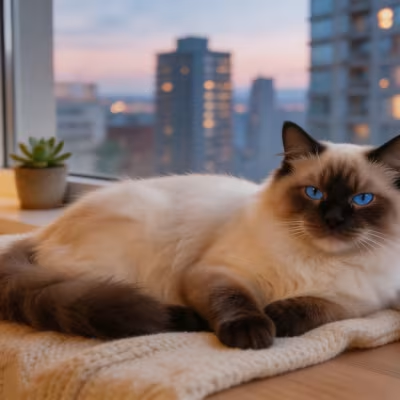
Their most striking feature is their colorpoint pattern—pale bodies with darker "points" (face, ears, legs, tail). Colors include: seal point (dark brown points), chocolate point, blue point (gray), and lilac point (pink-gray).
Their heads are wedge-shaped with large, pointed ears positioned close together. These ears contribute to their alert, intelligent expressions. Their large, almond-shaped blue eyes are mesmerizing and deeply expressive.
Siamese cats have short, glossy coats requiring minimal grooming. Their bodies are sleek and muscular, built for athleticism and agility.
Temperament and Personality
Siamese cats are famously vocal and extroverted. They're extremely people-oriented, often following owners throughout homes and wanting to be constantly near them. They're often described as dog-like in their loyalty and attention-seeking behavior.
These cats are highly intelligent and capable of learning commands, playing fetch, and problem-solving. They engage actively in household life, interested in all activities and wanting to participate.
Siamese cats are renowned for their vocal communication. They don't simply meow—they carry on complete conversations with owners through a variety of vocalizations. Some find this communication charming and engaging, while others find constant vocalization challenging.
They're affectionate and enjoy physical contact, often sitting on laps or nestling in owner's arms. They form deep bonds with families and may suffer from separation anxiety if left alone extensively.
Siamese are playful, maintaining enthusiasm for games and interactive toys throughout their lives. They enjoy climbing, jumping, and exploring.
Health Considerations
Siamese cats are generally healthy, but several breed-specific conditions warrant attention. Progressive retinal atrophy, an inherited eye condition, can lead to blindness. Reputable breeders conduct eye screening.
Asthma affects some Siamese cats, causing respiratory distress. Environmental management and medications manage this condition when it develops.
Heart disease, including hypertrophic cardiomyopathy, occurs in the breed. Cardiac screening helps responsible breeders minimize this condition.
Strabismus (crossed eyes) and nystagmus (involuntary eye movements) are sometimes hereditary traits in Siamese. While not painful, they affect vision.
Responsible breeders conduct health screening and genetic testing. When selecting breeders, request documentation of health clearances.
Siamese cats typically live 12-17 years, though many live into their late teens and early twenties with excellent care.
Exercise and Activity Needs
Siamese cats are highly active and athletic. They need regular interactive play, climbing opportunities, and environmental enrichment.
Provide climbing structures, cat trees, and improved spaces. These intelligent cats enjoy surveying their domains from high vantage points.
Daily interactive play with fishing-pole toys, balls, or laser pointers engages their intelligent minds and athletic abilities. These social cats often enjoy playing with owners rather than alone.
Many Siamese enjoy use training and outdoor exploration on leashes. This provides environmental enrichment satisfying their curious, adventurous natures.
Without adequate stimulation, Siamese cats may develop behavioral problems including destructiveness or excessive vocalization.
Grooming and Coat Care
Siamese cats have minimal grooming requirements due to short, glossy coats. Weekly brushing maintains coat health and controls shedding.
Bathe Siamese cats occasionally (every 4-6 weeks) to maintain coat quality and skin health. Many Siamese tolerate bathing better than other cats.
Trim nails every 2-3 weeks. Clean ears weekly. Brush teeth daily to maintain dental health.
Nutrition and Feeding
Siamese cats require high-quality diets with adequate protein (30%+ for adults). Their active nature requires proper nutrition supporting energy levels.
Feed Siamese appropriate portions based on age and activity level. These active cats maintain lean body weight naturally but can become overweight with overfeeding.
Kittens require specialized kitten food with appropriate nutrient ratios. Feed kittens 3-4 times daily until 6 months, then transition to twice-daily feeding.
Provide fresh water constantly. Some Siamese prefer running water from fountains—water fountains encourage hydration.
Training and Socialization
Siamese cats are highly trainable, unusual for cats. Their intelligence and people-focus facilitate learning.
Early socialization ensures confidence around various people and situations. Expose kittens to diverse experiences, sounds, and environments.
Many Siamese learn to walk on usees, sit on command, or play fetch. Use positive reinforcement—treats and praise—to encourage behaviors.
These intelligent, social cats need regular interaction and mental stimulation. Training sessions and enrichment activities prevent boredom.
Communication and Vocalization
Siamese communication is legendary. They use varied vocalizations to express needs, desires, and observations. Some owners find this charming; others find it overwhelming.
If constant vocalization bothers you, Siamese cats may not be ideal. Their talking is inherent to their nature and difficult to suppress.
However, many owners appreciate their communication, describing Siamese cats as genuine conversation partners. They respond to human interaction with enthusiasm and apparent understanding.
Social Needs and Compatibility
Siamese are highly social, suffering in isolation. They need frequent human interaction and shouldn't be left alone for extended periods.
They generally coexist peacefully with other cats, dogs, and cat-friendly pets. Early socialization facilitates positive relationships.
They're ideal for active households where cats are constantly involved in family life. Busy professionals working long hours might struggle meeting their social needs.
Siamese cats form intense bonds with preferred owners and may be more reserved with strangers, though proper socialization creates confidence around various people.
Is a Siamese Cat Right for You?
Siamese suit active families wanting vocal, interactive cats involved in daily life. They're ideal for people appreciating constant communication and engagement.
They're not appropriate for people wanting quiet, aloof cats. Siamese demand attention and participation.
They're excellent for first-time cat owners willing to invest in interactive play and training. Their intelligence and trainability make them rewarding companions.
They're unsuitable for people spending extensive time away from home. These social cats suffer from prolonged isolation.
Conclusion
Living with a Siamese Cat Their constant communication and desire for involvement create unique relationships between cats and owners.. For those appreciating vocal, interactive cats, Siamese become irreplaceable family members.. Their elegant appearance, trainability, and genuine affection make them exceptional choices for engaged, active households.

0 Comments
No comments yet. Be the first to share your thoughts!
Leave a Comment