Cat Body Language: Understanding What Your Cat Is Telling You
Cats are masterful communicators, yet many cat owners struggle to interpret what their feline friends are actually saying. Unlike dogs, who openly display emotions through exuberant body movements, cats communicate through subtle signals. Understanding cat body language deepens your relationship, prevents conflicts, and helps you recognize when your cat needs attention or space. This complete guide breaks down the key components of feline communication so you can become fluent in your cat's unique dialect.
The Tail: Your Cat's Most Expressive Feature
Tail Position and Movement
Your cat's tail is surprisingly expressive and reveals their emotional state. A high, vertical tail with a slight hook at the tip signals confidence, happiness, and contentment. You'll typically see this when your cat greets you or approaches familiar people and situations. This tail position suggests your cat feels secure and is ready for interaction.
Conversely, a tail held low or tucked under the body indicates fear, anxiety, or submission. A cat displaying this posture feels threatened or insecure and may be considering escape or hiding. This is when you should give your cat space and avoid forced interaction.
A swishing or twitching tail deserves careful attention. Slow, gentle swishes often accompany relaxation and contentment, especially when your cat is watching birds from a window or lounging in sunlight. However, rapid, forceful tail thrashing signals frustration, irritation, or building agitation. If you see this behavior during petting, your cat is likely reaching their tolerance limit and needs space.
Tail Puffing
When a cat's tail suddenly becomes twice its normal size, that's the pilomotor reflex in action. This defensive posture makes your cat appear larger to potential threats, signaling fear or aggression. This often accompanies arched backs and sideways positioning. Your cat is essentially saying, "I'm scared and ready to fight if necessary." It's time to back away and let your cat calm down in a safe space.
Ear Signals and Meanings
Cat ears are extremely mobile and expressive. Forward-facing ears in a natural upright position indicate an alert, confident cat. Your cat is engaged with their environment, processing information, and feeling secure. Cats in this state are typically friendly and open to interaction.
Ears turned backward or flattened to the head signal fear, aggression, or extreme stress. This posture protects the delicate ear interior during conflicts. If your cat's ears are pinned back, they're uncomfortable, and you should determine the source of their distress and provide relief.
Ears twisted or held sideways might indicate confusion, uncertainty, or ambivalence. Your cat is processing mixed signals or deciding how to respond to a situation. This might accompany head tilting, another sign of attention and curiosity.
Rapid ear movements, scanning back and forth, show your cat is tracking sounds and paying close attention to their environment. This is normal alert behavior, especially when your cat is hunting or monitoring activity.
Eye Contact and Expression
The Slow Blink: A Sign of Affection
One of the most endearing cat communication signals is the slow blink. When your cat looks at you and slowly closes and opens their eyes, they're conveying affection and trust. This behavior mimics what contented cats do when relaxed around trusted companions. If your cat offers a slow blink, respond with the same gesture—it's a genuine moment of connection and reassurance.
Eye Width and Dilation
Wide eyes with dilated pupils can indicate arousal, excitement, or fear depending on context. A hunting cat might display this while stalking prey. A frightened cat shows wide eyes as part of their stress response. In bright light, pupils naturally constrict; in dim light, they dilate. Understanding the context helps interpret what those wide eyes mean.
Narrow, squinting eyes often accompany contentment, relaxation, and sleep. This is a safe sign that your cat feels secure and may be ready for petting or cuddle time.
Staring and Intensity
A direct, unblinking stare can feel threatening to cats. In feline language, prolonged staring is a challenge or threat signal. If your cat stares intensely, they're likely feeling territorial or defensive. Never stare back in a dominant way; instead, blink or look away to signal peaceful intent.
Body Position and Posture
Relaxed Posture
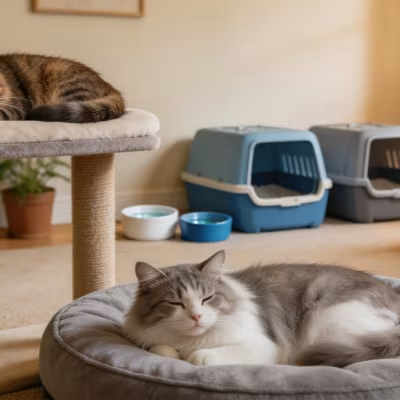
A content cat displays an upright, loose posture with smooth fur lying flat. The body is neither tense nor rigid. The cat might lounge with limbs extended or curl up in a cozy position. This relaxed posture indicates a cat who feels safe, secure, and comfortable in their environment.
Stretched and Play Bow
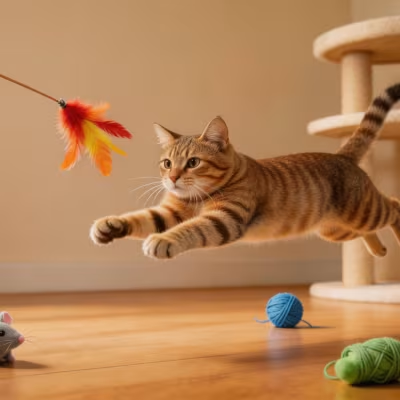
When your cat stretches their front legs forward while raising their rear end, they're performing a play bow. This invitation to play is one of the most positive signals you'll see. Your cat is confident, happy, and wants to engage with you. This is an excellent time for interactive play sessions.
Crouched and Ready to Pounce
A low, crouched body position with hindquarters raised and tensed means your cat is preparing to hunt or pounce. Their focus narrows, their body compresses, and they're calculating their strike. This behavior is normal predatory instinct and becomes problematic only if directed at people. Redirect hunting instincts toward appropriate toys.
Sideways or Arched Back
The classic cat Halloween pose—arched back, sideways orientation, and all fur on end—is a fear or defensive posture. Your cat is trying to appear as intimidating as possible while protecting vital organs. This signals extreme discomfort, so remove the source of stress and give your cat space.
Mouth and Facial Expressions
Meowing and Vocalizations
Cats have extensive vocabularies, producing different meows for different situations. A short, friendly mew is a greeting. Longer, more demanding meows indicate wants or needs—food, water, play, or attention. Some cats are naturally more vocal than others, but changes in vocalization patterns can signal health issues.
Yowling, a longer, more intense vocalization, often indicates mating behavior or distress. Hissing is a clear warning signal: Back off now. Growling precedes potential aggression or extreme fear. These vocalizations demand immediate attention and distance.
Whisker Position
Forward-facing whiskers suggest confidence and curiosity. Your cat is engaged and investigating. Whiskers pulled back toward the face indicate fear or defensiveness, as cats naturally protect these sensitive sensory organs when threatened.
Scent Marking and Head Bunting
When your cat rubs their face, body, or head against you, people, or objects, they're not just showing affection—they're marking territory with scent glands. This behavior demonstrates trust and ownership. Your cat is literally claiming you as part of their family and safe space. It's a significant sign of bonding and security.
Putting It All Together
Cat body language makes sense when you observe patterns rather than isolated signals. A cat with forward ears, relaxed body, slowly blinking eyes, and a vertical tail with a hook is clearly content and open to interaction. A cat with pinned-back ears, low body position, wide eyes, and a puffed tail is frightened and needs space.
Spending time observing your individual cat helps you recognize their unique communication style. Some cats are inherently more vocal; others rely primarily on body signals. By learning to read these signs, you'll develop a deeper understanding of your cat's needs, emotions, and personality, resulting in a stronger, more harmonious relationship that benefits you both.



0 Comments
No comments yet. Be the first to share your thoughts!
Leave a Comment