
Cat Tail Body Language
People who say cats don’t express themselves simply haven’t watched closely. Cats communicate in many subtle ways beyond meows and scent marking. Their posture, eyes, ears, and especially the tail reveal a great deal about their mood and intentions. Learning to read cat tail body language can help you understand whether a cat feels friendly, fearful, playful, or stressed.
When interpreting tail signals, always consider the whole-body context and the immediate situation. The same tail position can mean different things depending on the cat’s overall posture, facial expression, and environment. The following descriptions are general guides to common tail positions and movements.
Upright Tail Position
A tail held straight up while a cat walks or stands usually signals confidence and approachability. It’s a friendly, sociable posture, often seen when a cat greets a person or another animal. If the cat flicks the tip of the tail while it’s upright, that small movement often signals extra enthusiasm—think of it as a happy hello.
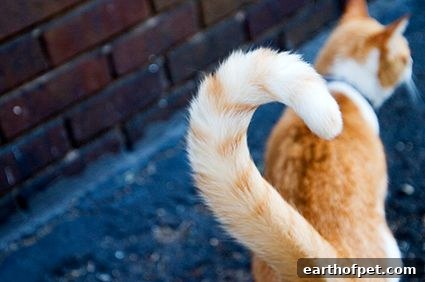
Question Mark
When the upright tail curves at the tip like a question mark, it’s typically an inviting, affectionate gesture. This tail shape often accompanies a relaxed body and soft eyes and is a common way cats say they’re pleased to see you.
Lowered Tail Position
A tail held low, near the ground, commonly signals uncertainty, fear, or a readiness to spring into action, such as when hunting or preparing to pounce. In tense situations, a low tail can also indicate that the cat may become defensive if approached. Give the cat space and observe other signals to determine whether interaction is appropriate.
Relaxed Half-Mast
A tail held level with the spine or slightly lower in a soft, relaxed “U” shape usually means the cat is calm and comfortable. This is a typical tail position for a cat walking at ease. If the tail is limp rather than tense and other body language is relaxed, the cat is likely content. However, if the cat is crouched with a half-mast tail and the face or ears look tense, the posture can indicate concern—so watch the whole body.
Tail Curled Around the Body
When a cat sits or rests with its tail wrapped around its body, the meaning depends on the context. Some cats sit this way when they feel cozy and secure; others tuck their tail around themselves when they’re unsure or not feeling well. Outdoor cats frequently tuck their tails around their bodies when resting. In many cases this position signals a desire not to be disturbed.
Tail Tucked beneath the Body
A tail tucked tightly between the hind legs indicates strong fear and submissiveness. The cat is trying to appear small and non-threatening. Don’t assume this posture means it’s safe to approach—if the cat feels trapped, it may resort to defensive aggression. Give the cat room to retreat safely.
Puffed-up Tail
When the tail hairs stand on end (piloerection), the tail looks puffed or bottle-brush-like. This response, often accompanied by arched fur along the back, makes the cat appear larger and is a classic sign of alarm or fright. Although the tail may be upright, this is not the same as an inviting upright tail—this posture communicates that the cat feels threatened.
Inverted “U” Position
An inverted “U” shape with bristled fur along the back typically signals defensive aggression. Kittens sometimes show this posture when startled or during rough play, sometimes combined with a sideways, crab-like walk. In adult cats, it’s usually a clear warning to back off.
Quivering Tail
A quivering tail often signals excitement or anticipation. Cats may quiver when they expect food, when greeting a favored person, or when scent-marking by backing up to an object and vibrating the tail before spraying. This movement can reflect strong, focused arousal rather than calm contentment.
Tail Lashing
Rapid, forceful tail lashing—whipping back and forth—is a visible sign of agitation. If you ignore this warning, aggression or a defensive reaction may follow. Respect the signal and give the cat space until the tail calms down.
Tail Twitching
Short, focused twitches at the tail tip often appear when a cat is intently watching prey, a bird at the window, or a toy. This twitching reflects concentration and readiness to pounce, and you’ll frequently see it during play or hunting behavior.
Tail Twining/Wrapping
When cats twine their tails together while walking or drape a tail across a companion or a human, they’re showing affection and social bonding. A cat that gently wraps its tail over you or another cat is offering a form of tactile closeness—think of it as a feline hug.
Changing Tail Positions
Pay attention to sudden shifts in tail posture paired with other body signals. For example, a cat may enjoy head and neck pets, but if you stroke toward the spine and the tail suddenly lashes, the experience has become overstimulating or uncomfortable. Noticing these changes helps you respect boundaries and reinforces trust.
In short, a cat’s tail is a powerful communication tool. By observing tail positions along with overall body language and context, you can better understand your cat’s needs, reduce stress, and strengthen your relationship.