Patient Condition and History
Max is a 5‑year‑old neutered male indoor Himalayan cross cat who presented to the Emergency Veterinary Hospital in Rapid City, SD, after his owner observed excessive vocalization, repeated licking of the hindquarters, and an inability to urinate. On physical examination and diagnostic evaluation he was diagnosed with a urethral obstruction, an acute urinary blockage that prevents normal urine flow.
Feline urethral obstruction is a common emergency in male indoor cats. While uroliths (urinary stones) can cause an obstruction, most cases result from a urethral plug composed of crystals, cellular debris, and inflammatory material, frequently associated with feline idiopathic cystitis (FIC). When left untreated, urethral obstruction can rapidly progress to life‑threatening complications including severe pain, dehydration, electrolyte disturbances, and kidney dysfunction.
At presentation, Max was painful, stressed, mildly dehydrated, and azotemic (elevated blood concentrations of metabolic waste secondary to reduced kidney function). He was sedated and anesthetized for urethral catheterization to relieve the blockage. After successful catheterization, he was hospitalized for 48 hours for intensive monitoring and supportive care. During his stay a PetPace collar was placed to continuously monitor vital signs, heart rate variability (HRV), respiration, and activity, supplementing standard clinical observation.
For the first 36 hours the urinary catheter remained in a closed collection system. After confirming the production of an adequate urine volume and appearance, clinicians removed the catheter and continued close observation for recurrence. Twelve hours after catheter removal Max had stable clinical signs and was discharged in good condition.
Monitoring Data
Continuous monitoring from the PetPace collar showed objective physiologic improvement during Max’s hospital stay. Pulse and respiratory measures trended toward normal values as his pain and obstruction were resolved, mirroring his clinical recovery over the two days of hospitalization.
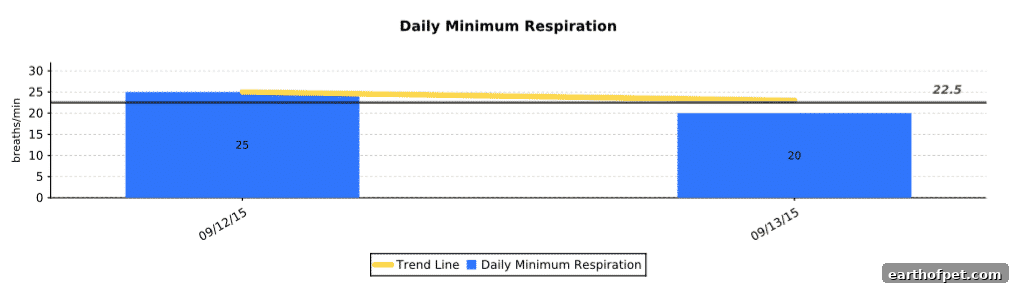
Minimum respiratory rate values improved alongside Max’s clinical recovery.
Heart rate variability (HRV), an established marker that reflects autonomic balance and can indicate pain and stress levels, also improved as the obstruction was relieved and the catheter was removed. In this case the Triangular Index — an HRV measure — showed measurable improvement from day one to day two, consistent with decreased stress and discomfort.
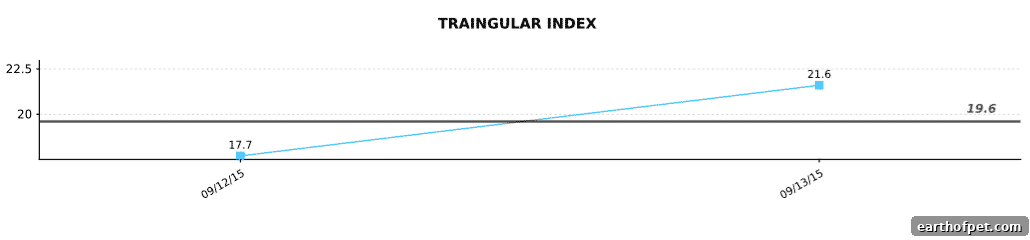
Triangular Index (HRV) indicating approximately 22% improvement from day 1 to day 2 of hospitalization.
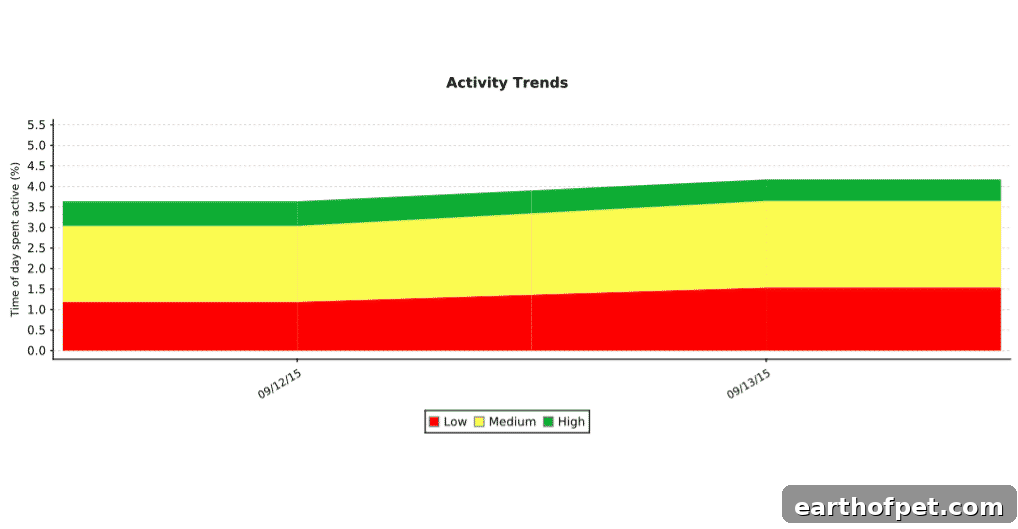
Activity data recorded by the collar also reflected clinical progress. Although Max remained in a cage for treatment, his overall activity increased modestly on the second day after catheter removal, corresponding to reduced pain and improved comfort levels.
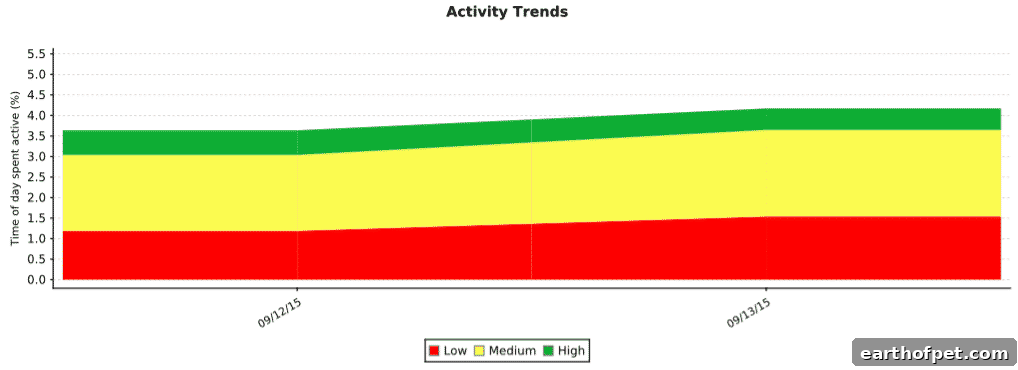
Activity chart showing mild improvement on day 2 of hospitalization.
Discussion
Urethral obstruction in cats is a frequent and urgent condition managed by veterinary emergency services. Affected cats are typically painful and stressed, and yet they require prompt, often hands‑on treatment such as catheterization, fluid therapy, analgesia, and close monitoring to ensure a favorable outcome. This clinical scenario presents a practical challenge: delivering necessary care while minimizing additional stress from handling.
In Max’s case, continuous, noninvasive monitoring with the PetPace collar provided high‑resolution physiologic data that aligned well with physical exam findings and laboratory results. Trends in pulse, respiration, HRV, and activity complemented clinical judgment and helped the veterinary team assess treatment response in real time with less frequent manual handling. These objective measures can be especially valuable in feline emergency care when cats may hide signs of deterioration or become distressed by repeated restraint.
Conclusions
This case demonstrates how continuous wearable monitoring can support the management of feline urethral obstruction. The PetPace collar delivered clinically relevant, high‑frequency data on vital signs, HRV, and activity while reducing the need for repeated handling. Integrating such monitoring into an emergency workflow can enhance patient assessment, guide treatment decisions, and potentially reduce stress for hospitalized cats during painful conditions like urethral obstruction.
Dr. Asaf Dagan, DVM, Diplomate ABVP (Canine and Feline Practice) and PetPace Chief Veterinarian, observed that vital signs, HRV, and activity together provide useful indicators of pain, stress, and overall condition during disease and recovery. When interpreted alongside clinical examination and diagnostic testing, this data offers the attending clinician a valuable tool for tracking a patient’s response to therapy in real time.
Kim Earley, Director of Administration at the Animal Clinic of Rapid City, SD, added that the clinic routinely places PetPace collars on many hospitalized patients to elevate the standard of care while minimizing stress in a busy regional emergency center.