As Easter approaches, our minds often drift to baskets full of chocolate and colorful candies—treats that are great for people but unsafe for pets. This year, celebrate the holiday by making something special for your dog: a batch of homemade Easter dog treats that are nutritious, simple to prepare, and sure to get tails wagging.
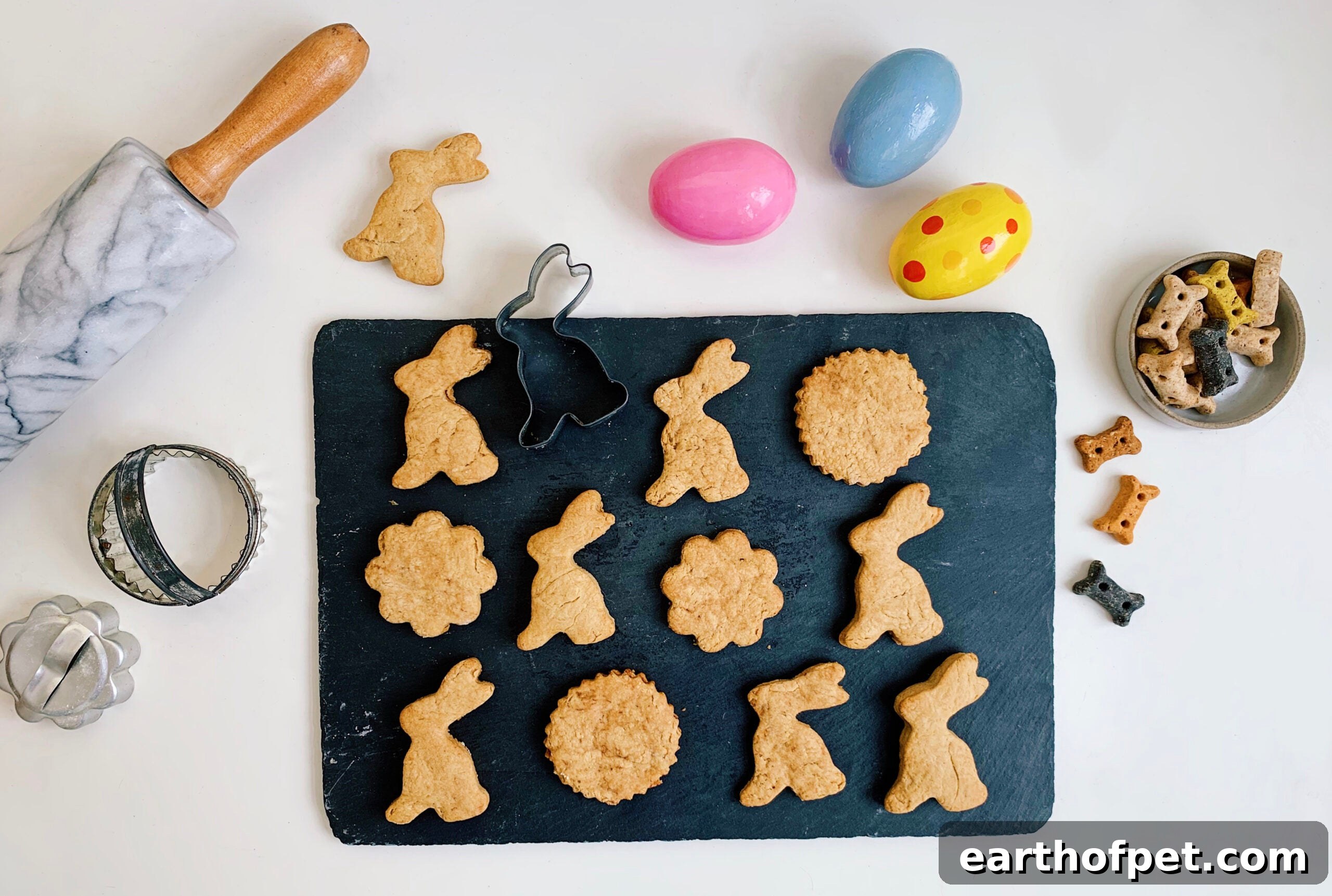
These peanut butter-based cookies use pantry staples and can be shaped into fun seasonal designs like eggs, bunnies, or simple circles. They’re ideal for pet owners who want a wholesome alternative to store-bought snacks and enjoy making a festive, dog-safe treat at home.
Homemade Easter Dog Peanut Butter Treats Recipe
Makes: 12–15 treats (depending on cutter size)
Time to Cook: Approximately 20–30 minutes, plus optional chilling time
Ingredients:
1/2 cup peanut butter (make sure it does NOT contain xylitol or other artificial sweeteners)
1 large egg
1.5 tablespoons unsweetened applesauce (or vegetable oil)
1.5 cups whole wheat flour (or all-purpose flour if your dog has a sensitivity)
1/2 teaspoon baking soda
1/2 teaspoon ground cinnamon
Optional: 1/2 ripe banana, mashed (adds sweetness and moisture)
Optional snack toppers: Wellness Old Mother Hubbard Treats — Bac’N’Cheez or P-Nuttier (use as a garnish or small crunchy topper)
Directions:
1. Preheat your oven to 350°F (175°C).
2. In a medium bowl, combine the egg, applesauce and half of the peanut butter. Beat with a hand mixer or whisk until the mixture is smooth and creamy. If you’re using mashed banana, fold it in now.
3. Gradually add the flour, baking soda and cinnamon and mix until a firm dough forms. If the dough feels too sticky or warm, cover and chill it in the refrigerator for about 20–30 minutes to make rolling easier.
4. On a lightly floured surface, roll the dough to about 1/4-inch thickness. Use seasonal cookie cutters—egg and bunny shapes are perfect—but if you don’t have cutters, a clean can or jar rim makes a great circle cutter.
5. Place the shaped cookies on a baking sheet lined with parchment paper, leaving about 2 inches between each treat. Bake for approximately 15 minutes, or until the edges are lightly golden and the centers are set.
6. Allow treats to cool completely on a wire rack—start with 5–10 minutes on the baking sheet and then move to the rack to finish cooling. Once cooled, you can spread a thin layer of peanut butter on top and press a single Wellness Old Mother Hubbard Bac’N’Cheez or P-Nuttier biscuit into each cookie for extra texture and appeal.
7. Serve one or two treats to your dog and watch the happy reaction. Always observe your dog after offering a new treat to make sure they tolerate it well.
Storage tips: Store baked treats in an airtight container at room temperature for up to one week. For longer storage, freeze the cookies in a sealed container for up to three months and thaw as needed. Thaw completely before serving.
Substitutions and dietary notes: If your dog has a grain sensitivity, substitute with a dog-safe gluten-free flour blend, but be mindful that textures and baking times may vary. Always use peanut butter that does not contain xylitol—this sweetener is toxic to dogs. If you’re unsure about any ingredient or if your dog has food allergies, check with your veterinarian before serving new treats.
Serving and safety: Treats should make up no more than 10% of your dog’s daily caloric intake to maintain nutritional balance. Break larger cookies into smaller pieces for small dogs or to use as training rewards. Never feed your dog chocolate, grapes, raisins, macadamia nuts, or anything containing xylitol.
Finish the celebration with quality time: After the treats, give your dog some extra one-on-one attention—play a game of fetch, enjoy a longer walk, or offer a grooming session followed by cuddles. Combining healthy homemade treats with exercise and affection makes for a truly special Easter your dog will remember.
Please note: Keep treats to approximately 10% of your dog’s daily food intake and consult your veterinarian for personalized dietary advice if your dog has health conditions or known allergies.