Patient Condition and History
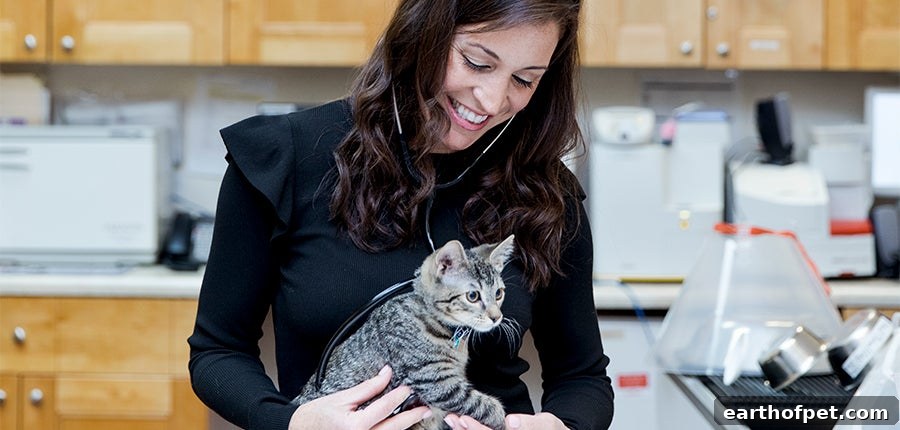
Mya is a 14-year-old spayed female domestic shorthair cat, weighing 13 lb, who lives exclusively indoors and had no previously known health issues. Her owner, Carol Pipher—a veterinary technician at Southern Tier Veterinary Associates in Vestal, NY—placed a PetPace collar on Mya as part of routine health screening. The collar continuously monitors physiologic metrics and sent readings that prompted further investigation.
Monitoring Data and Medical Exam
The PetPace collar recorded elevated heart rate values that concerned Carol: an average pulse of 182 beats per minute, a maximum of 231, and a minimum of 130. The device also reported a low heart rate variability score (VVTI – 8.2). Based on these abnormal trends, Carol brought Mya to the veterinary hospital for an examination.
On physical examination, Mya appeared clinically unremarkable, but blood tests revealed two notable abnormalities commonly associated with feline hyperthyroidism: a markedly elevated total T4 of 12.4 µg/dL (normal range 0.8–4.7) and a mildly increased red blood cell count (RBC 11.6; normal range 7.12–11.4). No other clinical signs or laboratory abnormalities were detected at that time.
Mya was started on oral medication to control her thyroid hormone levels. After treatment, a 24-hour follow-up recording with the PetPace collar three months later demonstrated measurable improvement across monitored parameters: average pulse values fell by roughly 20% (average 141; max 208; min 103) and heart rate variability improved by about 13% (VVTI – 9.3), reflecting a positive physiologic response to therapy.
ELEVATED PULSE INDEXES IN A CAT WITH OCCULT HYPERTHYROIDISM.
SIGNIFICANT DECREASES IN PULSE INDEXES FOLLOWING MEDICAL TREATMENT FOR HYPERTHYROIDISM.
Discussion
Hyperthyroidism in cats results from excessive production of thyroid hormones by the thyroid gland and is a relatively common condition in older cats. Because thyroid hormones influence metabolism and many bodily functions, the disease can affect multiple organ systems and present with a wide range of clinical signs. It often progresses gradually, and by the time clear symptoms such as weight loss or organ dysfunction appear, the disease may already be advanced. That delayed recognition can complicate treatment and worsen outcomes.
In this case, continuous monitoring with the PetPace collar identified abnormal cardiorespiratory trends in an otherwise apparently healthy cat. Those early warnings led to veterinary evaluation, diagnostic testing, and prompt treatment before advanced complications developed. Mya’s response to medication—documented both by laboratory values and by improved collar metrics—demonstrates how early detection and intervention can lead to good clinical outcomes in chronic conditions like hyperthyroidism.
Conclusions
The PetPace collar can serve as an early alert system by identifying deviations from an individual pet’s normal physiologic patterns. By flagging non-specific but meaningful changes—such as sustained elevations in pulse or shifts in heart rate variability—the device can encourage owners to seek veterinary care sooner, enabling timely diagnosis and treatment before major complications arise.
Many chronic diseases in pets, including hyperthyroidism, progress slowly and may produce only subtle or intermittent signs that are easy to miss. Continuous, trend-based monitoring and the analytics provided by smart collars can help detect those subtle changes earlier than periodic in-clinic checks alone. In Mya’s situation, collar data directly prompted a thorough veterinary exam and led to a diagnosis and effective management of a potentially serious condition.
Dr. Cari Bowlin, Medical Director at Southern Tier Veterinary Associates, commented: “The data provided by the PetPace collar was what prompted us to thoroughly examine a presumably healthy cat. It enabled a timely diagnosis of a serious disease and turned my staff into believers in this innovative technology.”
Dr. Asaf Dagan, DVM, Diplomate ABVP (Canine and Feline Practice) and PetPace’s Chief Veterinarian, added: “The PetPace collar enables clinics to run routine periodic screening of their clients, for example as part of an annual work-up. This can be invaluable in early detection of chronic diseases and—as exemplified in this case—can dramatically improve pet health.”