Moli, a 4-year-old dog in good overall health, was struck by a car after running onto the road. The PetPace 2.0 smart collar she wears captured clear evidence of pain, stress, and her recovery over the following days.
Moli is a four-year-old spayed female Siberian Husky mix who was healthy and active before a collision with a car on the evening of November 11, 2023. She sustained superficial scrapes and bruising on her left hind leg and inner thigh. Veterinary care included antibiotics, pain medication, and an Elizabethan collar to prevent further irritation while the wounds healed.
The PetPace Health 2.0 smart collar Moli wears continuously recorded multiple biometric changes in the hours and days after the accident, providing objective data that complemented the clinical exam and treatment.
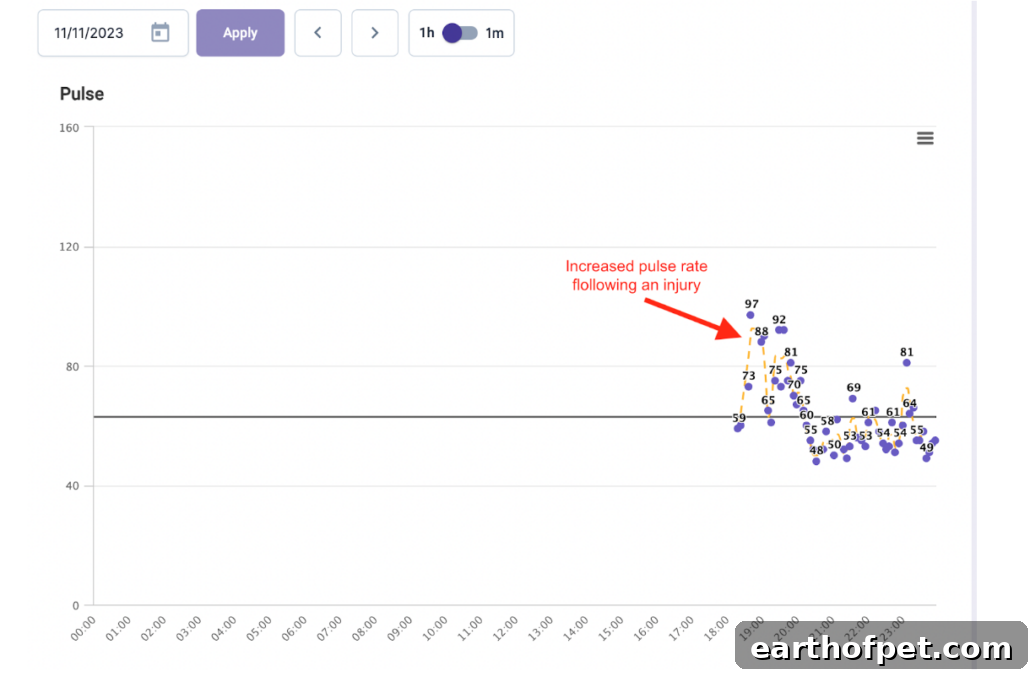
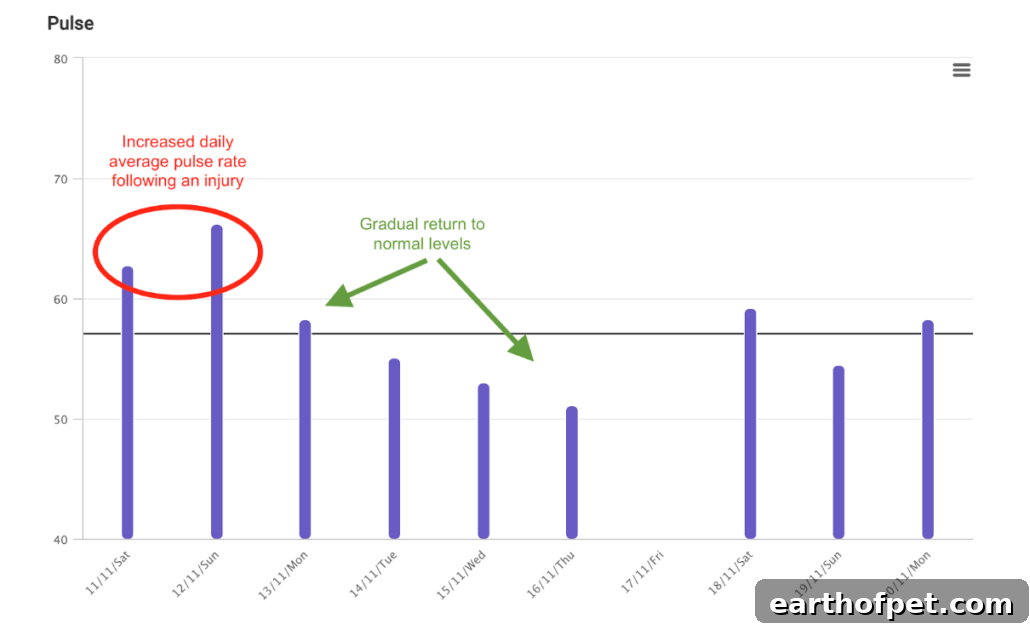
- Heart (pulse) rate: Immediately following the injury, Moli’s pulse rose sharply from a typical baseline of about 59 beats per minute to over 90 bpm in the hours after the event (see Chart 1). The daily average pulse was elevated to about 66 bpm the following day. With treatment and clinical improvement the collar showed a steady decline in average daily pulse back toward baseline over subsequent days (see Chart 2).
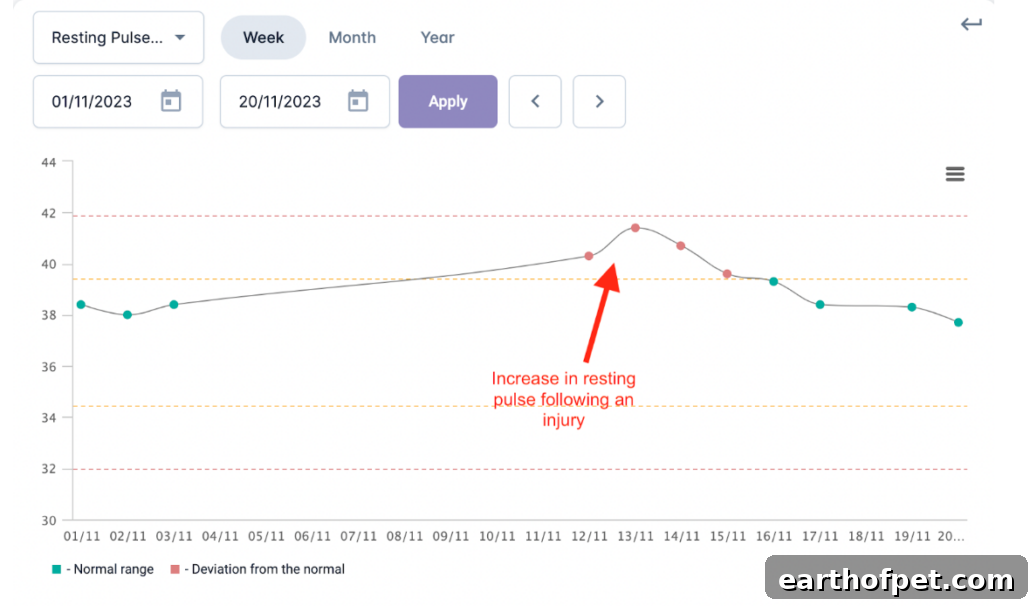
- Resting pulse: The collar’s resting pulse metric, which isolates heart rate during deep rest, also increased markedly and triggered a red flag in the PetPace Biometric Profile (see Chart 3). Elevated resting pulse is an important sign of physiological stress or pain even when the animal is otherwise still.
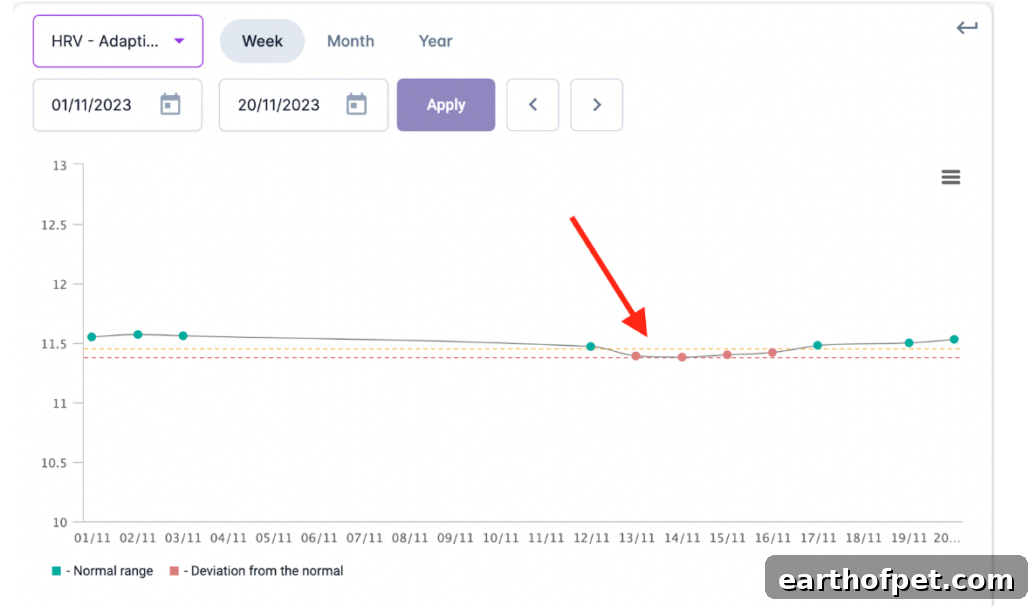
- Heart rate variability (HRV): HRV, a widely used marker of stress and pain, dropped significantly following the injury and produced a red flag in the Biometric Profile (see Chart 4). As Moli received care and began to recover, HRV rose back toward baseline.
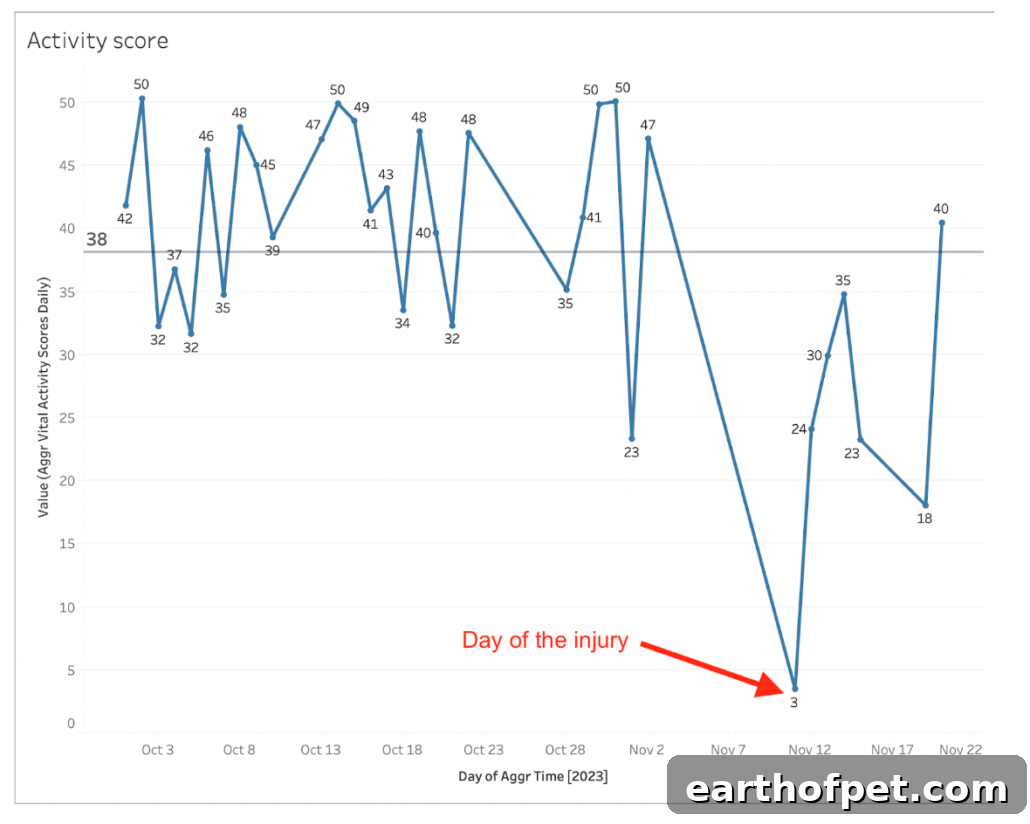
- Activity level: Moli’s activity score fell for several days after the accident before steadily returning to her normal activity range, consistent with post-injury rest and healing (see Chart 5).
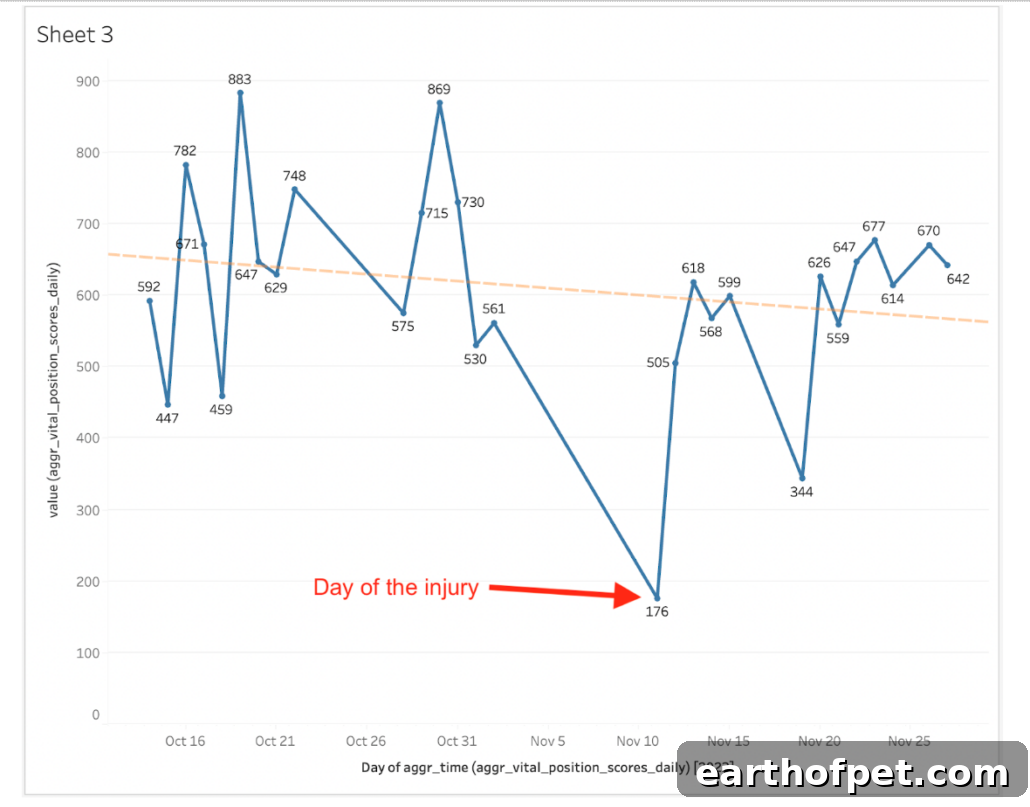
- Posture score: The collar also recorded a decrease in posture score—the frequency of posture changes—over several days following the injury before it returned to normal. Reduced posture changes often reflect discomfort or guarded movement during recovery (see Chart 6).
Over the course of a few days following treatment, Moli’s clinical signs improved and she returned to her typical behavior and activity. The PetPace collar’s continuous monitoring documented both the acute physiological response to trauma and the subsequent stepwise improvement that matched the veterinary assessment.
“This case underscores the accuracy and value of the PetPace collar in detecting health issues quickly, followed by tracking treatment efficacy and eventual recovery and return to normal levels,”
said Dr. Asaf Dagan, DVM, DABVP, PetPace Chief Veterinary Scientist.
Moli’s owner, Ayelet Ben‑Zvi, described how the data helped in the immediate aftermath:
“Seeing Moli’s vitals helped us monitor her condition in the hours after the injury, making sure she was not in a life‑threatening situation, and then gave us peace of mind as we watched her recovery progress as expected.”
About PetPace
PetPace develops wearable health technology designed to help pets live longer, healthier lives. Founded in 2012 by a team of veterinarians, engineers, IoT specialists, data scientists, and pet owners, the company focuses on continuous monitoring devices and analytics that detect early signs of illness, measure pain and stress, and track recovery. PetPace collaborates with universities and research institutes worldwide to validate and improve its algorithms and hardware so pet owners and veterinarians can make faster, better-informed decisions about care.
This case with Moli illustrates how continuous biometric monitoring—heart rate, resting pulse, HRV, activity, and posture—can provide timely, objective insight into a pet’s condition after an acute incident. That information can help guide treatment decisions, confirm clinical improvement, and offer owners reassurance during recovery.