Cat Weight Management
Your cat looks perfect as they are, right? Maybe. Or maybe your cat is overweight and you've just gotten used to what an overweight cat looks like. According to veterinary associations, over 60% of US cats are overweight or obese. That's not normal — it's an epidemic.
The dangerous thing about an overweight cat is that the weight doesn't just make them less active. It causes disease. Overweight cats have higher rates of diabetes, arthritis, heart disease, and cancer. An overweight cat might live 5-10 fewer years than a lean cat. From a quality-of-life perspective, weight management is one of the most impactful things you can address.
Assessing Your Cat's Body Condition
Your vet uses a body condition score (BCS) from 1-9, where 5 is ideal.
Ideal body condition (BCS 5):
- Ribs are easily felt with gentle pressure but not visibly prominent
- Waist is visible when viewed from above
- Belly is relatively tucked, not hanging
- Cat moves with agility and ease
- Healthy energy level
Overweight (BCS 6-7):
- Ribs are harder to feel under fat
- Minimal waist visible from above
- Belly may hang slightly
- Some difficulty moving; reluctance to play
- May pant with activity
Obese (BCS 8-9): Ribs can't be felt through fat, No visible waist from above, Significant belly overhang, Difficulty moving, grooming, or playing, Visible struggle with activity, and May have breathing difficulty.
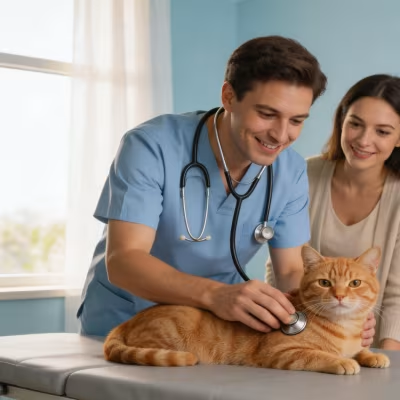
If you're unsure, your vet can officially assess body condition and provide specific weight goals.
Why Cats Gain Weight: It's Not Just Overeating
Yes, overeating contributes, but it's more complex than that.
Indoor lifestyle: Outdoor cats naturally hunt, climb, and roam. Indoor cats have unlimited food with minimal activity. This mismatch is a major factor.
Free-feeding: Leaving food out constantly encourages overeating. Cats aren't naturally designed to self-regulate when food is always available.
High-carbohydrate diets: Many dry kibbles are very high in carbohydrates (35-50% dry matter). Cats evolved eating low-carb, high-protein diets. High-carb diets can disrupt metabolism and encourage weight gain.
Age-related metabolism: Cats' metabolic rate decreases with age. A diet that was appropriate for a 3-year-old is too much for a 10-year-old.
Medical conditions: Hypothyroidism (rare in cats but possible) and other conditions can slow metabolism.
Genetics: Some cats are naturally larger or have slower metabolisms. This doesn't mean weight loss is impossible, but the approach may need adjustment.
The Weight Loss Plan: How to Help Your Cat Safely
Weight loss requires patience. A cat losing more than 2-3% of body weight per week can develop hepatic lipidosis (fatty liver disease). Safe, slow weight loss is crucial.
Step 1: Get a baseline and goal weight Your vet will weigh your cat and suggest an ideal weight. If your cat is 16 pounds and ideally should be 11 pounds, that's your target.
Step 2: Reduce calories, not protein Cats need adequate protein. Instead of cutting protein (which makes them hungry and loses muscle), increase moisture content and reduce carbohydrates. Switch from all-kibble to a mixture of wet and dry food. Wet food is naturally lower in calories per volume because of water content.
Step 3: Measure portions carefully Use a measuring cup. Don't estimate. Weigh your cat weekly or every two weeks to monitor progress.
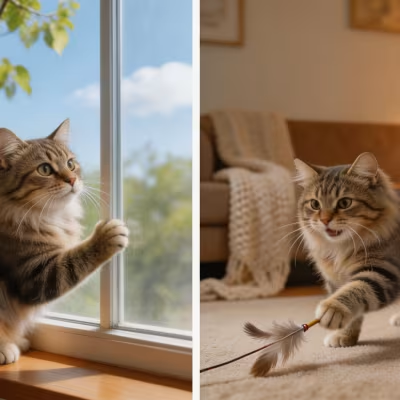
Step 4: Increase play and exercise Encourage activity through play. Wand toys, lasers (used responsibly), and feather toys engage cats' hunting instinct. Multiple 10-15 minute play sessions daily are ideal. Some cats will use a cat wheel or exercise on a cat tree.
Step 5: Consider meal feeding instead of free-feeding Remove uneaten food after 20-30 minutes. This gives you control over intake and more closely mimics natural feeding patterns.
Step 6: Be patient Expect 1-2 pounds of weight loss per month. For a 16-pound cat going to 11 pounds, that's a 5-6 month process. It's slow, but it's safer.
Special Situations
Multi-cat households: If you have both overweight and normal-weight cats, separate them during feeding. Feed the overweight cat a lower-calorie diet while others get their normal food. This requires management but is essential.
Cats demanding food constantly: Some cats are food-motivated and vocal. They'll demand food constantly, even if not hungry. Don't cave to demands — this reinforces the behavior. Set feeding times and stick to them. Your cat will adjust.
Cats with treated medical conditions: If your cat recently was treated for hyperthyroidism or other conditions that affected weight, discuss with your vet how this changes their caloric needs.
The Prescription Diet Question
Prescription weight loss diets exist and can be very effective. They're high in protein, lower in carbohydrates, and formulated to support satiety while reducing calories. If regular diet adjustment isn't working, ask your vet about prescription options.
What Not to Do
Don't drastically cut calories overnight: Sudden changes cause digestive upset and can trigger hepatic lipidosis. Gradual change is essential.
Don't switch diets excessively: While variety can be nice, too-frequent switches disrupt digestion. Find a good diet and stick with it during weight loss.
Don't use diet treats instead of regular food: "Diet" treats are often just lower-calorie versions of regular treats. If weight loss is the goal, reduce all treats and use small amounts of regular food as treats instead.
Don't expect rapid weight loss: Your cat didn't gain weight overnight and won't lose it overnight. Patience is crucial.
Maintenance After Weight Loss
Once your cat reaches their ideal weight, you'll need to adjust portions to maintain rather than continue losing. Your vet can guide this. Many cats regain weight without dietary adjustments, so ongoing monitoring is important.
FAQ
How long will weight loss take? It depends on how much weight your cat needs to lose and how much caloric reduction you achieve. Expect 1-2 pounds per month, which means a 5-pound loss may take 2.5-5 months.
What if my cat won't eat wet food? Gradually introduce it. Mix a small amount of wet food with dry food, increasing the proportion over days or weeks. Warming wet food slightly can increase palatability.
My cat eats very fast. Does this mean they're hungry? Not necessarily. Many cats eat quickly regardless of hunger level. Slowing eating with slow-feeder bowls can help portion control.
Can I just give my cat less of their current food? Yes, if the current food is nutritionally balanced. Just be sure you're not undercutting critical nutrients. A vet can review your plan.
My cat has medical conditions. Can they still lose weight? Usually yes, but requires careful management. Work closely with your vet on a plan that addresses both the chronic condition and weight loss.
Is it true that neutered cats are more prone to weight gain? Neutering does reduce metabolic rate by about 25%. This means portion sizes need adjustment after spaying/neutering. But weight gain is preventable through appropriate feeding.
What role does exercise play in weight loss? Exercise matters for maintaining muscle mass and overall health, but weight loss is primarily driven by caloric intake. You can't exercise away bad nutrition.



0 Comments
No comments yet. Be the first to share your thoughts!
Leave a Comment