Cat Nutrition Guide: What to Feed Your Cat for Optimal Health
Here's a fact that might surprise you: your cat is a carnivore in a way that dogs simply aren't. A dog can technically survive on a vegetarian diet (though it's not ideal). Your cat cannot. Cats are obligate carnivores, meaning their bodies are designed by evolution to get nutrition from meat, not plants.
Yet many commercial cat foods are packed with grains, corn, and other plant-based fillers. This mismatch between what cats are designed to eat and what many are actually eating is at the root of numerous health problems plaguing the modern domestic cat.
What Makes a Cat a True Carnivore
Unlike omnivores (which can derive nutrition from plants and animals), cats have specific physiological requirements:
Taurine: Cats cannot synthesize taurine and must get it from their diet. Taurine is essential for heart function, vision, and reproduction. Deficiency leads to serious health problems. Plant-based foods lack taurine, which is why cats fed inadequate diets develop heart disease and blindness.
Arginine: Another amino acid cats need from dietary sources.
Vitamin A: Cats can't convert beta-carotene from plants to active vitamin A. They need preformed vitamin A from animal sources.
Arachidonic acid: A fatty acid essential for cats that comes exclusively from animal fat.
Higher protein requirements: Cats need more dietary protein than many other mammals. Most cats do well on diets containing 30-40% protein (dry matter basis).
Lower carbohydrate tolerance: Cats' digestive systems evolved to process meat, not grains. High-carbohydrate diets can contribute to obesity and diabetes.
These aren't preferences — they're biological necessities. A cat eating a grain-heavy diet might survive, but they're not doing well.
Wet vs. Dry Food: The Great Debate
Both can be appropriate, but they have important differences.
Wet food advantages:
- Higher moisture content, supporting kidney health
- Often higher protein content
- More closely mimics natural prey (high moisture)
- Can be easier for cats with dental issues
Wet food disadvantages:
- More expensive per unit
- Spoils quickly once opened
- Requires more frequent feeding to prevent spoilage
- Some cats with certain conditions (like lower urinary tract disease) may benefit from dry food
Dry food advantages: Convenient and economical, Stores easily, Mechanical action may support some dental health (though this is debated), and Some cats prefer it.
Dry food disadvantages:
- Much lower moisture content
- Often higher in carbohydrates and fillers
- May contribute to dehydration and kidney stress
- Less closely mimics natural diet
The best approach for most cats: A combination of wet and dry food. Many cats do well on primarily wet food with some dry food for convenience, or vice versa. The key is quality regardless of format.
Reading Labels: What Actually Matters
The ingredient list tells you whether a food is appropriate for a cat.
Look for:
- Meat as the first ingredient (chicken, turkey, beef, fish, etc., not "meat meal" or "meat by-products")
- Named meat sources (chicken is specific; "poultry" is vague)
- Multiple meat sources providing variety
- Taurine in the ingredient list
- Minimal grains, corn, or wheat
- No artificial colors, flavors, or preservatives
Be wary of:
- Vague ingredients like "meat meal" or "poultry by-products"
- Foods where corn, wheat, or soy appear in the first few ingredients
- Excessive fillers
- Low-quality protein sources
Don't get fooled by marketing:
- "Natural" is meaningless and unregulated
- "Grain-free" doesn't automatically mean healthy (some substituted legumes with similar carbohydrate profiles)
- "Whole" is marketing, not a definition
- "Premium" is not defined by regulatory bodies
Life Stage Nutrition
Nutritional needs change throughout your cat's life.
Kittens: Kittens need more calories, protein, and specific nutrients to support growth. They should eat kitten-formulated food until age one. Their higher metabolic demands mean they eat more frequently — typically 3-4 times daily for young kittens, tapering to twice daily by 6 months.
Adult cats (1-10 years): Adults need appropriate protein and balanced nutrition to maintain health. Most do well on twice-daily feeding with appropriate portion sizes.
Senior cats (10+ years): Senior cats have changing needs. Some become less able to digest certain proteins or fats. They may benefit from higher-quality, more digestible proteins. Some seniors lose appetite and benefit from more palatable, often wet-based diets. Work with your vet on senior nutrition.
Special Dietary Considerations
Cats with diabetes: Low-carbohydrate, high-protein diets support healthy blood sugar. Many diabetic cats can be managed or even reversed with diet alone if caught early.
Cats with kidney disease: Kidney disease cats have complex nutritional needs. This requires vet consultation, as high protein (generally good for cats) can stress failing kidneys. Your vet may recommend specific prescription diets.
Cats with digestive sensitivities: Some cats have allergies or intolerances. Elimination diets can identify culprits. Common triggers include grains, certain proteins, or additives.
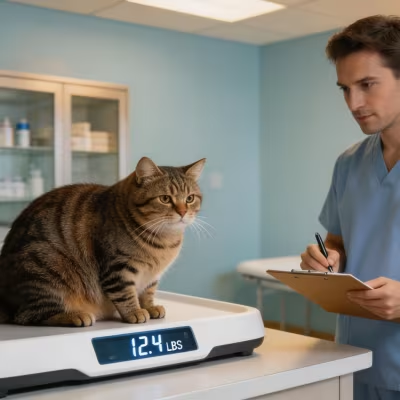
Overweight cats: Weight loss requires reduced calories, but not by cutting protein (cats need protein). Instead, increase moisture content and reduce carbohydrates. Work with your vet on a safe weight loss plan.
Portion Control and Feeding Methods
This is where many cat owners go wrong. Cats aren't designed to self-regulate food intake the way we might hope. They will overeat if given unlimited access, contributing to the obesity epidemic.
Measure portions: Use a measuring cup and follow guidelines based on your cat's weight and activity level. Your vet can provide specific recommendations.
Consider meal feeding vs. free-feeding: Free-feeding (leaving food out all day) makes portion control impossible. Meal feeding (offering food at set times, removing uneaten food after 20-30 minutes) gives you better control.
Don't assume fresh food needs: Cats don't need continuous access to fresh food. In nature, they'd eat a kill over several hours or even a day, then fast until the next hunt. Scheduled feeding is fine and actually more natural.
Account for treats: Treats should be no more than 10% of daily calories. If your cat eats treats, reduce their regular food portion accordingly.
Transitioning to a New Diet
Change food gradually to avoid digestive upset.
Mix the new food with the old, slowly increasing the proportion of new food over 7-10 days. Some cats are pickier than others and need slower transitions.
If your cat refuses a food change, don't force it immediately. Try mixing even more of the old food with new, or ask your vet for alternatives.
The Cost Question
Premium quality food costs more than budget brands. But consider it an investment in health. Cats fed lower-quality diets may develop obesity, diabetes, and kidney disease — all expensive to manage. The upfront cost of better nutrition is often offset by reduced vet bills down the line.
FAQ
Can cats be vegetarian? No. Cats can't synthesize taurine and will develop serious health problems on a vegetarian diet. They need meat.
Is grain-free always better? Grain-free isn't inherently superior to foods with whole grains. What matters is the overall quality and whether meat is the primary ingredient. Some grain-free foods use high-carbohydrate legumes instead, which isn't necessarily better.
How much should I feed my cat? This depends on age, weight, activity level, and metabolism. Feeding guidelines on packages are often too generous. Your vet can recommend appropriate portions.
My cat will only eat dry food. Is that okay? Cats can survive on dry food, but they may not drink enough water to fully compensate for the moisture loss. Supplementing with wet food or using a cat water fountain can help. Discuss with your vet.
Should I give my cat supplements? Most quality complete diets don't require supplements. However, fish oil (for omega-3 fatty acids) or joint supplements for senior cats can be beneficial. Consult your vet before adding anything.
How often should I switch foods? There's no requirement to switch foods frequently. Some people rotate foods for variety, while others keep cats on one food long-term. Both approaches work if the food is quality. If you do rotate, do so gradually.
Are prescription diets really necessary? For cats with specific health conditions (kidney disease, diabetes, digestive issues), prescription diets are formulated to address those conditions. Regular food won't provide the same support.



0 Comments
No comments yet. Be the first to share your thoughts!
Leave a Comment