How Often Should You Take Your Cat to the Vet?
A question that comes up constantly among cat owners mistakes cat owners make is skipping routine vet visits because their cat "seems fine." In a species that's exceptionally good at hiding illness, this is particularly risky. By the time your cat shows obvious signs of being sick, the problem may have progressed significantly.
The answer to how often your cat needs a vet visit isn't one-size-fits-all. It depends on age, health status, and individual risk factors. Let's break it down.
Kittens (0-1 Year): Frequent Visits Are Essential
Kittens need the most frequent vet visits of any life stage.
Typical kitten schedule:
- Initial visit around 6-8 weeks
- Follow-up visits every 3-4 weeks until 16 weeks of age (for vaccination series)
- Spay/neuter consultation and surgery (typically 4-6 months)
This may seem like a lot, but it's critical. Kittens need: Vaccination series with proper spacing, Parasite screening and treatment, Growth monitoring, Behavioral guidance, and Pre-spay/neuter exam.
By one year, your kitten should have completed their initial vaccination series and been spayed or neutered.
Adult Cats (1-10 Years): Annual Minimum, Ideally Twice Yearly
Healthy adult cats should see a vet at least once yearly. Twice yearly is ideal but not always realistic for every owner.
What happens at an annual exam:
- Full physical exam
- Discussion of any behavioral or health concerns
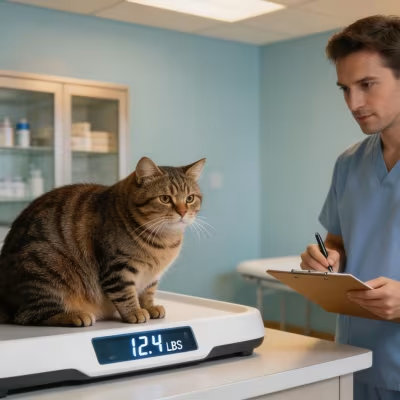
- Assessment of weight and body condition
- Oral exam (checking for dental disease)
- Vaccination status review
- Discussion of prevention (parasite, dental, etc.)
Why twice yearly is better than once: A lot can change in a year. For a species with a shorter lifespan than humans, a year is significant. Twice-yearly exams, especially after age 7, catch problems earlier.
Senior Cats (10+ Years): Twice Yearly to Every Three Months
Senior cats have more health issues and need more frequent monitoring.
Twice yearly (minimum): For generally healthy senior cats, this is the standard recommendation.
Three to four times yearly: For senior cats with chronic conditions (diabetes, kidney disease, hyperthyroidism, etc.), more frequent monitoring is beneficial.
Blood and urine work: Senior cats benefit from blood panels (chemistry and CBC) and urinalysis annually or twice yearly. This catches early kidney disease, diabetes, and other conditions before they cause problems.
Cats with Chronic Conditions: More Frequent Than You'd Think
If your cat has a diagnosed chronic condition, they likely need more frequent vet visits than a healthy cat.
Diabetes: Cats with new diagnoses need frequent visits (every 2-4 weeks) for monitoring and insulin adjustment. Once stabilized, they may need visits every 3-6 months.
Kidney disease: Mild kidney disease may need monitoring every 6 months. Advanced disease may require visits every 3-6 weeks or closer monitoring.
Hyperthyroidism: Newly diagnosed cats need visits every 4-8 weeks while medication is being adjusted. Once stable, maybe every 6 months.
Heart disease: Cats with heart disease may need multiple visits yearly depending on severity.
The frequency depends on the specific condition and how well it's controlled. Your vet will guide you.
Sick Cats: Don't Delay
If your cat is showing signs of illness, don't wait for a scheduled annual exam. Call your vet and get an appointment.
Many conditions are more treatable when caught early. A urinary blockage, for instance, becomes life-threatening quickly. Vomiting lasting more than a day warrants evaluation. Appetite changes lasting 24 hours should prompt a call.
The Financial Reality
Vet care isn't cheap. A typical annual exam costs $150-300. Adding lab work (blood, urine) adds $100-300 more. This is why pet insurance or preventive care plans exist. If cost is a barrier:
- Ask about wellness plans that bundle services at a discount
- Discuss with your vet which services are most important for your cat's specific situation
- Remember that preventive care often costs less than treating serious illness
Building a Relationship With Your Vet
The best veterinary care happens when you have an ongoing relationship with a vet who knows your cat. They know what's normal for your individual cat, notice subtle changes, and can make personalized recommendations.
If you don't have a regular vet, find one now. Look for vets who:
- Take time to discuss your concerns
- Ask detailed questions about your cat's lifestyle and health
- Explain their reasoning for recommendations
- Respect your input
- Seem to genuinely like cats
A good vet partnership is invaluable.
When to Go to an Emergency Vet Instead of Waiting
Some conditions warrant emergency evaluation instead of waiting for a regular appointment: Inability to urinate, Severe difficulty breathing, Collapse or loss of consciousness, Uncontrolled bleeding, Severe trauma, Severe vomiting or inability to keep food down, and Extreme distress or apparent severe pain.
If it's after hours or you're not sure, call your regular vet's emergency line. They can advise whether an ER visit is necessary.
What Changes With Indoor vs. Outdoor Cats
Outdoor and indoor-outdoor cats may need more frequent vet visits due to higher disease exposure risk. If your cat has outdoor access, discuss with your vet whether more frequent visits are warranted.
Geriatric Cats (15+ Years)
Geriatric cats are a special case. These ancient felines have complex medical needs and benefit from: Twice-yearly exams minimum, Twice-yearly lab work, Pain management assessment, Quality-of-life discussions, and Possibly more frequent monitoring if multiple chronic conditions exist.
The Bottom Line
The cat owner who brings their healthy adult cat in once yearly is doing better than someone who never goes. But twice yearly is ideal. Senior cats absolutely need twice-yearly visits. Cats with chronic conditions need more frequent monitoring based on their specific situation.
Don't skip vet visits because your cat seems fine. Schedule them before you notice problems. Preventive care is the best investment you can make in your cat's health.
FAQ
Can I skip my cat's annual exam because they look healthy? No. Cats hide illness. By the time they look sick, they may have been struggling for weeks or months. Annual exams catch problems early.
Does my indoor-only cat need annual vet visits? Yes. Indoor cats still develop disease, dental problems, obesity, and other conditions. Annual wellness exams are appropriate for all cats.
How much does a typical vet visit cost? An annual wellness exam typically costs $150-300. Adding lab work adds more. Ask your vet for pricing and discuss options if cost is a concern.
What if I can't afford to bring my cat in twice yearly? Annual exams are much better than none. If cost is the issue, many vets offer payment plans or wellness packages that reduce per-visit cost.
Can I do wellness exams less frequently if my cat is very young? Once cats are past the kitten stage, annual visits are standard. There's no benefit to waiting longer.
Should senior cats on medications see a vet more often? Yes. Cats on medications (for diabetes, thyroid issues, heart disease, etc.) need more frequent monitoring to ensure the medication is working and to adjust dosing as needed.



0 Comments
No comments yet. Be the first to share your thoughts!
Leave a Comment