Pet Acoustics Study Finds Species-Specific Music Reduces Feline Stress
NEW YORK, March 30, 2021 /PRNewswire/ — There are more than 95 million cats living in households across the United States. Feline behavioral stress is often triggered by their acute sensitivity to sounds: cats hear from roughly 40 Hz up to about 85,000 Hz, which is more than three times the upper range of human hearing. To address stress related to this heightened auditory sensitivity, Janet Marlow, a sound behaviorist and the founder of Pet Acoustics, developed science-based music tailored to the feline auditory range. Pet Acoustics has offered calming music for cats since 1997, and the company reports repeatable, observable benefits when the music is used thoughtfully.
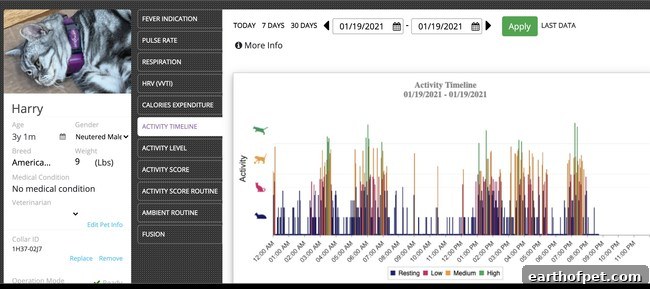
Pet Acoustics Inc., an award-winning provider of species-specific music, recently initiated a clinical study to measure how its feline-focused music affects cats’ physiological and behavioral states. Conducted over three months, the study compared periods with no music to periods when the Pet Acoustics feline calming music was played. Researchers monitored biometric and behavioral data continuously to determine whether the music produced measurable calming effects.
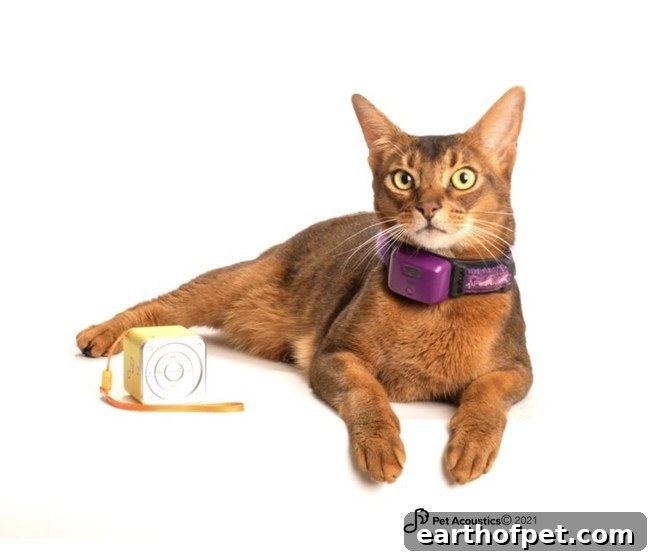
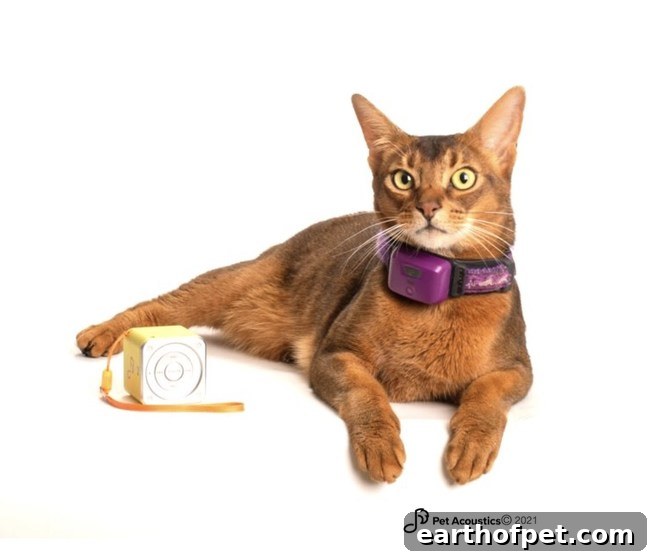
Each cat in the study wore a Petpace smart collar equipped with multiple sensors to track vital signs and activity in real time. The study recorded pulse rate, activity levels and heart rate variability (HRV), among other markers. Music was broadcast from a portable Pet Acoustics Pet Tunes speaker while the contemporaneous biometric data were sent to a cloud-based analysis engine provided by Petpace for evaluation.
After three months of paired comparisons, results showed consistent physiological and behavioral changes when the feline music was playing. Across the sample, pulse and overall activity levels were lower with the music, while heart rate variability (HRV) increased. HRV is a widely used indicator of autonomic nervous system balance: lower HRV is associated with higher sympathetic (fight-or-flight) tone, while higher HRV reflects greater parasympathetic activity and a calmer physiological state. The study’s most pronounced effect was the increase in HRV when cats listened to the music, which supports the conclusion that the music promoted a calmer internal state.
Stress scores derived from the biometric and behavioral data were significantly lower during music exposure compared with no-music periods. These benefits were broadly consistent across the animals studied: the results did not vary significantly by sex, age, breed, neuter status or whether a cat was primarily indoor or outdoor. In short, all cats in the study responded positively to the species-specific calming music.
The practical implications of these findings are relevant for pet owners and animal care professionals. Pet Acoustics’ feline music may help reduce stress during common challenges for cats, including introducing a newly adopted cat to a home, calming a cat for veterinary visits, reducing flight responses during thunderstorms or fireworks, supporting stress management during post-surgical recovery, and easing anxiety associated with crate travel.
For more information about the Pet Acoustics study, or to request study materials, please contact the company directly by email at [email protected].
Media Contact:
Janet Marlow
[email protected]
+860.459.8000
PetAcoustics.com
P.O. Box 26 Washington Depot, CT 06794
SOURCE Pet Acoustics