
How continuous health and behavior monitoring helped researchers study how shelter environments affect cats’ stress
Entering an animal shelter is a challenging change for many cats. Stress in that setting can influence their health, behavior, and chances of adoption. While shelters strive to create supportive environments, some environmental factors—like indoor lighting—have received relatively little study under real shelter conditions. Because light influences mood, sleep cycles, and stress across species, researchers set out to understand how different lighting conditions affect cats as they acclimate to shelter life.
Study goals
The study aimed to:
- Determine how specific lighting conditions influence stress in cats during the initial days after intake.
- Track changes in comfort and behavior over the first days in a shelter environment.
- Measure daily rest and activity patterns using continuous monitoring.
- Examine how both the physical environment and elapsed time in shelter care shape the adaptation process.
Study overview
- Subjects: 101 domestic cats of both sexes.
- Location: An animal control shelter quarantine/holding room in the U.S. Midwest.
- Duration: Observations and measurements during the first five days after intake.
- Lighting conditions tested:
- Standard overhead LED lighting.
- Dim lighting.
- Dim lighting with reduced blue wavelengths, described as “orange-tone” light.
Cats were housed individually with standard enrichment, hiding areas, litter boxes, and routine care to reflect typical shelter conditions while allowing meaningful comparisons between lighting groups.
How PetPace supported the research
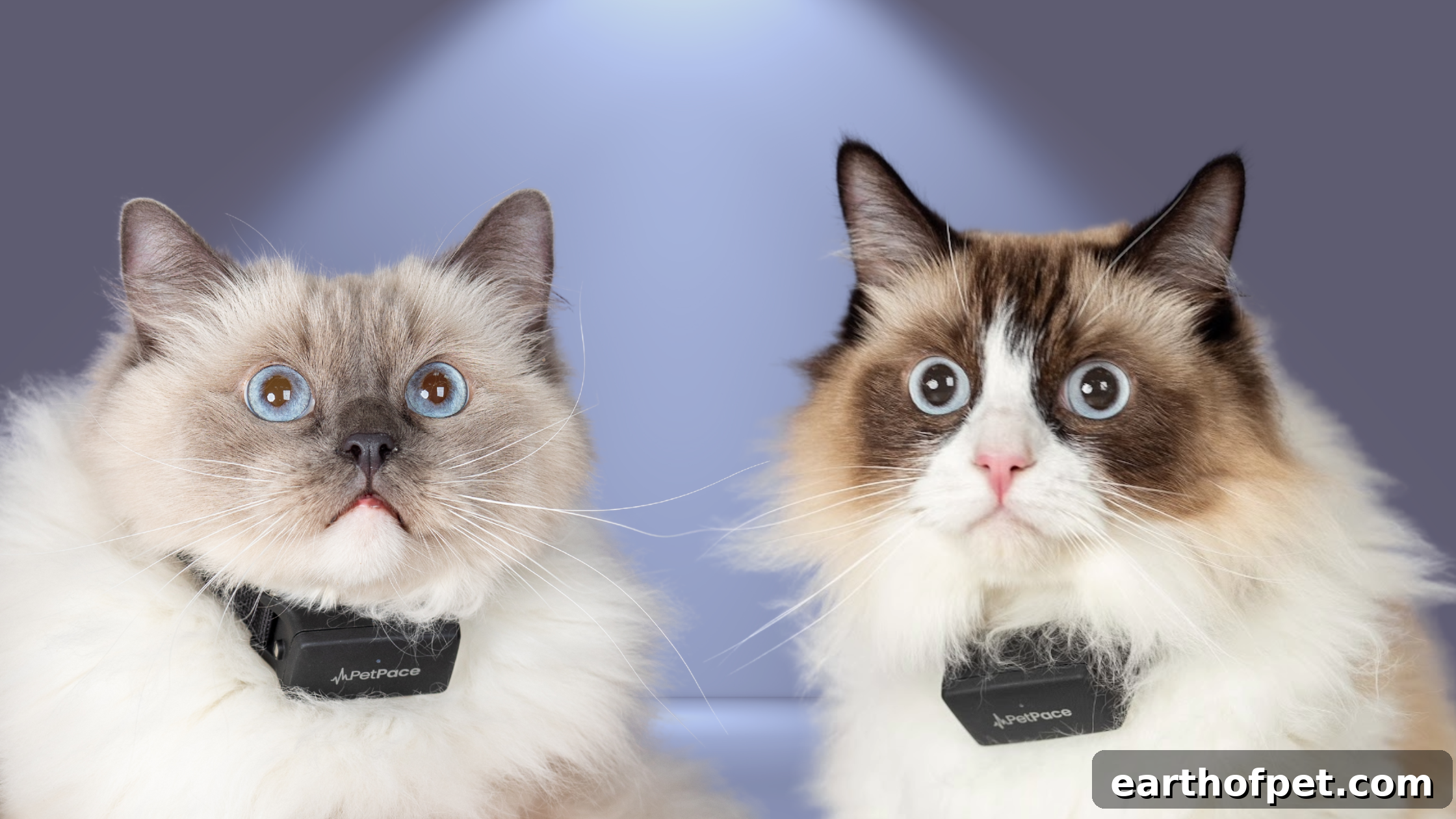
PetPace Smart Health Cat Collars provided continuous, non-invasive monitoring across the study period. Rather than relying only on brief observation windows, the collars captured round-the-clock behavioral and physiological indicators for each cat.
This continuous data allowed researchers to:
- Track activity and rest cycles throughout the day and night.
- Observe how cats’ behavior and physiological measures changed over time.
- Link specific environmental factors—such as lighting quality—with measurable stress indicators.
Key findings
1. Cats maintain clear daily patterns
Continuous monitoring showed that most cats preserved consistent daily rhythms despite being in a novel environment, with activity rising around the time lights were turned on. This pattern indicates that, provided predictable cues and routine, cats can retain structured daily behavior even when displaced from home.
2. Stress decreased as cats adjusted
Across all lighting conditions, the study found a general decline in stress over the first five days. Measured stress hormones fell while behavioral signs of stress improved, and many cats became more willing to interact with people as time progressed. These results underline the importance of allowing an adjustment period before making firm assessments of a cat’s temperament or welfare in a shelter setting.
3. Lighting conditions matter
Lighting had a measurable effect on adjustment and stress indicators. Cats housed under dim, blue-reduced (“orange”) lighting showed lower stress levels by day five compared with some other conditions. In contrast, dim lighting without blue reduction sometimes corresponded with increased hiding behavior. The findings suggest that relatively modest changes to lighting—reducing blue wavelengths while maintaining appropriate dimness and visibility—may help improve feline welfare without major facility renovations.
Why continuous monitoring was valuable
The authors emphasized several advantages of continuous wearable monitoring:
- It provides objective, continuous data rather than relying on intermittent, subjective observations.
- It enables researchers to correlate environmental characteristics with stress markers over time.
- It supports deeper analysis of how individual animals adapt across days, revealing patterns that short observations can miss.
Turning behavior into measurable, continuous metrics made it possible to identify subtle but meaningful effects of shelter conditions on feline welfare.
Implications for shelters and veterinary care
The study supports several practical applications:
- Designing shelter environments with attention to lighting quality, predictability, and comfort for cats.
- Timing enrichment, handling, and veterinary care to match animals’ adjustment trajectories and daily rhythms.
- Using wearable health monitoring in research and applied welfare programs to obtain objective data on stress and adaptation.
Overall, the work illustrates how continuous, non-invasive monitoring can enhance animal welfare research and inform improvements in shelter practices.
Looking ahead
The team began this project using PetPace cat collars acquired in 2020 and is seeking additional collars to expand similar research to dogs. Broadly applying continuous monitoring approaches could help standardize the way stress, well-being, and environmental impacts are measured in real-world animal care settings.
Read the full study: “Light quality and time in shelter modulate behavior and cortisol in the domestic cat (Felis catus).”