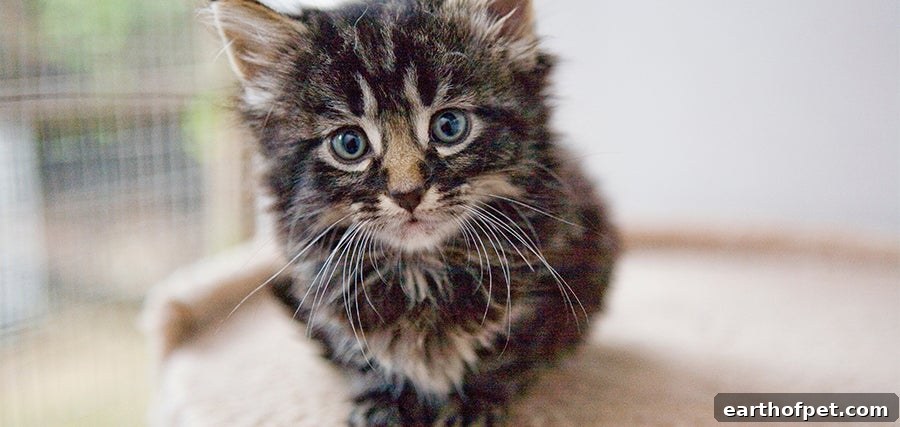
Kittens grow astonishingly fast, especially during the first weeks of life. This timeline outlines key developmental milestones so you can track their growth, understand what they need, and enjoy watching them discover the world.
Here’s what to expect:
Newborn Kittens
- Kittens arrive blind and deaf, with eyes closed and ears folded.
- They have no teeth at birth.
- By about five days, the eyes begin to open (often appearing blue at first) and the ears unfold so they can start to hear.
During this stage kittens are entirely dependent on their mother. If an orphaned kitten requires care, it needs round‑the‑clock attention, including feeding a specially formulated kitten milk replacer every two hours. Human dairy products should never be given, as they can upset a kitten’s digestion and harm its health.
Two Week Old Kitten
- Wobbly attempts to stand and take a few steps begin; kittens still stay very close to their mother and littermates.
- Soft, squeaky mews emerge as their first vocalizations.
- The first baby teeth begin to appear.
- Claw control is not yet developed; nails are not fully retractable.
Three Week Old Kitten
- Eyes and ears are more developed, though vision may still be somewhat blurry.
- Kittens become more mobile and curious; introduce safe kitten toys to encourage gentle play and socialization.
- Begin gentle handling so they become comfortable with human touch. Brushing with a very soft brush can mimic a mother’s grooming and help them acclimate to being handled.
Four Week Old Kitten
- Kittens are no longer neonatal and start to look like fluffy miniature adult cats.
- Exploration increases; supervised play helps build confidence.
- Start brief, gentle interactions with people. Very young children should observe rather than handle kittens to avoid accidental harm.
- Introduce small amounts of soft, specially formulated kitten food. This helps provide the extra calories, fat, and protein they need as they grow and explore.
- Feeding the nursing mother an energy‑dense diet is important—her nutrient needs increase while producing milk. Consult your veterinarian for the best diet for a lactating cat.
- Feed kittens alongside their mother using a flat bowl so they can eat comfortably while staying close to her.
- Kittens can be gently cleaned with a warm, damp cloth.
- Introduce a low‑sided litter box; kittens instinctively use litter but may need help getting in and out at first.
Six Week Old Kitten
- Eyes focus clearly and vision improves.
- Kittens explore slightly farther from the nest and practice pouncing and play behaviors with siblings.
- Distinct personalities begin to emerge—some kittens will be bold, others more reserved.
- Teething continues; provide safe teething toys (store them in the refrigerator between uses to soothe sore gums).
Eight Week Old Kitten
- Most kittens are fully weaned by this age.
- This is often the earliest appropriate time for spay/neuter if the kitten weighs at least two pounds—check with your veterinarian for the right timing.
- Kittens are usually ready for adoption into new homes.
- Offer both wet and dry kitten diets to help them adjust to different textures; feed small meals three times a day and follow feeding guidelines, increasing portions if the kitten seems hungry during rapid growth.
- Begin a gentle grooming routine (brushing and occasional handling of paws) to prepare them for future nail trims and veterinary care.

Ten Week Old Kitten
- All 26 baby teeth are typically present.
- Kittens can usually retract their claws.
- Eye color becomes permanent.
- Individual personalities are well established—expect curiosity, playfulness, and varying levels of boldness or shyness.
At this stage kittens tend to sleep less and play more as they expend bursts of energy followed by naps.
Twelve Week Old Kitten
- Kittens need close supervision as they practice climbing and jumping and testing their limits.
- When left alone, confine a playful kitten to a safe room free of heavy items that could fall and cause injury.
- Feeding can often be reduced to two meals a day while following the manufacturer’s guidelines and your veterinarian’s advice.
Four Month Kitten
- This is an intense growth period—kittens are energetic and enjoy small interactive toys.
- Their appetite increases; follow feeding guidelines to support growth without overfeeding.
- If you plan to take a kitten outdoors safely, introduce a secure kitten harness and leash and train slowly and patiently.
Five Month Kitten
- Growth rate begins to slow as kittens approach six months.
- Reproductive maturity can occur at a young age. Ensuring spay/neuter surgery by around five months is recommended by many veterinarians and animal welfare programs to prevent unintended litters and help control stray populations.
- Core vaccinations should be completed by this stage; confirm your kitten’s vaccination schedule with your veterinarian.
Six Month Kitten
- By about six months many kittens reach near‑adult size, though larger breeds may continue growing for up to a year.
Nine Month Kitten
- Reassess dietary needs—continuing a high‑calorie kitten formula after growth is complete can contribute to unwanted weight gain.
- Consult your veterinarian about transitioning to adult food based on your kitten’s body condition and activity level.
- Most adult teeth are in by this age, and your vet may recommend changing diets accordingly.
One-Year-Old Kitten/Cat
- At 12 months most cats are physiologically adult.
- Expect a “teenage” phase in behavior as your cat settles into adult routines and continues to refine social skills and personality.
A Final Word on Kittenhood
If your lifestyle and resources allow, adopting two kittens is often beneficial. Companionship with a same‑species playmate helps kittens socialize, burn energy, and feel less lonely when left alone. If you adopt a kitten, consider sharing photos of their milestones using a favorite pet hashtag to celebrate their growth with others.