

Patient Condition and History
Kira is a five-month-old female Husky puppy weighing 10 pounds who was admitted to Herzliya Veterinary Hospital in Israel after repeated regurgitation and progressive weight loss. After a complete diagnostic work-up she was diagnosed with a rare congenital vascular anomaly known as Persistent Right Aortic Arch (PRAA).
PRAA occurs when the aortic arch develops on the right side instead of the left, creating an abnormal ring of large blood vessels around the esophagus. This vascular ring compresses the esophagus and prevents solid food from passing normally into the stomach. Clinical signs typically appear when puppies transition to solid food and include frequent regurgitation, poor weight gain or failure to thrive, stunted growth, an intense appetite despite weight loss, and occasionally aspiration pneumonia with symptoms such as coughing, fever, lethargy, or difficulty breathing. Corrective surgery is required to release the vascular constriction and restore normal feeding.
On presentation Kira also had aspiration pneumonia and hypoalbuminemia (low blood protein levels). She was admitted to the ICU for stabilization, antibiotic therapy, nutritional support and close monitoring prior to surgery. During the operation the team found that the constricted segment of the esophagus did not regain normal diameter after the vascular ring was released and therefore required surgical resection with a primary esophageal anastomosis. A temporary feeding tube (gastrostomy tube) was placed to bypass the esophagus and ensure safe nutrition during recovery.
To support continuous, non-invasive monitoring throughout her challenging recovery period, a PetPace collar was fitted toward the end of the procedure.
Monitoring Data
Intraoperative monitoring used a standard medical anesthesia monitor while the PetPace collar collected simultaneous, non-invasive vital signs. Pulse data recorded by the PetPace collar closely matched the anesthesia monitor readings throughout the procedure, demonstrating the collar’s reliability in a surgical setting.
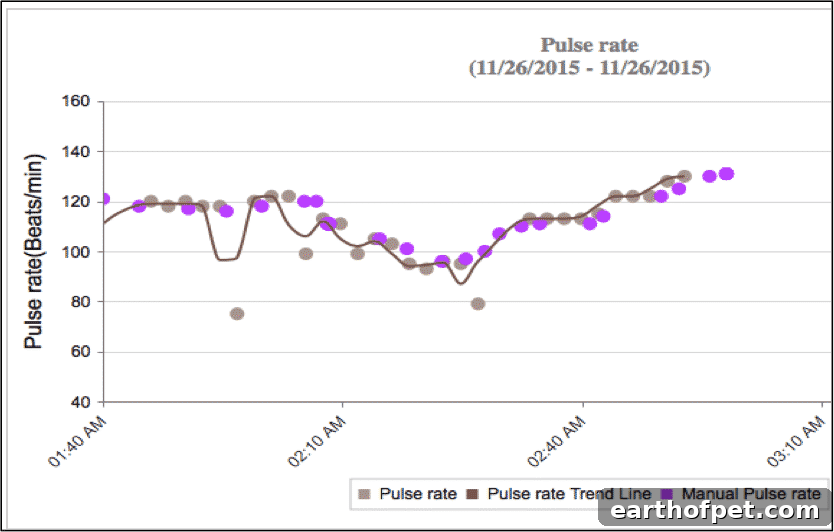
Comparison of intraoperative pulse measurements from the anesthesia monitor (purple points) and the PetPace smart collar (brown points).
Temperature trends captured by the PetPace collar documented expected intraoperative hypothermia during this prolonged thoracic procedure when the chest cavity was open. Continuous temperature tracking helped the clinical team manage warming measures and support postoperative recovery.
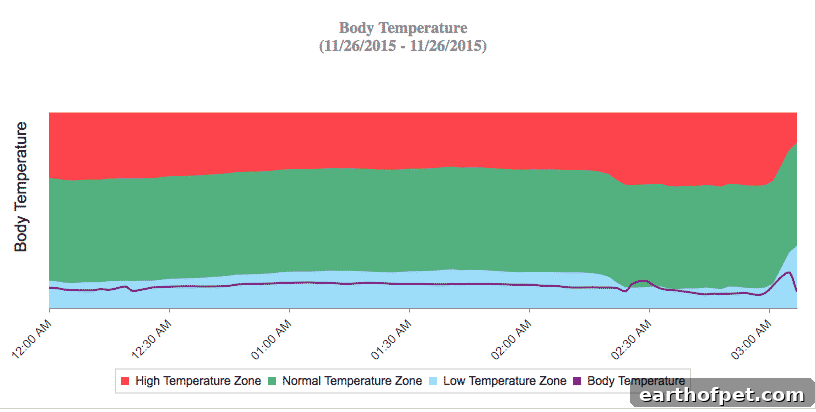
Temperature graph during surgery showing the hypothermic period recorded by the PetPace collar.
After surgery, PetPace vital sign streams were displayed in real time on a central monitor in the hospital ICU and used alongside routine nursing checks to guide care. The collar provided continuous pulse and temperature data during the postoperative period, helping the team track recovery trends without repeated physical handling.
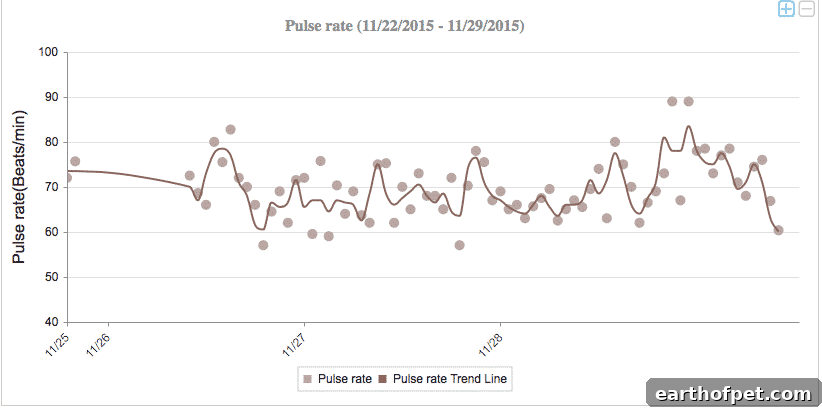
Aggregated pulse data from the PetPace collar during postoperative days, recorded non-invasively and displayed for clinical staff.
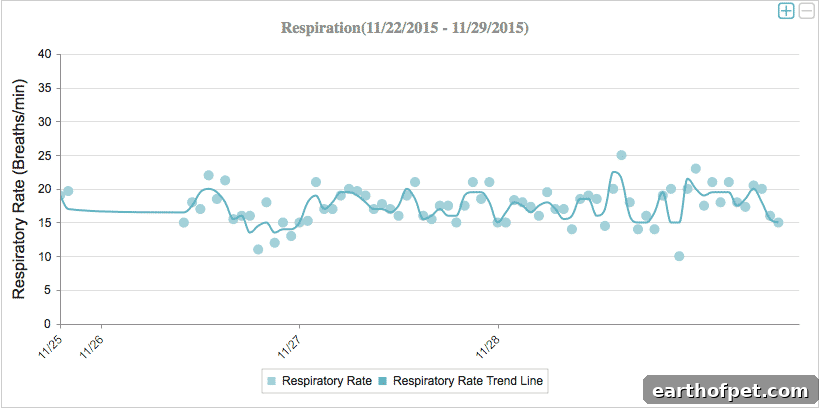
Additional aggregated pulse trends from the PetPace collar across the postoperative period.
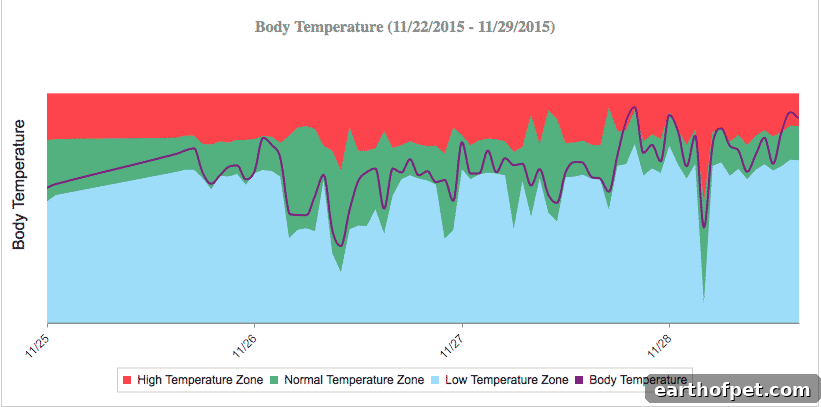
Aggregated temperature data during the postoperative days captured by the PetPace collar.
Heart rate variability (HRV), a marker of autonomic balance and physiological stress, improved by approximately 14% following surgery. This likely reflects the combined effects of resolving the mechanical obstruction, effective pain control, treatment of pneumonia, and overall clinical stabilization.
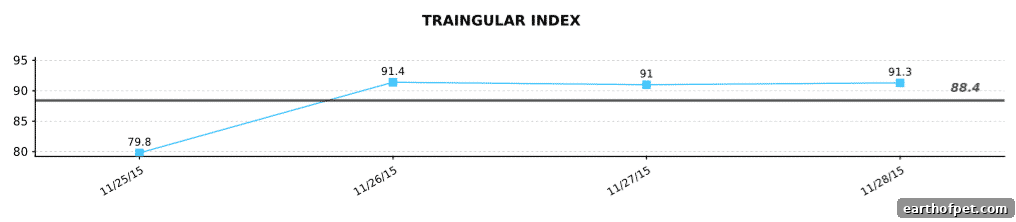
Heart rate variability (HRV) metrics recorded by the PetPace wearable during the postoperative period.
Discussion
Care of critically ill veterinary patients requires sustained monitoring and considerable staff time. In Kira’s case, the severity of her condition and the complexity of her surgery necessitated intensive supervision. The PetPace collar was integrated into the monitoring protocol to supplement hands-on assessments and to provide continuous physiologic data between manual checks. Automatically collected and time-stamped measurements reduce the risk of missed events and can reveal subtle trends that intermittent spot checks might miss. Because the data is gathered without repeated handling, continuous wearable monitoring also minimizes stress for hospitalized patients and reduces disruption to recovery.
Conclusions
Non-invasive wearables such as the PetPace collar offer two key advantages for in-hospital patient care: continuous, real-time streaming of physiologic data to support clinical decision-making, and reduced need for repeated manual measurements that can stress patients and consume staff resources. In Kira’s case the collar provided reliable pulse and temperature tracking during surgery and recovery and contributed useful HRV information that paralleled her clinical improvement.
Dr. Asaf Dagan, DVM, Diplomate ABVP (Canine and Feline practice) and PetPace Chief Veterinarian, observed that using the PetPace collar for in-house intensive monitoring enhances medical care without proportionally increasing the workload required for frequent manual checks.
Dr. Shahar Baruch, owner of Herzliya Veterinary Hospital and Kira’s attending veterinarian, noted that the hospital routinely uses PetPace collars for inpatients and projects the data on a central screen so staff can maintain a high level of vigilance while minimizing additional handling of fragile patients.