
Patient Condition and History
Dottie is a five-year-old, 16 lb spayed female Boston Terrier who was boarded at VetCare Harris Animal Hospital in Tampa, Florida. While she appeared healthy and ate her meals normally twice a day, hospital staff noticed that Dottie lost weight during her stay. To investigate whether her weight loss was due to calories burned exceeding calories consumed, the team fitted Dottie with a PetPace smart collar to quantify her activity levels and estimate caloric expenditure.
Monitoring Data
On admission, Dottie weighed 16.2 lb. Within one week of boarding her weight had fallen to 14.1 lb. With no known medical issues and an apparent appetite, staff suspected that unusually high activity could be the cause. The PetPace collar provided continuous monitoring of Dottie’s activity, including patterns that occurred overnight when the hospital was closed and direct observation was not possible.
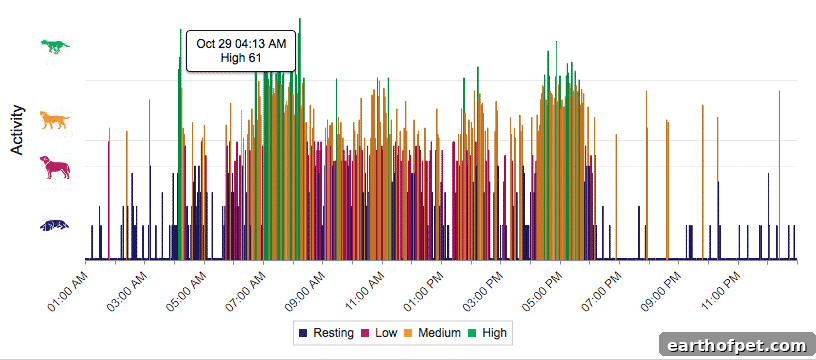
An example daily activity chart from Dottie’s boarding period, showing frequent high activity bursts throughout day and night.
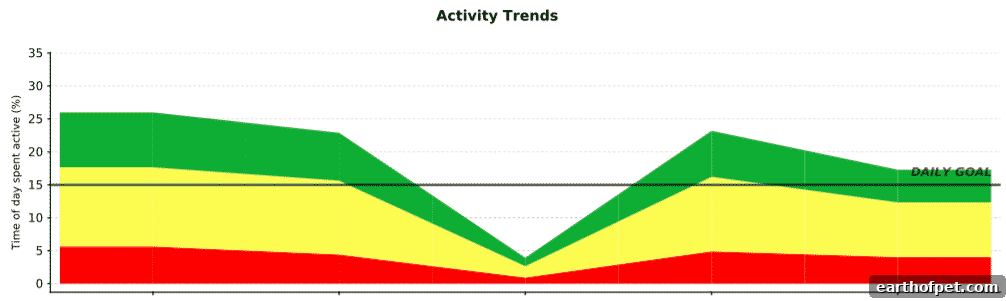
Dottie’s activity trend chart during boarding, demonstrating sustained high activity levels across multiple days (one day appears lower because the collar was worn only a few hours).
The PetPace collar records not only the duration of activity but also its intensity. The accumulated activity breakdown below shows how much time Dottie spent at different intensity levels during the monitored period.
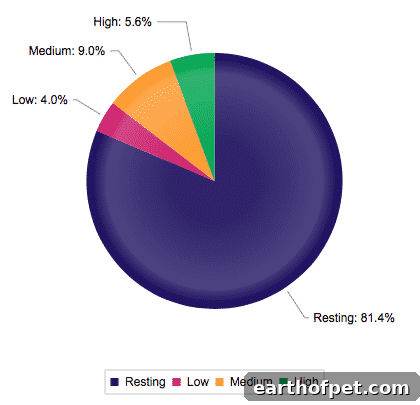
Distribution of Dottie’s activity by intensity level. Values represent the relative amount of time spent at each intensity.
PetPace calculates an Overall Activity Score that combines intensity, frequency and duration to allow easy comparison across time periods and against other pets. Dottie recorded an overall activity score of 17.2 during boarding—well above the typical overall activity score of around 11 for healthy, active dogs. This placed her among the highest activity scores seen by PetPace.
All other monitored physiologic parameters remained stable and within normal ranges, including pulse indices, respiratory rates, and heart rate variability (HRV). Sample trend graphs from the monitoring period show consistently normal values despite her high activity.
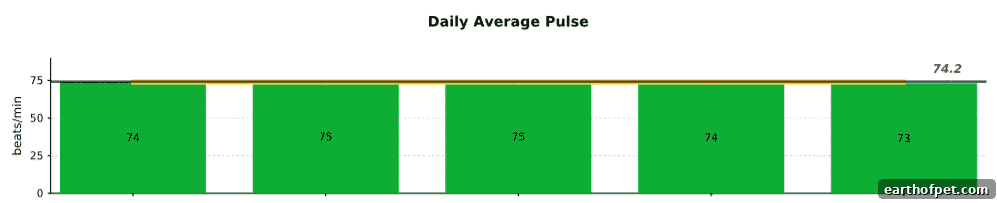
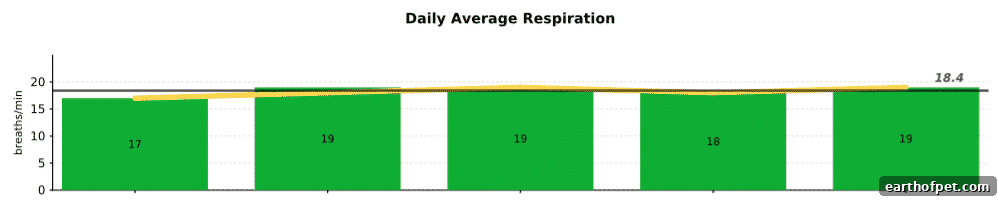

Sample data trend graphs showing normal and stable physiological values for a hyperactive boarding patient with weight loss.
PetPace also measured a VVTI (Vaso-Vagal Tonus Index) vs. pulse rate plot, an experimental HRV-related metric that can reflect autonomic balance and general well-being. Dottie’s VVTI distribution appeared normal, further supporting that her weight loss was not driven by an underlying acute illness detectable through these physiologic markers.
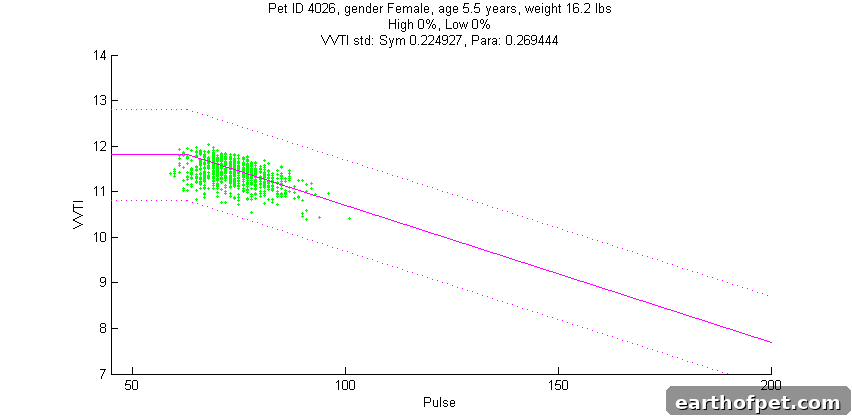
VVTI (HRV index) vs. pulse plot showing a normal distribution, consistent with good health status for the monitored period.
The PetPace system also provides an estimated caloric expenditure based on the patient’s signalment (age, weight, neuter status) and recorded activity. This estimate helps caregivers set appropriate feeding plans to meet increased energy requirements for very active pets.
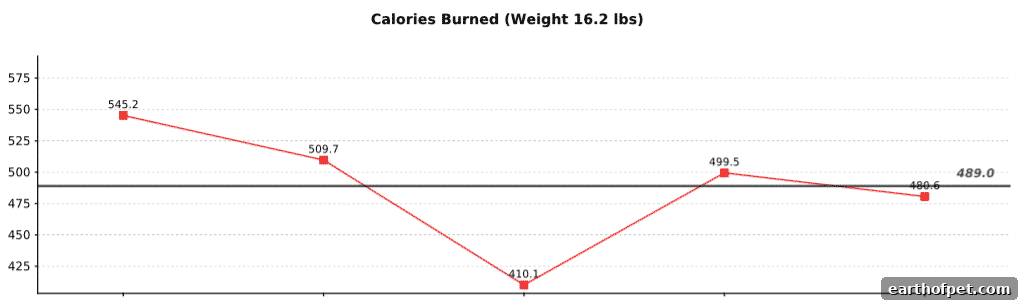
Estimated caloric expenditure for an active boarding dog based on sensor data and patient signalment.
After reviewing the activity and caloric data, hospital staff increased Dottie’s food allowance. With the adjusted feeding regimen, Dottie began to regain weight.
Discussion
Weight management is closely linked to activity level and pattern. Accurate measurement of activity—encompassing intensity, duration, frequency and consistency—provides actionable insights for owners and veterinary teams working to help pets gain, lose or maintain weight. Active dogs, including highly playful or working breeds, often require increased caloric intake to meet their metabolic needs.
Combining quantified activity data with estimated caloric expenditure improves the precision of feeding recommendations and makes results transparent and shareable among caregivers. Moreover, when activity analytics are viewed alongside physiologic indicators (pulse, respiration, HRV), clinicians gain a fuller picture of the pet’s overall health. In Dottie’s case, normal physiologic data alongside very high activity scores pointed toward insufficient caloric intake as the primary cause of weight loss rather than an undetected medical condition.
Conclusions
Detailed activity analysis is a valuable tool for managing canine weight and assessing general health. Activity metrics are most useful when interpreted in the context of other health indicators and the individual pet’s medical history. As PetPace’s Chief Veterinarian Dr. Asaf Dagan notes, activity data analytics make weight management more objective and data-driven, while also providing insights that extend beyond simple exercise tracking. Dr. Brian Shaw of VetCare Harris Animal Hospital adds that objective activity data strengthens clinical decision-making for patient care, including accurate determination of caloric needs.