Owning a dog with epilepsy & seizures is both heartbreaking and exhausting. The question “when will it happen next?” never fully goes away. Seizures can occur without warning—when you’re at work, preparing dinner, putting the kids to bed, or asleep yourself. Still, one of the first instructions many veterinarians give is: keep track of the seizures.
But how do you track them? You can’t watch your dog around the clock with a notebook and stopwatch. Life demands your attention—work, family, sleep—yet your dog needs monitoring. That dilemma is the daily reality for owners of dogs with epilepsy. Fortunately, technology is helping bridge the gap.
Dog Seizures & Epilepsy: The Essentials
Seizures are sudden, uncontrolled bursts of electrical activity in the brain that can cause convulsions, loss of consciousness, and unusual behaviors. Epilepsy refers to the condition of having recurrent seizures rather than a single isolated event.
Seizure episodes in dogs can be dramatic—collapsing, rigid limbs, paddling motions, heavy drooling, and loss of bladder or bowel control. Yet some episodes are subtle, presenting as odd movements, disorientation, or changes in behavior. Causes vary widely and include inherited epilepsy, brain disease or tumors, metabolic problems like low blood sugar or liver shunts, infections, toxins, and trauma. In many dogs, no clear cause is identified; this is known as idiopathic epilepsy, which is unfortunately common and unpredictable.
Why Tracking Seizures Matters
Recording seizure frequency, duration, and severity is essential for effective treatment. Accurate data helps your veterinarian adjust medication types and dosages, evaluate how well a treatment is working, and minimize adverse effects. The better the information, the better the clinical decisions.
Manually logging seizures, however, is challenging. A seizure might occur when you’re not present or while you’re asleep. Sporadic notes and occasional vet visits are often insufficient to capture the true picture of what’s happening.
The Emotional Toll of Seizure Episodes
Being with your dog during a seizure is intense and frightening. Time seems to stretch, and your natural response is to comfort and protect your pet—not to record exact timings. Yet vets often need specifics such as how many seizures occurred since the last visit, how severe each event was, and what behaviors were observed during the episode.
Many devoted pet owners manage to keep detailed logs because the information is so valuable for treatment planning. Still, it’s hard to be emotionally present and simultaneously document every detail. That’s where continuous monitoring tools can help, capturing objective data when you can’t.
Enter PetPace’s Seizure Monitoring Program
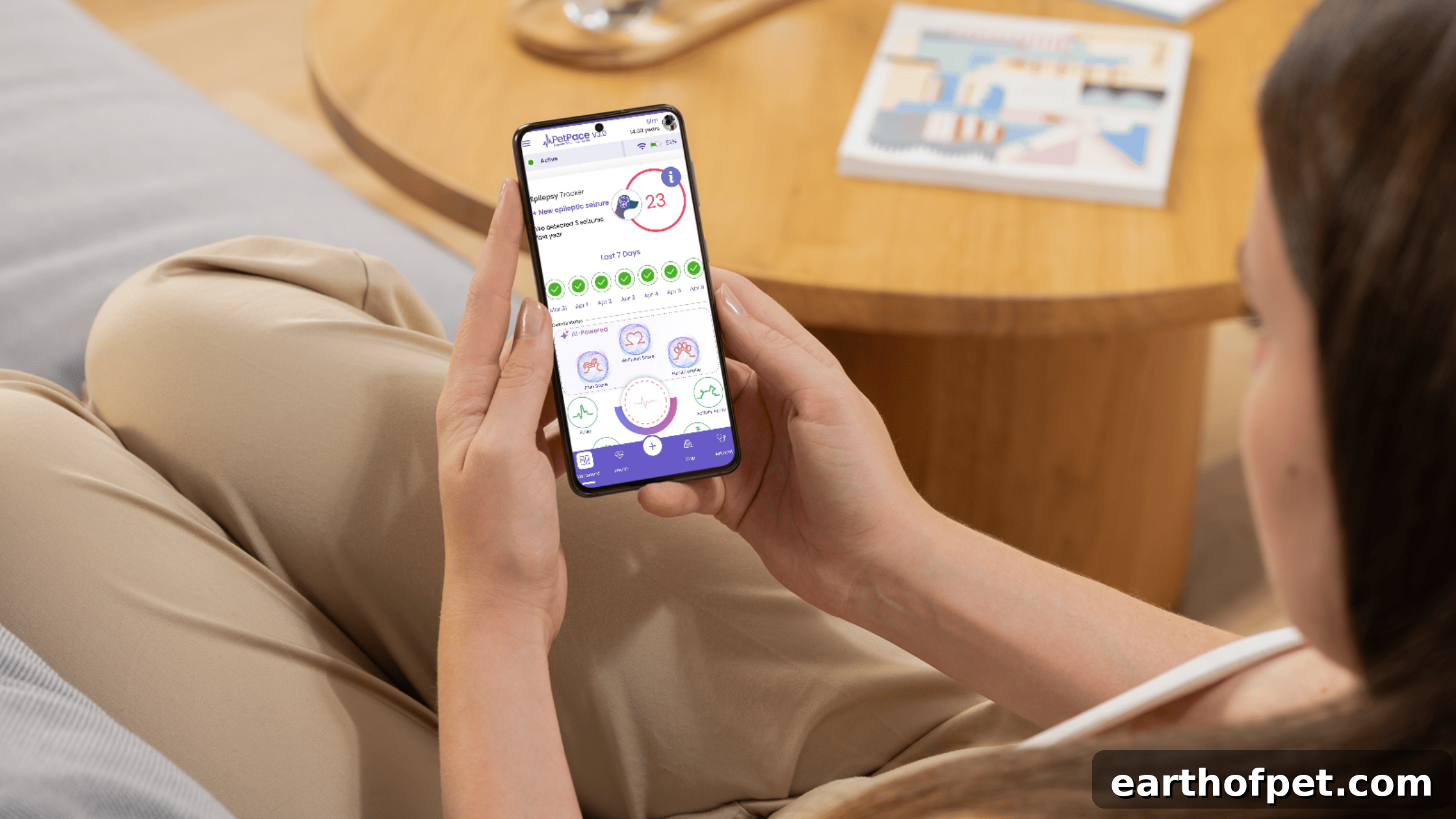
The PetPace smart health collar offers a practical solution. Rather than relying solely on manual logs or intermittent clinic data, PetPace continuously monitors a dog’s vital signs and behavior before, during, and after seizure events.
PetPace collects and analyzes thousands of data points every minute—pulse, respiration, heart rate variability, temperature, activity, and posture—using those signals to detect and log seizure events. This continuous stream of objective data provides a clearer, more complete record of what’s occurring, even when you aren’t there.
This capability grew from years of research in collaboration with universities and investigators in the US and Europe, and from contributions by countless pet owners who meticulously documented their dogs’ seizure episodes. The combination of real-world logs and advanced analytics enabled PetPace to develop reliable detection and reporting tools.
PetPace is especially useful for identifying full (grand mal) seizures after they occur, giving pet parents and veterinarians accurate counts of events and insight into how well treatments are working.
PetPace: Practical Monitoring for Real Life
While no device can yet predict or prevent seizures, PetPace is designed to count them accurately. That data empowers owners and clinicians to:
- Understand the true frequency of seizures, not just the ones witnessed
- Adjust treatments more quickly and precisely
- Make informed decisions that reduce suffering
- Share comprehensive health reports with specialists remotely

One PetPace customer in Scotland described finding the collar after losing a dog to epilepsy and searching for better monitoring. When the product became available locally, she and her husband began receiving real‑time updates—sometimes on their smartwatches—bringing vital reassurance and practical oversight.
More Than Peace of Mind
Living with a seizure-prone dog is stressful; the constant “what if” can dominate daily life. PetPace doesn’t stop seizures, but it restores a measure of control. You may not always be present when a seizure begins, but continuous monitoring can capture what you miss and provide clear, actionable information.
Start gaining reliable insight into your dog’s health: monitor seizures continuously, share detailed data with your veterinarian, and respond more quickly when changes occur. Better data leads to better care for your pet.