Robert P. Hunter PhD, Joel Ehrenzweig DVM, MRCVS, Atticus Hainsworth PhD, Abbe Crawford PhD, MRCVS, Asaf Dagan DVM, Jaime Sage DVM, MS, DACVR, and Joseph Araujo PhD.
DOI: https://doi.org/10.2460/ajvr.23.02.0032
AVMA Journals, 26 Sep 2023: Research into human dementia treatments remains limited, so robust translational models are urgently needed. Canine cognitive decline (CCD) is a common, progressive condition in older dogs that mirrors many physiological, behavioral, and neuropathological features of human dementia, making companion dogs a valuable comparative model.
CCD involves changes in behavior, memory, spatial orientation and daily routines, and it is associated with measurable shifts in plasma neurodegenerative biomarkers and brain pathology. Validated biomarkers and behavioral assessments can detect early-stage cognitive impairment in dogs, supplying reference values for neurodegeneration and enabling enrollment of appropriate candidates into clinical studies.
Studying naturally occurring CCD in a diverse population of companion dogs offers a fast-moving, real-world model for testing diagnostics and interventions that could benefit both veterinary and human medicine. A coordinated research strategy combining blood biomarkers, clinical comorbidity screening, and continuous biometric monitoring can accelerate discovery and improve translational relevance.
The collaborative one-health approach—bridging human and veterinary medicine—emphasizes the interdependence of health across species. Insights from CCD research have the potential to generate novel therapies and diagnostic strategies that improve outcomes for pets and inform human dementia care.
Why the Dogs Overcoming Geriatric Memory and Aging Initiative?
The Dogs Overcoming Geriatric Memory and Aging (DOGMA) Initiative aligns with AVMA one-health goals by promoting cross-disciplinary collaboration among veterinarians, physicians, and researchers. DOGMA seeks to standardize methods for identifying early cognitive decline in dogs, establish biomarker reference ranges, and create pathways for testing therapeutics and care strategies that are relevant across species.
By reframing CCD through the DOGMA framework, the initiative highlights shared priorities in aging research and emphasizes how companion animal studies can inform human medicine without replacing the need for traditional models.
DOGMA
D – Dogs: Because dogs share households and lifestyles with people, they experience overlapping environmental exposures and age-related risks. This makes them an informative comparative model for studying cognitive decline.
O – Overcoming: The initiative focuses on proactive, translational solutions to reduce the burden of cognitive impairment and improve quality of life for aging individuals, regardless of species.
G – Geriatric: With longer lifespans, age-related conditions are increasing in both veterinary and human medicine. Prioritizing geriatric research addresses a growing public health challenge.
M – Memory: Memory impairment is a hallmark of dementia. Investigating memory loss in dogs—its onset, progression, and biomarkers—can reveal mechanisms that are relevant to human diseases such as Alzheimer’s.
A – Aging: Aging is a universal process. Studying systemic changes across species can identify conserved pathways and potential interventions to extend healthspan.
Behavior
Behavioral screening is central to CCD detection. The Canine Dementia Scale (CADES) questionnaire is designed to identify onset, categorize severity, and track progression of cognitive impairment by assessing social interactions, spatial orientation and routine changes. CADES classifies dogs as mild, moderate, or severe based on observed behavioral deviations. Sensory and physical impairments—such as visual or olfactory deficits—can contribute to or mimic CCD and should be evaluated as part of the diagnostic process.
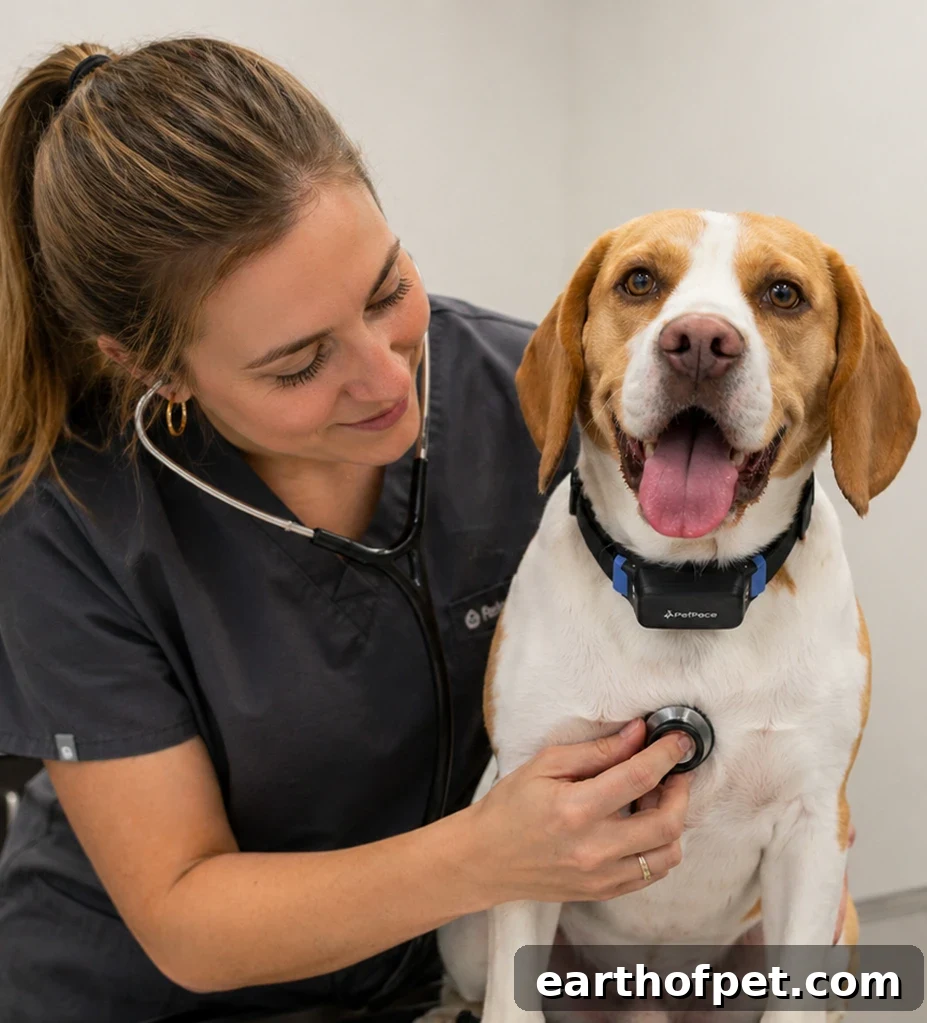
Wearable monitoring technologies provide continuous, objective data that complement caregiver observations. Innovative 24/7 smart collars can noninvasively track temperature, heart rate, respiratory rate, activity patterns, posture, heart rate variability and location. Proprietary algorithms characterize an individual dog’s pattern of life; persistent deviations from that baseline can trigger alerts and identify candidates for further clinical assessment or research enrollment.
Alongside biometric monitoring, routine laboratory diagnostics help rule out comorbidities that produce CCD-like signs. Recommended testing includes CBC and blood chemistry, C-reactive protein and targeted neurodegenerative biomarkers such as amyloid-β, phosphorylated tau proteins, neurofilament light chain (NfL) and glial fibrillary acidic protein (GFAP). Ophthalmic exams to detect hypertensive retinopathy and assessments of interstitial fluid can reveal contributing conditions. Biologic samples should be cryopreserved for future analysis and biomarker discovery.
Conclusion
Advances in veterinary and human medicine have extended lifespans, but they have also led to higher rates of age-related chronic illnesses, including neurodegenerative diseases. Progress in treating these disorders has been limited by a lack of animal models that naturally replicate human disease progression. Early recognition of behavioral changes consistent with CCD, combined with parallel shifts in neurodegenerative biomarkers and continuous biometric monitoring, will improve identification of study candidates and generate comparative data. Such integrated, cross-species research efforts can accelerate development of diagnostics and therapies, improving care for aging dogs and informing strategies to detect and manage early-stage dementia in people.
For the full article, visit the American Veterinary Medical Association Journal’s website, or click here: AVMA Journals.