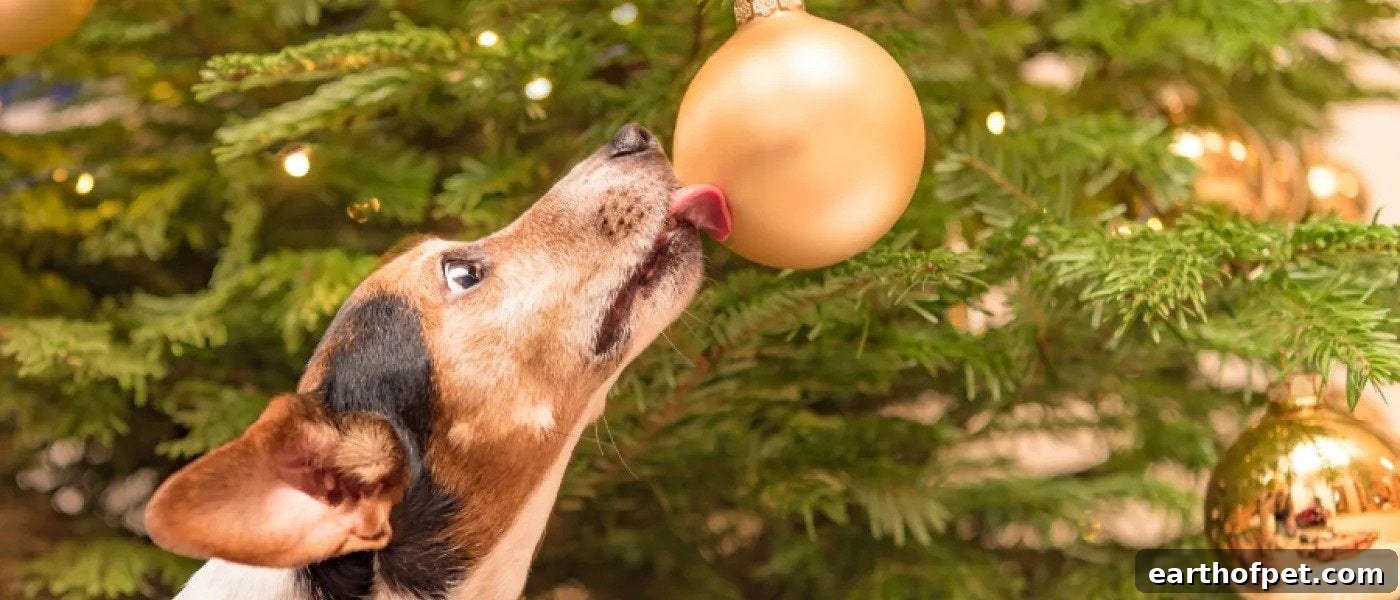
‘Tis the season for giving, celebration, and decorating our homes with lights, live trees, festive plants, and more. While these additions create a warm atmosphere, many holiday decorations and treats can pose serious health risks to pets. Use these holiday pet safety tips to identify common hazards, take practical precautions, and enjoy a season that is both beautiful and safe for your furry family members.
Christmas Trees, Flocking, & Pet Safety
A Christmas tree is central to many homes during the holidays. If you choose a real tree rather than an artificial one, be aware of hazards that can affect dogs, cats, and other pets:
- Tree water: Water collected in the tree stand can harbor bacteria and mold. It may also contain fertilizers, pesticides, or additives that are unsafe for pets if lapped up. Prevent access by covering the stand or using a sturdy tree skirt and supervising pets around the base.
- Tree needles and branches: Pine needles and small branches are sharp and can irritate or puncture a pet’s mouth, throat, stomach, or intestines if swallowed. Ingested needles can lead to vomiting, internal injury, or intestinal blockage that may require veterinary attention.
- Flocking and preservatives: Artificial snow, flocking, or preservatives used on trees may cause gastrointestinal upset or mild toxicity if eaten. Keep curious pets away from flocked surfaces and wipe their paws if they brush against treated branches.
- Toppling trees: Pets that climb, jump, or play around the tree can cause it to fall. Secure your real or artificial tree to a wall or ceiling anchor and keep heavier ornaments nearer the trunk. Clear fallen decorations quickly to prevent your pet from chewing or swallowing debris.
Effects of Poinsettias & Other Holiday Plants if Eaten
Many seasonal plants add color and fragrance to holiday décor, but several are toxic to pets if chewed or eaten. Common harmful plants include:
- Amaryllis
- Mistletoe
- Balsam
- Pine
- Cedar
- Holly
- Poinsettias
Symptoms of plant ingestion can range from mild drooling and upset stomach to more severe vomiting, diarrhea, drooling, weakness, or difficulty breathing depending on the plant and the amount consumed. If you suspect your pet has eaten any part of a houseplant, contact your veterinarian or a pet poison control hotline immediately. Before decorating, check that plants you bring into the home are safe for dogs and cats, and consider pet-safe alternatives like silk plants or placement in rooms your pets cannot access.
How to Keep Pets Safe from Ornaments, Lights, & Other Holiday Décor
Many artificial decorations are not pet-proof. Anticipate common scenarios and take steps to reduce risk:
- Electrical cords and light strands: Chewing cords can cause electrical shock or burns. Use cord protectors, tape cords along baseboards, or hide them behind furniture. Consider battery-operated lights where feasible.
- Candles and open flames: Unattended candles can cause burns or start fires if knocked over by pets. Replace open flames with battery-operated candles or flameless LED alternatives for a safer ambiance.
- Fragile ornaments and small decorations: Glass, ceramic, and small ornaments can break into sharp pieces or become choke hazards. Choose unbreakable ornaments, place fragile items out of reach, and avoid edible-looking decorations that might tempt pets.
Additional measures include using shatterproof bulbs, keeping tinsel and small decorative items off lower branches, and creating a pet-free zone around festive displays. Redirect curious pets with toys and interactive enrichment away from high-risk areas.
Holiday Treats that Aren’t Pet Friendly
Many holiday foods are unsafe for pets. Chocolate, candy containing xylitol (an artificial sweetener), raw bread or cookie dough, fatty table scraps, and foods seasoned with garlic or onion can cause serious illness. Alcohol and rich sauces are also dangerous. To keep your pet safe during gatherings, feed them a balanced meal before guests arrive and offer only pet-safe treats that you know are appropriate for their diet and size.
Keeping Your Pet Safe
Practical preparations make the holidays less stressful for pets and people alike. Consider an artificial tree and unbreakable ornaments if you have an especially curious pet. Anchor trees and secure large decorations to prevent tipping. Store decorations, small items, and food out of reach. Provide extra toys and interactive chews to keep your pet entertained and less likely to investigate decorations.
Keep contact information for your veterinarian and a pet poison control hotline handy in case of suspected ingestion or injury. Signs that your pet needs immediate veterinary care include severe vomiting, difficulty breathing, seizures, collapse, persistent lethargy, or uncontrolled bleeding.
Finally, remember to include your pet in the festivities in safe ways—special pet-friendly treats, extra attention, and supervised time near the decorations help them feel part of the holiday without risking their health. With a few simple precautions, you can deck the halls and protect your pet at the same time, ensuring a joyful, safe holiday season for the whole family.