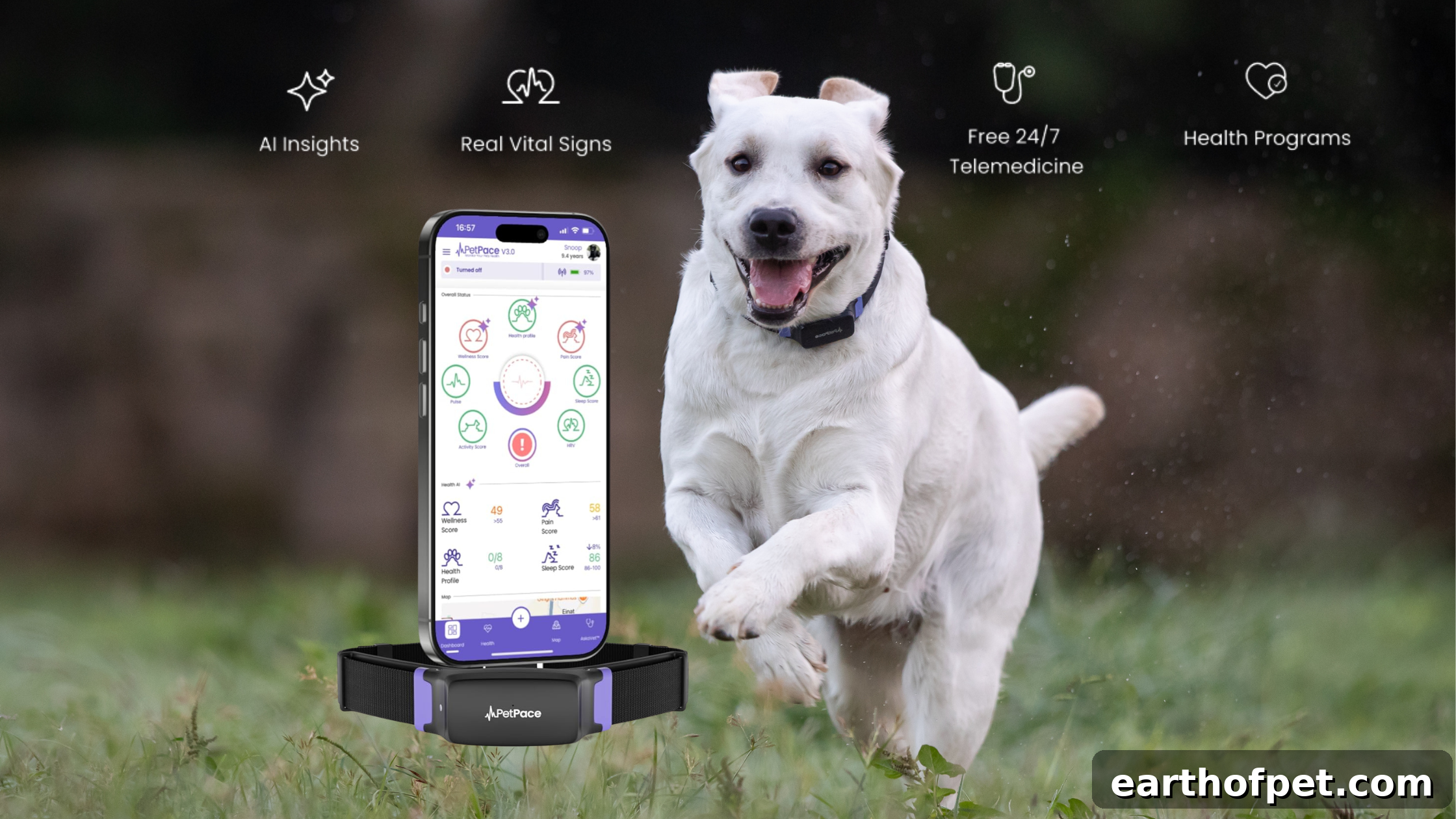
As wearable technology for pets gains popularity, many dog owners face a choice between two types of devices: pet activity trackers and pet health monitoring collars. At first glance they can look similar—both attach to a collar, connect to a mobile app, and promise insights into your pet’s routine. In reality, however, they serve very different purposes. Understanding those differences will help you pick the right device for your dog.
What Is a Pet Activity Tracker?
A pet activity tracker focuses primarily on measuring your dog’s movement and daily activity. Much like a human fitness tracker, its goal is to help you gauge exercise levels and lifestyle habits.
Common metrics tracked by activity devices
- Steps taken
- Distance traveled
- Calories burned
- Active versus rest time
- GPS location (on many models)
Activity trackers are useful for everyday questions: Is my dog getting enough exercise? Has activity dropped lately? Are we keeping a consistent routine? They work well for weight management, setting exercise goals, and building consistent daily habits. The main limitation is that they measure only external behavior—they show what the pet is doing, not how the pet is feeling internally.
What Is a Pet Health Monitoring Collar?
A pet health monitoring collar is designed to track physiological signals—vital signs that reflect how the body is functioning. These collars look beyond movement to provide a broader picture of your pet’s health over time.
Typical physiological data monitored
- Pulse and heart rate
- Respiratory rate
- Body temperature trends
- Heart rate variability (HRV)
- Sleep quality and recovery
- Posture and behavior patterns related to wellbeing
When combined with activity data, vital signs give a more complete view of overall health. Health monitoring collars can detect subtle changes that activity alone cannot reveal and are intended to support proactive care and early detection.
The Core Difference: Movement vs. Vital Signs
Put simply:
- Activity trackers measure movement and external behavior.
- Health monitoring collars measure internal physiology and vital signs.
Why movement alone can be misleading
Pets often hide discomfort, maintaining routine activity even when a problem is developing. Because outward behavior may remain unchanged, relying on activity data alone can miss early or internal health issues.
Why vital signs matter
Physiological measures reveal changes you can’t see. For example:
- An elevated resting heart rate can indicate stress, pain, or illness.
- Shifts in breathing patterns may point to respiratory or cardiac problems.
- Small, sustained changes in temperature can signal emerging conditions.
In short: activity shows behavior; vital signs reveal health.
Side-by-Side Comparison
| Feature | Activity Tracker | Health Monitoring Collar |
| Primary focus | Exercise & movement | Overall health & physiology |
| Data type | External (steps, activity) | Internal (vital signs) |
| Heart rate tracking | No | Yes |
| Respiratory tracking | No | Yes |
| Temperature trends | No | Yes |
| Sleep tracking | Basic | Advanced |
| Pain detection | No | Yes (in some systems) |
| Chronic condition management | No | Yes |
| Early issue detection | Limited | Strong |
| GPS tracking | Often included | Sometimes included |
| Best for | Fitness & routines | Health monitoring & prevention |
These devices are not direct substitutes—each offers a different level of insight.
Why This Difference Matters for Your Pet
Most owners rely on visible signs—energy, appetite, and behavior—to judge health. Unfortunately, those signs often appear after a condition has progressed. Because cats and dogs mask discomfort, early symptoms can be subtle or absent.
The advantage of continuous health monitoring
Tracking vital signs over time allows you to:
- Detect subtle changes earlier, which can be lifesaving
- Identify trends rather than isolated events
- Share objective data with your veterinarian
- Make more informed decisions about care
Continuous monitoring supports proactive care rather than reactive treatment.
When an Activity Tracker Is Enough
An activity tracker is a good choice if your priority is lifestyle and fitness. It’s suitable when you want to:
- Increase your dog’s daily exercise
- Manage weight
- Use GPS for safety and location tracking
- Establish a consistent routine
For many owners, activity data provides useful, actionable insight into daily habits.
When a Health Monitoring Collar Is the Better Choice
Choose a health monitoring collar if you want deeper insight into your pet’s wellbeing—particularly for:
- Aging pets
- Animals with existing medical conditions
- Owners who want early warning signs of potential issues
- Those who prefer a data-driven approach to health care
These collars are focused on long-term health awareness and prevention rather than just fitness metrics.
Do You Need Both?
Sometimes yes, but often no. Many advanced health monitoring collars include activity tracking and GPS, providing both movement data and physiological monitoring in one device. The decision usually comes down to how much depth of insight you want into your pet’s health.
Common Misconceptions About Pet Wearables
“If my dog is active, they must be healthy.”
Activity doesn’t always equal health. Pets can maintain normal movement while developing internal issues.
“All smart collars are the same.”
Not all devices collect the same data. Some only track movement, while others monitor heart rate, respiration, and temperature. Check what data a device actually provides before assuming it monitors health.
“I’ll notice if something is wrong.”
Many health problems develop slowly and subtly. Without objective data, early warning signs are easy to miss, even for the most attentive owners.
FAQ: Pet Health Monitoring Collars vs. Activity Trackers
What is the main difference?
Activity trackers record movement and exercise, while health monitoring collars capture vital signs such as heart rate, respiration, and temperature patterns.
Can an activity tracker detect health problems?
Not reliably. Reduced activity can be a symptom, but activity trackers are not designed to detect internal physiological changes early.
Are health monitoring collars worth it?
For owners seeking deeper health insight—especially for senior pets or animals with medical conditions—health collars can provide valuable, proactive information. They are intended to complement, not replace, regular veterinary care.
Do health monitoring collars replace veterinary care?
No. These devices supply additional data to support veterinary evaluation and decision-making; they are not substitutes for professional diagnosis or treatment.
Do health monitoring collars include activity tracking or GPS?
Many advanced models include activity tracking and GPS, but their primary purpose remains monitoring vital signs and overall health.
Which should I choose?
If your goal is basic exercise tracking and GPS safety, an activity tracker is sufficient. If you want early detection of potential health issues and a fuller picture of your dog’s internal condition, choose a health monitoring collar.
The Bottom Line
- Activity trackers help you understand movement and daily routine.
- Health monitoring collars help you monitor internal health and physiological trends.
Both types of devices have value. If you want continuous insight into what’s happening inside your dog’s body, a health monitoring collar provides the deeper health perspective that activity trackers alone cannot offer.
Example: Health Collars with Integrated Features
Some health monitoring collars combine vitals and behavior data with activity tracking, GPS, and AI-driven alerts. These systems can collect pulse, heart rate variability, respiration, temperature trends, activity, sleep, and posture, then use analytics to flag concerning patterns and share data with veterinarians. They may also offer telemedicine features such as chat or video consultations to help interpret findings alongside your veterinarian.