Patient Condition and History
Jade is a 4-year-old spayed female Chihuahua mix weighing 15 lbs who was admitted for close observation after being struck by a car. On arrival she was breathing heavily and showed signs consistent with a possible internal chest injury. To ease her breathing, staff positioned her in sternal recumbency (lying on her belly). When Jade was allowed to roll onto her side she became visibly distressed and developed labored breathing (dyspnea).
When an animal experiences dyspnea, a key component of emergency care is reducing the mechanical effort required for ventilation. Lying on the side allows the animal’s body weight to compress the dependent lung, limiting its expansion and reducing oxygen intake. In a healthy resting pet this effect is usually insignificant, but in an animal already struggling to breathe it can rapidly become life-threatening.
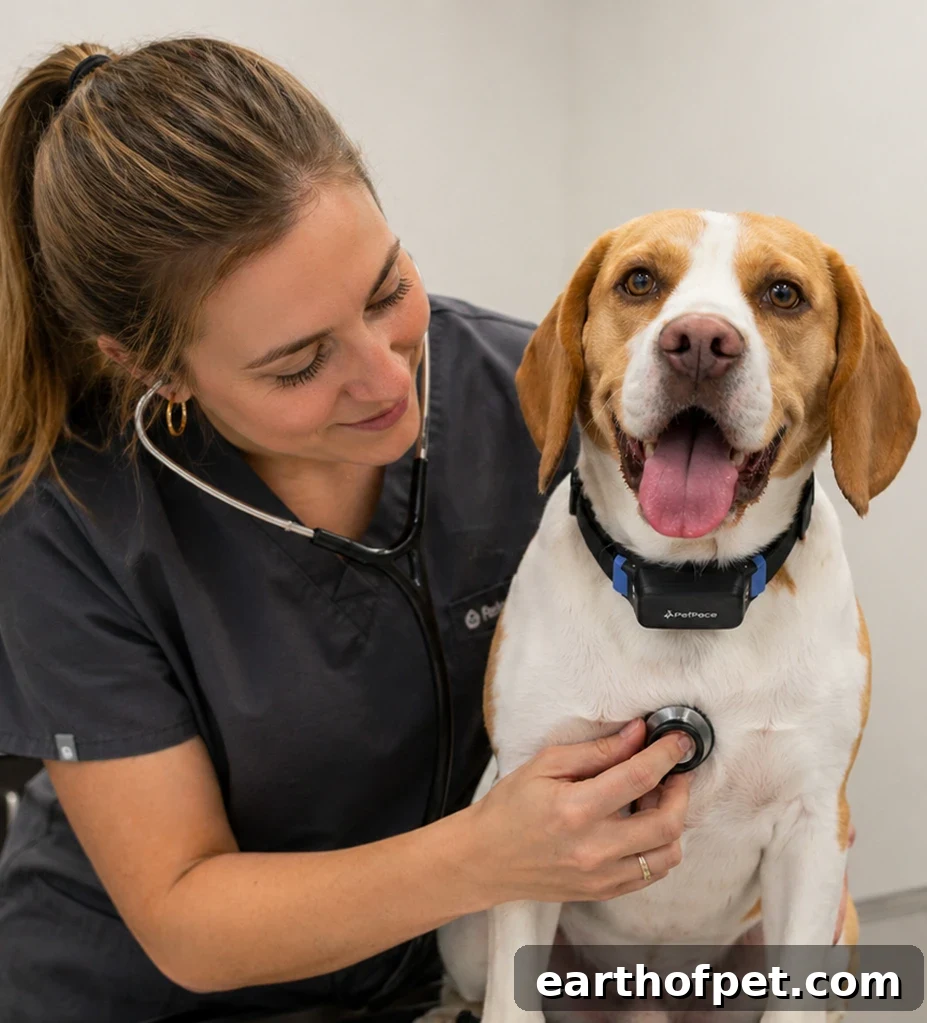
To help maintain Jade in the optimal sternal position and prevent deterioration if she rolled over, the veterinary team fitted her with a PetPace smart collar that monitored posture and respiratory metrics continuously.
Monitoring Data
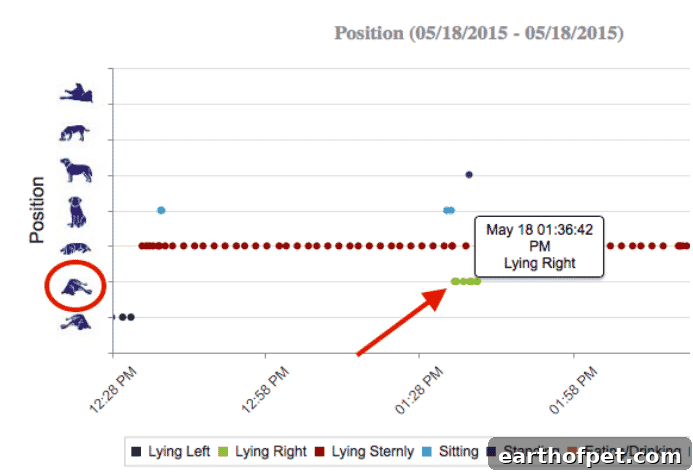
The PetPace proprietary algorithm produces minute-by-minute readings of body posture and vital signs. The visual displays used by hospital staff clearly showed Jade spending the majority of her time on her stomach. The charts also revealed brief episodes when she rolled onto her side; each such posture change coincided with an abrupt increase in respiratory rate, signaling acute respiratory distress.
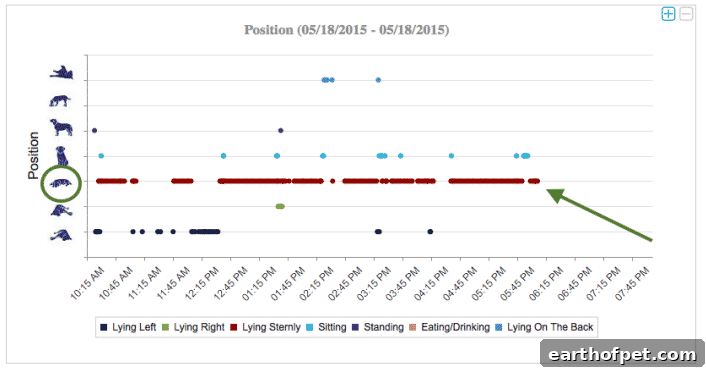
* JADE’S POSITION CHART SHOWING HER PREDOMINANTLY LYING ON HER STOMACH.
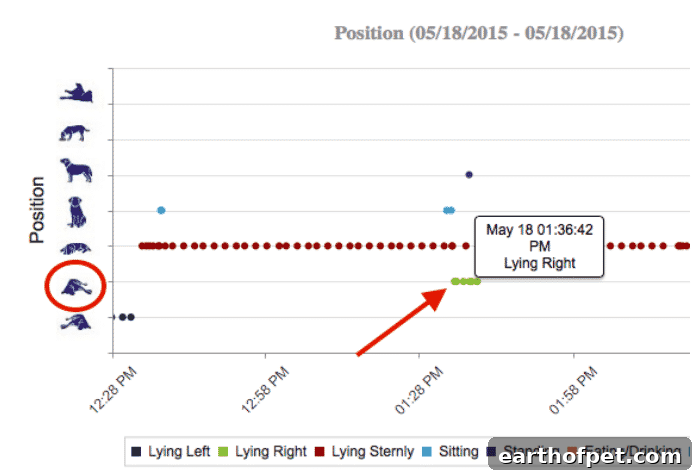
*CLOSE-UP VIEW OF A POSTURE CHANGE EVENT, ROLLING FROM STOMACH TO SIDE.
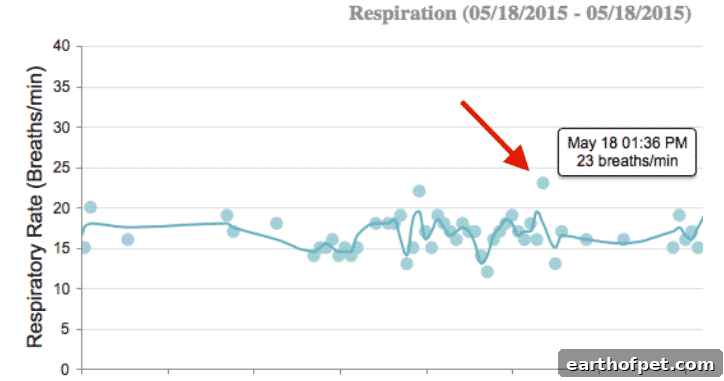
* RESPIRATION CHART (FROM THE SAME TIME AS THE POSTURE CHANGE CHART ABOVE) SHOWING ACUTE
RESPIRATORY RATE INCREASE.
Staff monitored these real-time graphics and alerts. Each time the system signaled a posture change to the side, caregivers promptly returned Jade to sternal recumbency, which immediately improved her breathing effort. The continuous data enabled staff to prioritize interventions based on objective posture and respiratory trends rather than intermittent visual checks alone.
In addition to posture and respiration, the PetPace activity chart provided a supplemental view of Jade’s movements. It indicated long periods of rest with occasional short, low-intensity movements associated with position changes—information that helped distinguish normal shifting from events that coincided with respiratory deterioration.
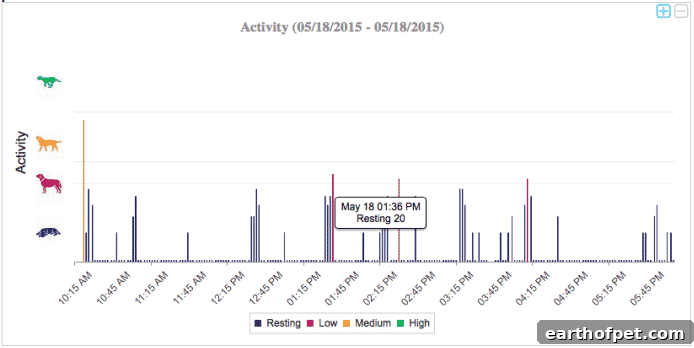
*ACTIVITY CHART SHOWING MOSTLY RESTING WITH OCCASIONAL SHORT, LOW-INTENSITY MOVEMENTS ASSOCIATED WITH POSITION CHANGES.
Discussion
Jade’s continuous posture, respiratory rate, and activity data supplied the clinical team with timely, objective indicators of an evolving respiratory crisis. In busy hospital settings it is difficult for staff to observe every patient continuously; veterinarians and veterinary technicians must manage multiple cases simultaneously. Telemetric monitoring with an accessible visual display reduces the risk that a critical change will go unnoticed between routine checks.
This case highlights the clinical value of real-time posture monitoring as part of a comprehensive patient-monitoring strategy. Data from the PetPace collar allowed rapid detection of position-related deterioration and triggered immediate corrective action that prevented worsening of Jade’s dyspnea. As Dr. Asaf Dagan, PetPace’s Chief Veterinarian and a specialist in canine and feline medicine and surgery, noted, continuous posture monitoring can provide early warning signs in a clinical setting.
Beyond acute care, tracking a pet’s habitual postures and activity patterns over time at home can reveal deviations that suggest pain, discomfort, or developing disease. Detecting these changes earlier may prompt timely veterinary evaluation and improve long-term outcomes.
Conclusions
PetPace’s wearable technology provides continuous remote monitoring of body posture, respiration, and activity, offering a practical tool to support veterinary care. In Jade’s case, real-time position data helped caregivers maintain an optimal sternal position, rapidly address episodes of respiratory distress, and contribute to a positive outcome.
By combining continuous telemetry with clear visual dashboards and alerts, veterinary teams can enhance patient safety, improve clinical decision-making, and reduce the burden of constant direct observation. Long-term use of posture and activity monitoring can also aid in early detection of pathological conditions, helping clinicians intervene sooner and improve quality of life for companion animals.
“Using the PetPace collar’s position data in real time helped us give Jade better care and treatment, and contributed to the good outcome of this case,” said Dr. Caitlin Tipton of Lake Wylie, SC, Jade’s veterinarian. “The collar provided clinically valuable data quickly, helping to prevent a life-threatening dyspnea.”