If your dog has epilepsy, you’re likely following all the advice you’ve been given: you watch closely, you record every seizure you observe, and you bring notes to veterinary appointments. From the outside, it looks like you’re doing everything right—and in many ways, you are.
Still, a quieter question often goes unasked: how complete is the picture you’re working from?
Are You Making Decisions Based on What You Know—or Only on What You See?
Much of epilepsy care is built around visible events: what you notice, what you remember, and what you can report to your veterinarian. But your dog’s life doesn’t take place only when you’re watching, and seizures don’t only happen while you’re present. Over time, it’s easy to assume that the events you witness represent the whole story—but that assumption can leave important gaps.
- What you notice in the moment.
- What you can recall later.
- What you’re able to tell your vet during checkups.
These are valuable pieces of information, but they are limited by time and perspective. When the picture is incomplete, decision-making about medication changes, activity adjustments, or further tests can feel uncertain—even when you’ve been conscientious and consistent.
Why It Still Feels Uncertain Even When You’re Doing Everything Right
Many pet parents experience this: you keep detailed records, you administer medications on schedule, you follow veterinary guidance—and yet there’s a nagging uncertainty. That uncertainty rarely signals that you’ve made mistakes. More often, it reflects a lack of full visibility into your dog’s daily and nightly patterns.
- You may be making important choices without complete confidence.
- Your seizure logs might miss events, or lack context about what preceded or followed an episode.
- Even thorough tracking can leave you second-guessing whether you’ve captured the whole story.
Feeling uncertain in this situation is normal. Incomplete information makes it harder to judge whether treatments are working or whether subtle changes in behavior are meaningful.
When Was the Last Time You Checked Your Dog’s Baseline?
One practical step is to re-evaluate your pet’s baseline—what “normal” looks like for them right now. Baseline measures can change over time as your dog ages, responds to treatment, or adapts to new routines. Ask yourself:
- Do I know my dog’s current resting and activity patterns?
- Has their sleep or nighttime behavior shifted recently?
- Are stress levels or triggers different than before?
- Would I notice if a seizure or subtle episode occurred when I wasn’t there?
Perfection isn’t necessary. What matters is having a clear sense of typical behavior so you can spot deviations that matter. Stability in epilepsy care isn’t just about preventing seizures—it’s also about recognizing meaningful change early.
What Changes When the Picture Becomes More Complete?
Clarity doesn’t make epilepsy simple, but it does change how you manage it. When you have a fuller view of your dog’s patterns, you’re able to:
- Reduce second-guessing and feel more confident about care decisions.
- Bring more detailed, reliable information to conversations with your veterinarian.
- Replace uncertainty with a steadier, evidence-based approach to monitoring and treatment.
Clarity doesn’t equal control, and it won’t remove all unpredictability. What it does is give you a firmer foundation for decisions about medication adjustments, diagnostics, or lifestyle changes.
What If It Wasn’t About Doing More—Just Seeing More Clearly?
Most pet parents are already doing everything they reasonably can. The challenge is visibility, not effort. Tools that provide continuous, objective information can fill gaps that are easy to miss in everyday life, helping you better understand your dog’s health between appointments.
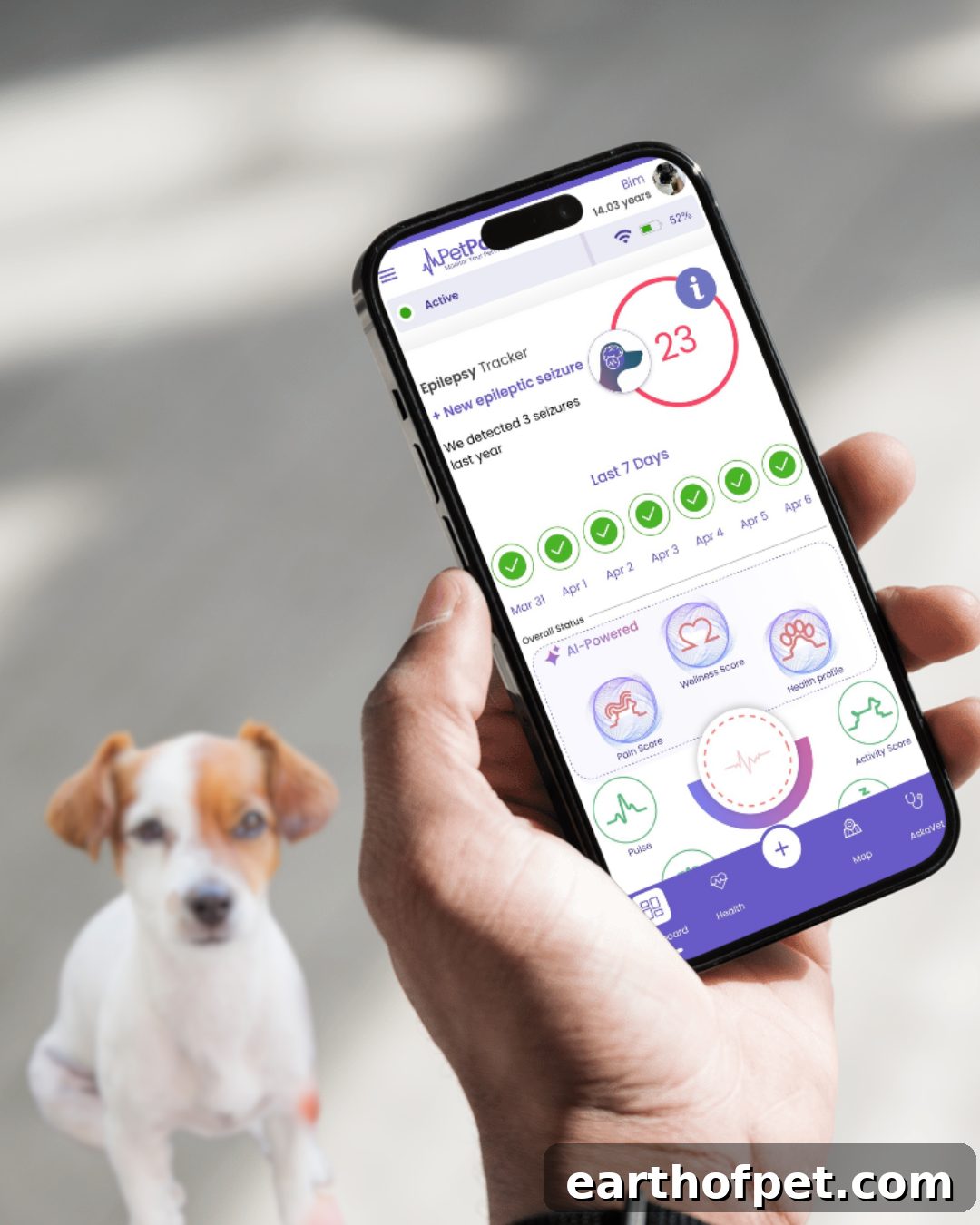
One example is the PetPace smart health collar, which is designed to help build a more continuous, consistent picture of your dog’s vital signs and behavior. Such devices don’t replace the role you play as a caregiver; they support and augment it by collecting data that can reveal patterns you might otherwise miss.
Because Confidence Comes From Clarity
Epilepsy can be difficult to manage because it’s often difficult to fully observe. Even with careful tracking and responsible care, an incomplete picture can make good decisions feel uncertain. Increasing visibility—by reassessing baselines, tracking patterns more continuously, and sharing clearer information with your veterinarian—can reduce doubt and make management more straightforward.
When the overall picture becomes clearer, the steps you take to care for your dog will be informed by better data, and both you and your veterinarian can act with greater confidence.