Dehydration occurs when a cat loses more fluid than it takes in, and it’s not only a loss of water — essential electrolytes are also depleted. These minerals (such as sodium, potassium, and chloride) are critical for normal organ and cellular function, so dehydration can quickly affect multiple systems in a cat’s body.
What Causes Dehydration in Cats?
Cats can become dehydrated for a variety of reasons. Common causes include:
- Overheating from high temperatures or sun exposure
- Fever related to infection or inflammation
- Illnesses that reduce appetite or impair water intake
- Diarrhea, which causes rapid fluid and electrolyte loss
- Vomiting, which prevents normal hydration and nutrition
- Metabolic disorders such as kidney disease or diabetes that increase fluid loss or reduce thirst
Dietary factors also play a role. Cats fed exclusively on dry food may not consume enough moisture because dry kibble typically contains about 10% moisture, compared with 70–80% for canned or wet food. This makes wet food a helpful option for increasing daily fluid intake.
What are Some Symptoms of Dehydration?
Dehydration can produce a range of signs. Here are five of the most common symptoms to watch for:
- Low energy and lethargy. While cats sleep a lot naturally, a dehydrated cat may be unusually listless or slow to respond to normal activities. Any sustained change in activity level is worth monitoring.
- Loss of appetite. Nausea or general malaise can lead a cat to refuse food. Reduced food intake often worsens dehydration because the cat is getting even less fluid.
- Panting. Cats do not usually pant; when they do it often signals overheating, pain, or another medical issue that requires attention.
- Pale, sticky gums or thick saliva. Healthy gums are usually moist and pink, and saliva is thin. Dehydration makes saliva thick and rope-like, and gums may appear dry, tacky, or pale. Pressing gently on the gums of a well-hydrated cat produces a brief white spot that quickly returns to pink; in a dehydrated cat this refill takes noticeably longer.
- Sunken or dull eyes. Dehydration can make a cat’s eyes appear recessed or less bright than usual.
Skin Tent Test
A simple at-home check is the skin tent test: gently lift the skin at the back of the neck between the shoulders and release it. In a hydrated cat the skin should snap back into place quickly. If the skin returns slowly or stays elevated, this suggests at least mild dehydration; if it doesn’t return at all, the dehydration may be severe. Be aware that older cats often have reduced skin elasticity even when hydrated, so use this test together with other signs and consult your veterinarian when unsure.
What to do if Your Cat is Dehydrated
If you suspect your cat is dehydrated, contact your veterinarian promptly. Veterinary care typically involves fluid therapy administered subcutaneously (under the skin) or intravenously, depending on how severe the dehydration is. Your vet will also run tests to identify the underlying cause — blood work, urinalysis, and other diagnostics may be needed to guide treatment and rule out serious conditions.
How to Prevent Dehydration
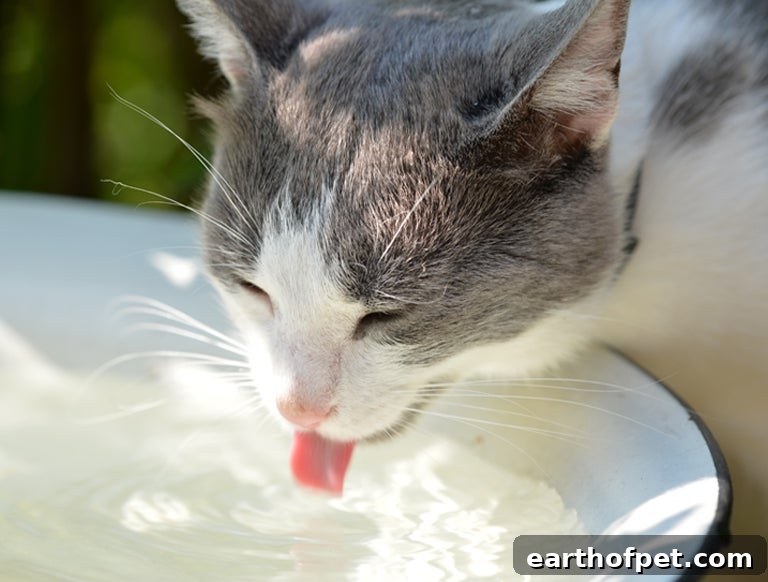
- Cats need approximately 3.5–4.5 ounces of water per 5 pounds of body weight each day. Ensure easy access to fresh, clean water in multiple locations around the home.
- Clean water bowls daily to keep the water palatable and to reduce bacteria build-up.
- Some cats strongly prefer flowing water. If yours does, a well-maintained pet water fountain can encourage drinking.
- If your cat eats only dry food, discuss with your veterinarian the possibility of transitioning to wet food or adding canned food to increase moisture intake.
- Keep the home well-ventilated and at a comfortable temperature, especially in hot weather. Use air conditioning or safe fans to lower heat exposure when needed.
- For outdoor cats, provide shaded water bowls and refresh the water often. Adding ice cubes can help keep water cool on hot days, and make sure shelter is available in shaded areas.
- Monitor your cat’s water intake and watch for early signs of dehydration such as reduced drinking, lethargy, or changes in gum color.
- If your cat consistently drinks too little, consult your veterinarian about safe ways to entice drinking — for example, a small amount of low-sodium chicken broth or a veterinarian-recommended nutrient-enhanced water additive may help. Only use products your vet approves.
- Keep up with routine veterinary exams so underlying health problems that increase dehydration risk can be detected and managed early.
Being attentive to your cat’s drinking habits, environmental comfort, and overall behavior will help prevent dehydration and support long-term health. If you ever have concerns about your cat’s hydration or wellbeing, contact your veterinarian for guidance and prompt care.