Patient Condition and History
Miguel is an 11-month-old, 9-pound male Chihuahua mix that sustained severe bite wounds after an encounter with a much larger dog. His injuries included deep puncture wounds to the neck and a significant wound to the left elbow. He was unable to bear weight on his left foreleg and tended to knuckle over, raising concerns for potential nerve or soft-tissue injury in that limb.
These kinds of injuries are commonly described in veterinary practice as BDLD (Big-Dog-Little-Dog) incidents. When a small dog fights a much larger dog, the smaller animal frequently suffers more severe damage than would occur in a fight between animals of similar size. In addition to painful external punctures and lacerations, small dogs can sustain internal trauma from shaking and crushing forces, and are at higher risk for infection and secondary complications.
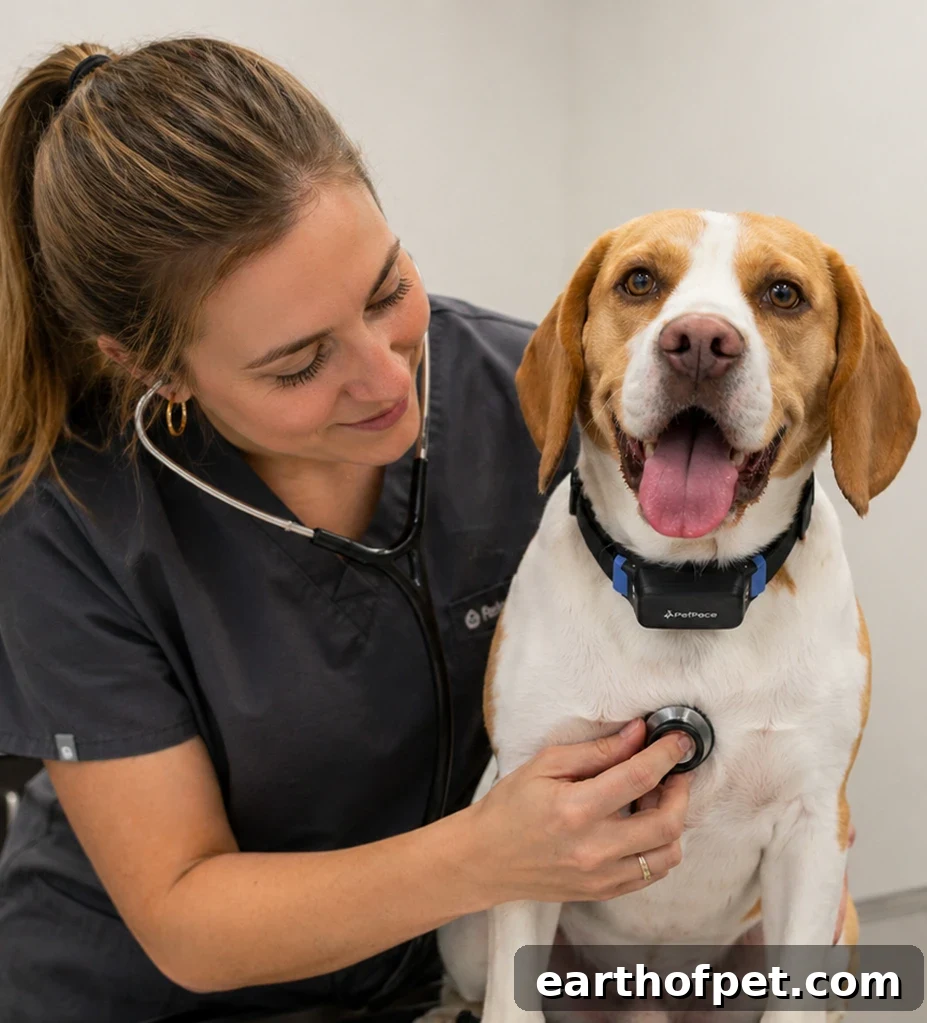
Miguel was admitted to intensive care for three days for evaluation, pain control, wound management, and supportive care. He later returned to the hospital for additional treatments, including a second surgery on his injured left leg. As part of his comprehensive care plan, a PetPace smart collar was fitted to monitor his vital signs and pain-related changes continuously and noninvasively.
Monitoring Data
The PetPace collar provided minute-by-minute monitoring of Miguel’s vital signs, activity levels, body positions, and heart rate variability (HRV). Data streamed in real time to the veterinary team through PetPace’s professional web application, allowing caretakers to track trends and alerts without repeatedly handling the dog. This remote, automated collection reduced the need for stressful physical exams while still delivering clinically useful information.
During his hospitalization Miguel remained clinically stable and was discharged after three days. Follow-up visits documented gradual improvement: his pain diminished, wound healing progressed, and function in the left foreleg recovered over time. The PetPace position-detection algorithm captured one meaningful milestone in his recovery—initially he spent almost no time lying on his left (injured) side, but within one week the collar recorded him resting on that side for more than four hours, indicating return of comfort and limb use.
Chart showing total time spent lying on the injured (left) side. One week after the injury and subsequent treatment, the dog significantly resumed lying on the left side, reflecting healing and reduced pain.
Discussion
In veterinary medicine, clinicians frequently face a trade-off between obtaining frequent vital-sign measurements and minimizing stress caused by handling. Repeated restraint and monitoring can increase pain, anxiety, and the risk of injury for both the animal and staff, and may even worsen the patient’s clinical status. Yet reliable, timely physiologic data are essential for informed clinical decisions and high-quality nursing care.
In Miguel’s case, the PetPace collar helped reconcile these conflicting needs by enabling continuous, intensive monitoring while minimizing physical interactions. Unlike traditional telemetry systems that require wires, clips, or bulky equipment, the PetPace collar is lightweight, easy to apply, and unobtrusive. It measures a wide range of health indicators—temperature, pulse, respiration, activity, body positions, calories burned, and heart rate variability—then transmits that information securely to the care team for real-time review.
Because the data are accessible on mobile devices and through a professional web interface, clinicians can monitor trends, detect early signs of deterioration, and prioritize interventions without repeatedly disturbing a recovering patient. That capability not only improves patient comfort and reduces the risk of additional stress-related complications, but also frees veterinary staff to focus on diagnostics, treatment, and other critical tasks.
“This case demonstrates one aspect of the revolution that PetPace is bringing to the veterinary world,” said Dr. Asaf Dagan, DVM, Diplomate ABVP (Canine and Feline practice), and PetPace’s Chief Veterinarian. “For the first time in veterinary medicine it is possible to receive streaming health data on patients without subjecting them to excessive handling. Even better, this can be accomplished while simultaneously freeing up medical staff for other tasks.”
Conclusions
Continuous monitoring of hospitalized pets no longer requires repeated, potentially distressing physical exams. The patented smart PetPace collar gathers a broad set of health-related metrics and transmits alerts and trends in real time to caregivers, enabling a higher level of care while substantially reducing the need for invasive handling. This approach lowers stress and risk for patients and optimizes the use of clinical personnel.
“Using the PetPace collar on Miguel was a great relief for the dog, his owner and us,” said Dr. Sue-Ann Gentry of Paw Creek, NC, Miguel’s veterinarian. “Like many BDLD cases, this poor young dog suffered serious painful injuries and had to undergo more than one surgery. The collar enabled us to keep a close eye on his condition but, at the same time, allowed him to rest and avoid the frequent handling that typically comes with intensive monitoring.”
Cases such as Miguel’s illustrate how noninvasive, continuous monitoring technology can improve patient welfare, support better clinical decision-making, and enhance overall outcomes for injured and recovering companion animals. By capturing objective physiologic and behavioral data around the clock, veterinary teams can detect changes earlier, tailor interventions more precisely, and promote safer, less stressful recoveries for vulnerable patients.