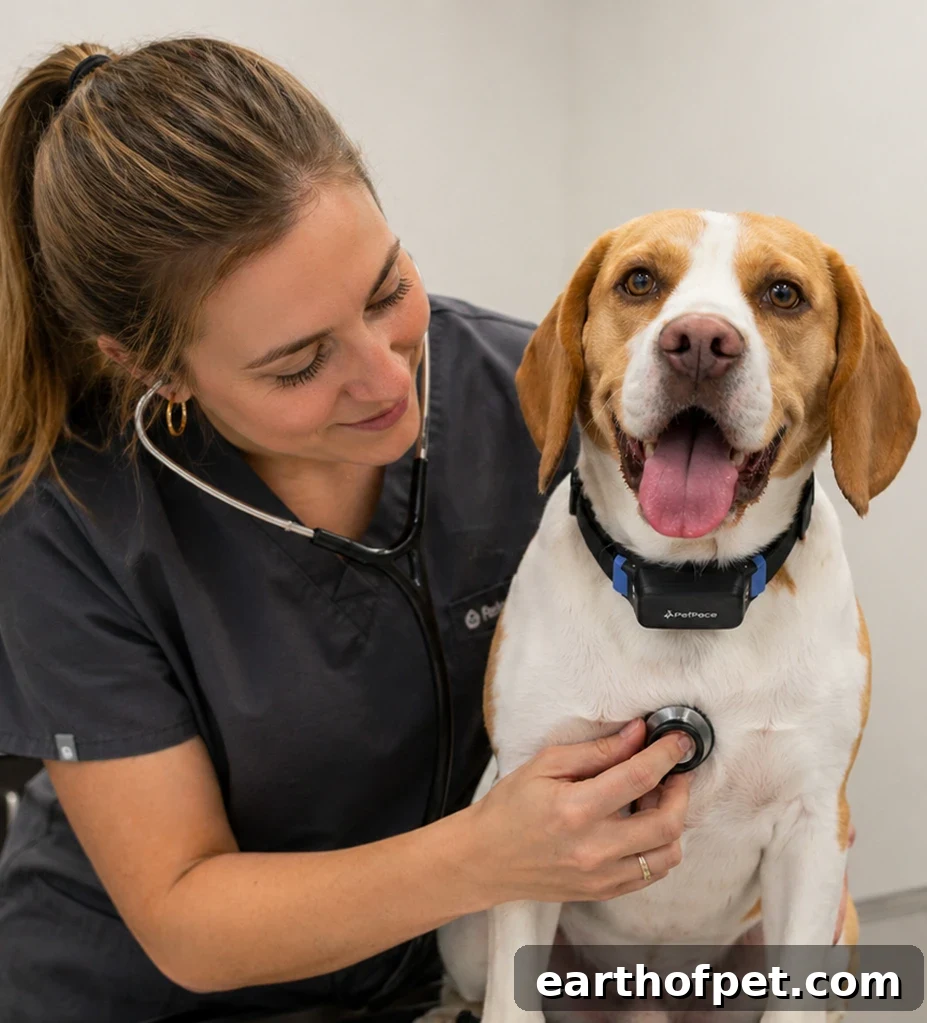
Shifting pet care from reactive to proactive.
Originally Featured on Woof News
Issue #109
Roy Ben Tzvi
October 15, 2024
This week we sat down with Asaf Dagan DVM, Chief Veterinary Officer and Co-founder of PetPace, and Lior Abraham, President of PetPace. The pet care industry is undergoing a technological transformation, and the smart collar segment is at the center of that change. As wearables gain sophistication, their role is shifting from convenience and activity tracking toward real, clinical-grade health monitoring that enables proactive care.
The move from reactive to proactive pet care is already underway, led by innovators like PetPace, whose approach integrates continuous biometric monitoring with advanced analytics to deliver actionable health insights for pet owners and veterinarians alike.
How does PetPace differ from other smart collars, and how can one product stand out in this evolving market?
Asaf Dagan – PetPace stands out because it focuses on assessing a pet’s true health status rather than only tracking activity. Where many consumer devices emphasize steps or general movement, PetPace is designed to continuously measure the vitals vets rely on: pulse, temperature, respiration, heart rate variability (HRV), and posture, along with activity and location. This comprehensive, continuous dataset is what makes accurate health assessment possible.
Collecting a wide range of physiological metrics around the clock allows PetPace to power AI-based analytics that detect early changes in a pet’s condition—often before overt symptoms appear. Relying on activity alone, as some competitors do, is inadequate for clinical assessment. Just as human doctors begin with vital signs, reliable pet health monitoring must include continuous tracking of the same core metrics to provide meaningful, trustworthy insights.
What’s your background? Can you share the origin story of PetPace?
Asaf Dagan – My background as a veterinarian showed me a persistent problem: many medical conditions in pets are discovered only when they are already advanced, limiting treatment options. Chronic illnesses often develop gradually, and animals have instinctive tendencies to mask discomfort. PetPace was born from the idea that if we could measure the same clinical signals veterinarians use—continuously and in the pet’s normal environment—we could identify issues early and intervene when treatments are most effective. The goal is early detection and better outcomes through continuous, real-world monitoring.
Running a hardware business presents unique challenges. Can you talk about your approach to manufacturing, supply chain management, and ensuring product quality?
Lior Abraham – Quality is a top priority for us. We invest significantly in processes and systems that maintain product integrity throughout manufacturing and fulfillment. Our manufacturing follows stringent industry standards and protocols. We’ve built automated testing to validate each unit during and after production, and we complement that with sampling and manual quality checks. We also ensure the product meets relevant certifications and regulatory standards to maintain consistent reliability for pet owners and veterinarians.
What have been your most successful marketing channels?
Lior Abraham – We use a mix of channels to reach pet owners, veterinary professionals, researchers, and potential partners. Our strategy includes social media advertising, search engine ads, email marketing, affiliate and referral programs, collaborations with partners, and a coordinated communications plan. Combining multiple channels ensures we connect with both consumers and industry stakeholders in meaningful ways.
Where do you see the pet wearables market in 10 years and how will it help the veterinary industry now and in the future?
Asaf Dagan – I expect substantial growth in the pet wearables market. The need is clear: pet owners want better ways to monitor their animals’ health, and veterinarians can benefit from continuous objective data. In a decade, devices like PetPace should be mainstream—commonly used by pet parents and integrated into veterinary practices. Wearables will play a key role in telemedicine by providing real-time physiological data that improves virtual examinations, supports pre- and post-operative monitoring, helps evaluate drug efficacy, and assists triage decisions such as whether a pet requires emergency care.
Beyond telemedicine, widespread adoption of wearables will deepen our collective understanding of pet health and disease. Vets will be able to observe how patients behave and respond to treatment in their natural environments, enabling more precise diagnoses and personalized care plans. We’re already seeing veterinary practices embrace virtual care; combining that trend with wearable technology will be a game changer for preventive medicine and chronic disease management.
Tell us about the joint study with Pet Acoustics on how music affects pet stress levels.
Asaf Dagan – Pet Acoustics develops music specifically designed to reduce stress in dogs and cats. We partnered with them to measure stress markers using PetPace collars and provide scientific data to support behavioral observations. In the study, we tracked physiological indicators of stress in both dogs and cats while Pet Acoustics music played and compared those readings to baseline periods without the music. The results showed reduced stress markers when the music was played, confirming what trainers and owners had observed behaviorally and demonstrating how wearable biometric monitoring can validate interventions aimed at improving animal welfare.
What crucial metrics are pet owners missing that PetPace can provide?
Asaf Dagan – Owners can observe behavior and general activity, but they cannot easily measure vital physiological metrics like temperature, pulse, HRV, and respiration. These biomarkers are essential for an accurate health assessment. Activity alone is influenced by many external factors—weather, lifestyle, temperament—and doesn’t reliably indicate underlying health issues. Physiological markers, however, provide objective signals. When they deviate from a pet’s baseline or from established norms, they point to real changes in health and well-being, enabling earlier intervention and more informed care decisions.
In short, continuous biometric monitoring with a clinically focused smart collar gives pet owners and veterinarians the tools to move from reactive responses to proactive health management, improving outcomes and enhancing the quality of life for pets.