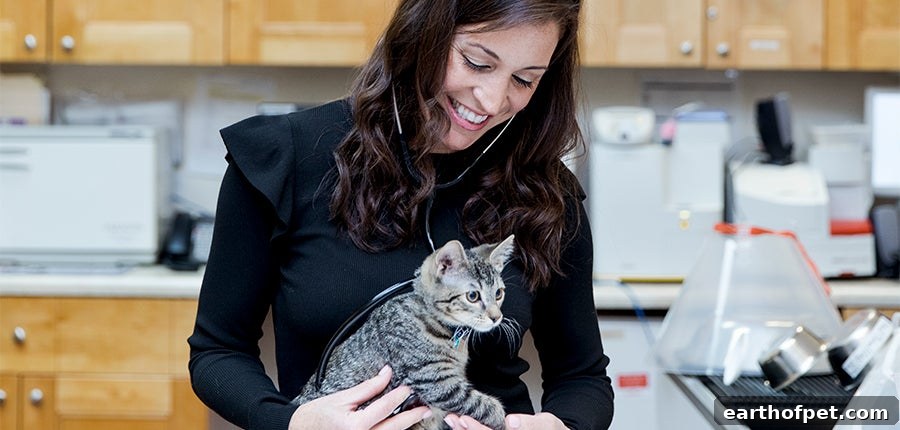
A recent article on CompanyGlance highlights new evidence that relatively simple environmental changes can meaningfully reduce stress in shelter cats, and it credits the PetPace smart collar with providing the precise, continuous data researchers needed to demonstrate those benefits. The article centers on a study led by researchers at Michigan State University that examined how indoor lighting conditions influence stress-related measures in cats during their first days in a shelter. By using the PetPace smart health collar, the team monitored behavior, sleep patterns, and physiological indicators in a way that minimized disturbance to the animals and captured day-to-day variation.
“The PetPace collar was an essential tool in our study, providing continuous, high-resolution data… that would not have been possible with spot-check methods.” – Dr. Alexandra Yaw, Lead Researcher
The study observed 101 cats during their initial days in a shelter setting and compared outcomes under different indoor lighting schemes. Cats housed in enclosures with dim, sunset-like lighting showed notably lower cortisol levels, a widely recognized physiological marker of stress. While the study did not rely on intermittent observations alone, the key advantage came from the PetPace collar’s ability to record continuous, non-invasive measurements. That continuous monitoring helped researchers detect subtle shifts in behavior and physiology over time—insights that spot checks or purely observational methods often miss.
Cortisol is one of several indicators that researchers use to gauge an animal’s stress response. Lower cortisol levels in the dim-light group align with behavioral and sleep changes recorded by the collars, suggesting that lighting adjustments can create a calmer environment for cats who are adapting to the stressors of a shelter. By tracking movement, rest cycles, and physiological signals continuously, the PetPace system provided a more complete picture of each cat’s daily rhythm and recovery patterns, enabling the team to link environmental conditions directly to measurable welfare outcomes.
Beyond the immediate findings about lighting, this work showcases the broader value of wearable health technology in animal welfare and shelter management. Smart collars and similar devices produce objective, high-resolution data that shelters and veterinarians can use to evaluate interventions, refine housing protocols, and prioritize changes that improve animal comfort. Unlike traditional observation—which can be intermittent and influenced by observer presence—wearables offer consistent, repeatable metrics. That objectivity helps staff make evidence-based decisions about enrichment, placement, and the design of spaces intended to reduce stress for incoming animals.
Practical implications from the study are straightforward and actionable. Adjusting lighting to mimic natural dusk conditions, reducing harsh overhead illumination, and creating quieter, more predictable visual environments are low-cost modifications that shelters can test and adopt. Paired with continuous monitoring from devices like the PetPace collar, shelters can track the effectiveness of these changes in real time and across many individuals, iterating on improvements with data-driven confidence.
For researchers, the combination of wearable monitoring and controlled environmental interventions opens new possibilities for studying animal welfare under realistic shelter conditions. Continuous data enables analysis of sleep quality, activity patterns, and physiological responses over hours and days, rather than relying solely on snapshots in time. That richer dataset improves the rigor of research and increases the likelihood that findings will translate into practical shelter practices that enhance feline well-being.
Ultimately, this study adds to a growing body of evidence that modest, thoughtful adjustments to the shelter environment can improve the welfare of cats during a stressful transition period. Wearable technology such as the PetPace smart health collar makes it possible to measure those improvements objectively, helping shelters and veterinary teams implement changes that support calmer, healthier animals as they move toward adoption.
Read the full article on CompanyGlance: How Smart Collars Help Shelter Cats Feel Less Stressed
For more information about PetPace and its applications in research visit: https://petpace.com/researchers/