Patient Condition and History
Pippa is a nine-year-old, 61 lb spayed female Labrador Retriever who has experienced hip dysplasia since early life. Hip dysplasia is a common orthopedic condition, especially in large-breed dogs, that causes improper formation of the hip joint. This malformation leads to joint laxity, progressive degeneration, inflammation and, frequently, chronic pain that requires monitoring and management.
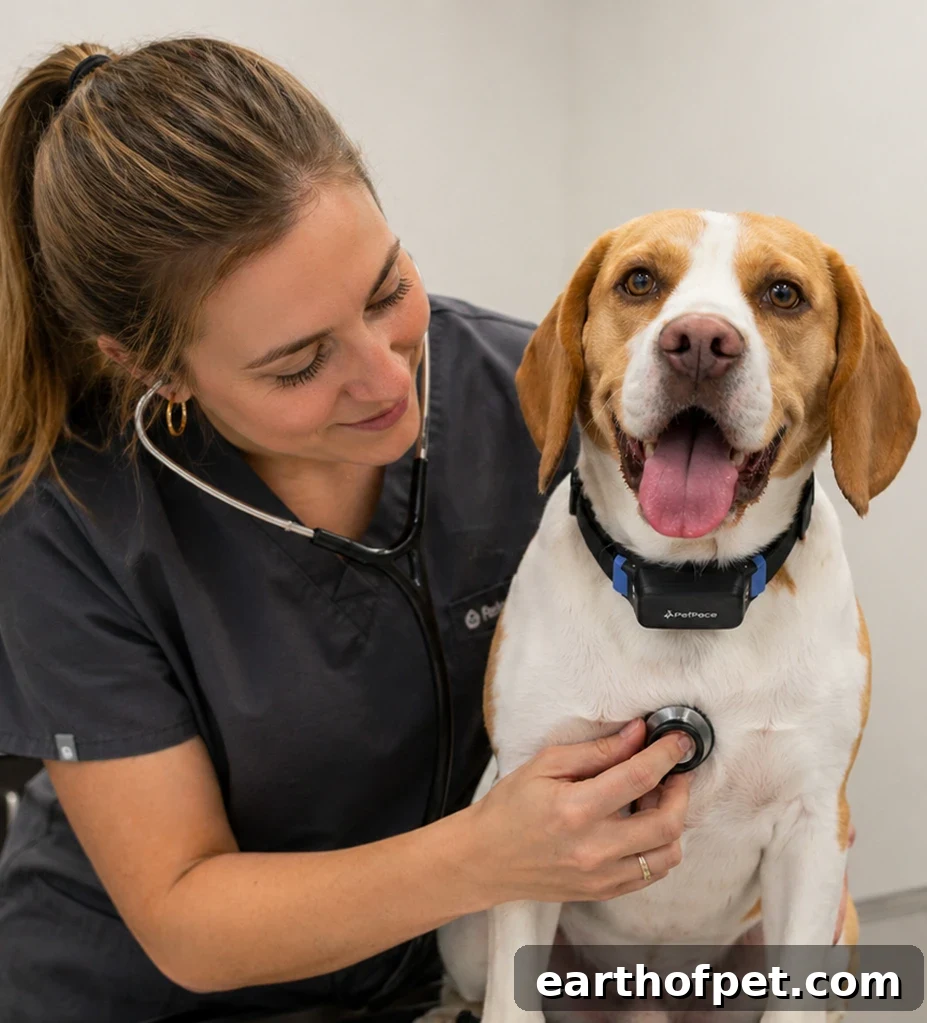
To better assess Pippa’s overall health and comfort, a PetPace collar was placed to monitor physiological and behavioral parameters associated with hip dysplasia, chronic pain and general wellbeing.
Monitoring Data
The PetPace Health Report provided a statistical analysis of Pippa’s continuous monitoring data, comparing her values to those of dogs with similar breed, age, weight and sex. Key findings include:
- Pulse – Pippa’s average pulse was 74 bpm (range 51–123), slightly better than the typical values reported for female Labrador Retrievers of the same age and weight (average 79; range 49–108).
- Respiration – Her average respiratory rate was 17 breaths per minute (range 10–26), which is similar to the reference group average of 20 (range 9–29).
- Resting time – Pippa rested 90.8% of the time. While this is higher than the overall species average of 81%, it is consistent with the rest patterns seen in other Labradors of her age and weight (approximately 92%).
- Positions – Most dogs similar to Pippa spend about 13% of rest time lying on their left side, but Pippa only spent 8% of rest time on her left side. This deviation may indicate discomfort or pain when lying on that side, which can be linked to hip pathology.
- Heart Rate Variability (HRV) – HRV indices, used as objective markers for autonomic balance and potential pain, were generally within normal ranges. For example, Pippa’s VVTI (Vaso-Vagal Tonus Index) average was 11.5.
Most of Pippa’s monitored values, except HRV, showed limited daily variability. However, HRV occasionally fell to lower values, suggesting intermittent episodes of discomfort or pain.
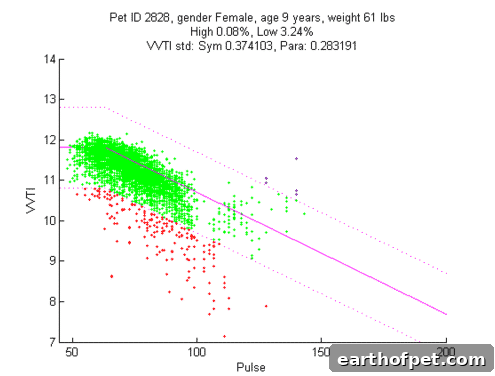
Pippa’s VVTI vs. pulse chart showing an above-normal proportion of points below the expected VVTI range (red points).
To investigate intermittent pain more precisely, caregivers examined minute-by-minute HRV using a scatter plot of VVTI against simultaneous pulse readings. Clinical experience and preliminary analyses suggest that an elevated percentage of plot points falling below the normal VVTI range correlates with pain and certain medical conditions. In Pippa’s case, 3.2% of data points fell below the normal VVTI range—higher than typical—supporting the presence of intermittent discomfort.
Discussion
Pippa did not display obvious, continuous signs of pain, and many of her vital signs were within or slightly better than expected ranges for her breed, age and weight. Despite that, the positional data and minute-to-minute HRV analysis revealed subtle but important indicators of intermittent pain related to hip dysplasia.
While Pippa’s overall average HRV appeared normal, closer inspection of detailed HRV trends showed variability—periods of decreased vagal tone and lower VVTI—that can reflect intermittent pain episodes. Pets with inflammatory joint disease commonly experience fluctuations in comfort influenced by factors such as activity level, weather, diet and other environmental or physiological triggers.
The position data reinforce this interpretation: Pippa spends significantly less time lying on her left side than similar dogs, which is consistent with discomfort localized to one side of the hips. Although HRV and position metrics are not diagnostic of a specific condition on their own, they are useful statistical indicators that flag potential problems requiring clinical correlation.
Pippa’s owner and primary caregiver, Dr. Nitzan Kroter, a veterinary surgeon based in Enfield, UK, has not identified other medical conditions that would explain these findings. Based on the clinical picture and continuous monitoring, he attributes the intermittent signs to chronic pain from hip dysplasia.
“Detecting chronic or intermittent pain in animals is a major challenge because pets often hide their discomfort and adapt their behavior,” explains Dr. Asaf Dagan, DVM, Diplomate ABVP (Canine and Feline Practice) and Chief Veterinarian at PetPace. Long-term, objective monitoring provides data that can reveal subtle trends and intermittent pain episodes owners and clinicians might otherwise miss.
Dr. Kroter adds that the PetPace collar’s continuous monitoring helps him identify those intermittent pain events and manage them appropriately, enabling targeted treatment while preserving Pippa’s quality of life.
Conclusions
Chronic pain in companion animals, particularly when intermittent, is easily under-diagnosed because pets often mask symptoms and maintain normal behaviors. Identifying and treating pain is essential both for the animal’s welfare and for preventing secondary medical consequences. Surveys indicate that pain in the pet population remains frequently unrecognized.
The PetPace collar supports detection of chronic pain by tracking physiological and behavioral markers—such as heart rate variability, pulse, respiration and resting positions—over both short and long terms. By comparing a pet’s metrics to its own baseline and to reference values for similar animals, caregivers and veterinarians can detect deviations that suggest pain exacerbations or declining wellbeing.
Hip dysplasia and related joint diseases are common causes of chronic pain and reduced mobility in dogs and cats. Continuous monitoring with devices like the PetPace collar can reveal intermittent pain episodes, guide therapeutic decisions, and ultimately improve pain management and quality of life for affected pets like Pippa.