Earthquakes are notoriously hard to predict, but dogs could help bridge the gap.
Originally published on: ABC News
By: Julia Jacobo
Video by: Nicolas Rothenberg
May 2, 2024, 5:03 PM
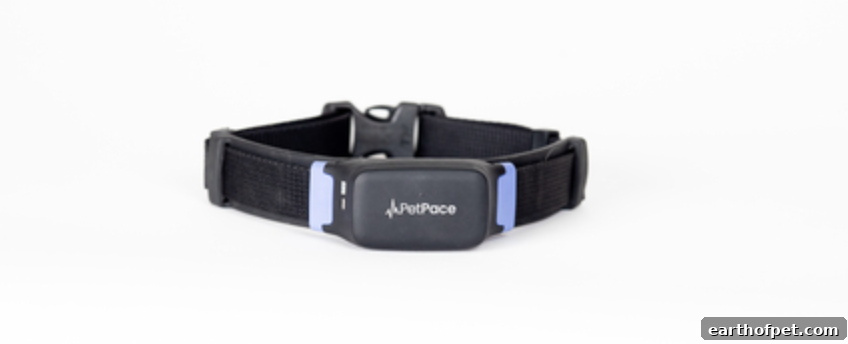
A small device worn on a dog’s collar may finally turn centuries of anecdotal reports about animals sensing earthquakes into usable data. Developers of the PetPace biometric collar, originally created to monitor pet health and detect early signs of illness, say the device’s physiological recordings could improve short-term earthquake forecasting.
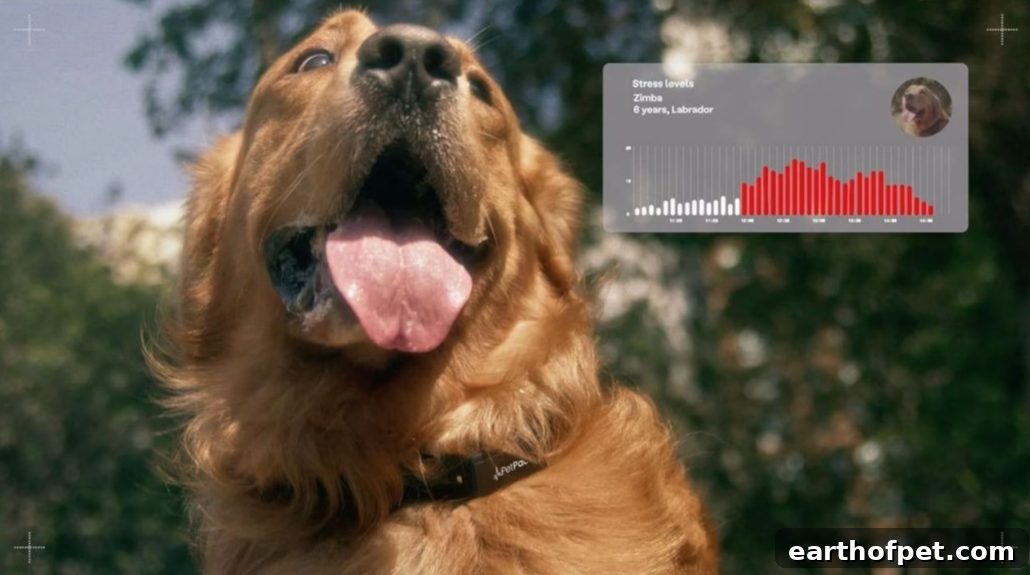
The collar collects continuous measurements of pulse, heart rate variability, body temperature, respiration and activity levels, sending that data in real time to the PetPace cloud. Asaf Dagan, chief scientist and cofounder of PetPace and the parent company Animal Alerts, says an AI algorithm then assesses each dog’s overall stress level. When many dogs in the same region show similar changes within a short time window, the system could detect a pattern that precedes seismic events.
“The idea is that if we can track the behavior and the anxiety levels of animals…and then we use AI and machine learning advanced models to correlate that with geophysical data like earthquakes of different magnitudes,” Dagan said.
To test the approach, Animal Alerts recruited pet owners across targeted geographic areas who volunteered to have their dogs wear the smart collar. The company also monitors dogs in locations with little seismic activity to serve as a control group for comparison. The current field project is underway in Lima, Peru, a region that lies along the Pacific Ring of Fire and experiences frequent seismic activity.

Stories of animals acting strangely before earthquakes go back millennia. The earliest recorded account often cited is from 373 BC in Greece, when reports described rodents and other small animals abandoning their burrows days before a powerful quake. Historical anecdotes include unusual behavior from birds, fish, reptiles, insects, cats, elephants and toads, with timing ranging from weeks to seconds before a quake.
For decades this accumulated evidence remained largely anecdotal. A 2018 review published in the Bulletin of the Seismological Society of America examined about 180 studies and found that public perception strongly favors the idea that animals can signal impending earthquakes. However, scientists have struggled to identify consistent, reliable animal behaviors that reliably precede seismic activity.
Some controlled observations do suggest measurable changes. Researchers in Germany filmed red wood ants nesting along a fault line and reported suppressed nocturnal rest and altered daily activity hours before seismic events. Another study in 2020 by scientists at the Max Planck Institute of Animal Behavior and the University of Konstanz tracked biologger and GPS data from cows, dogs and sheep near the epicenter of a 6.6-magnitude quake in Italy. That work found increased activity among animals housed together prior to earthquakes of magnitude 3.8 and larger, and reaction times varied with distance from the epicenter.
In the Italian study, animals appeared to respond between one and 20 hours before noticeable shaking, reacting earlier when they were closer to the quake’s origin. But researchers emphasized that while these observations are compelling, they did not establish a definitive causal mechanism for the behavioral changes.
Not every expert is convinced a collar-based approach will succeed. Earthquake geologist Wendy Bohon has expressed skepticism, noting that she has yet to see a convincing study proving animals can predict earthquakes before they happen. Geologists point out that there are no proven precursors to seismic events that can be consistently measured across different regions and fault systems.
Bohon and other seismologists emphasize that extraordinary claims require extraordinary evidence. Still, scientists welcome any additional high-quality data that might reveal new patterns or signals. Collecting physiological and behavioral information from many animals across different environments could expand the sample size of studied events and improve statistical analyses.
Proponents argue dogs are especially well suited as sentinels because of their acute senses. Dogs can detect faint odors and higher-frequency sounds beyond human perception, which might allow them to sense subtle environmental changes—such as small precursor ground motions, low-amplitude acoustic waves, ionization near stressed rocks, or airborne chemicals released before a rupture—that humans would miss.
“Dogs are particularly useful models of this phenomenon due to their acute senses and their close proximity to humans,” Rachell Grant, behavioral ecologist and lead for the Animal Alert project, said in a statement.
Scientists point out that animals might sometimes react to the first, smaller seismic waves (P waves) that arrive from a quake before the stronger, more damaging S waves are felt by people. In that case, animals would not be predicting the earthquake in a predictive sense but rather responding to subtle early signals humans typically do not detect.

Past proposals have explored crowdsourcing animal behavior through social media and community reporting as an early warning concept. After major quakes, people often point to unusual animal behavior in the hours or days beforehand, but anecdotal reports are difficult to verify and standardize.
In 2015, camera-based observations in the Amazon suggested that animal movements changed weeks before a 7.0-magnitude quake, indicating the potential for low-cost observational systems. Still, no technology today can reliably predict earthquakes, and researchers continue to search for reproducible signals and robust methods.
Animal Alerts’ collar-based effort aims to contribute consistent, time-stamped physiological data from many individual animals to help researchers test hypotheses about animal sensing and seismic precursors. Scientists say they welcome more data so they can explore every possibility, even as rigorous evidence is required before any system could be used as a practical warning tool.
“We want all the data and information that we can get, so that we can explore every possibility,” Bohon said. “But extraordinary claims require extraordinary evidence.”