
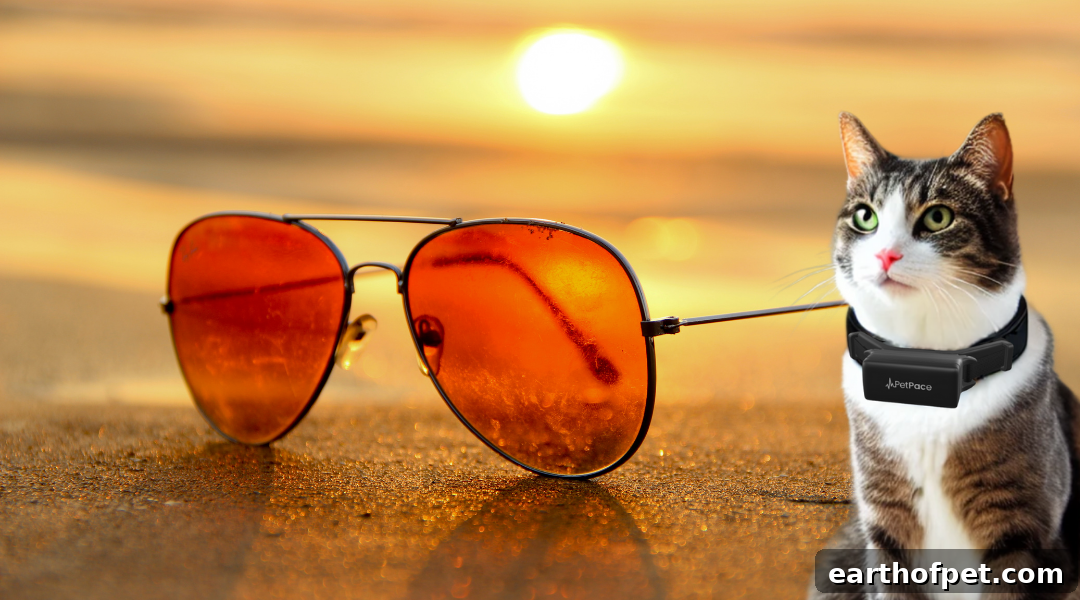
CHICAGO – Experts from PetPace, the manufacturer of health-monitoring smart collars for cats and dogs, are warning pet owners about the dangers of rising summer temperatures and explaining how the PetPace smart collar can help protect pets. According to Dr. Asaf Dagan, PetPace’s chief veterinarian, people should be aware of the physical limits of their animals and take steps to prevent heat-related illness. Leaving pets outside for long periods, pushing them into strenuous activity during the heat, or leaving them unattended in a vehicle can all have severe, sometimes fatal, consequences. A continuous monitoring device can detect early signs of trouble and alert owners before a condition becomes critical.
The PetPace smart collar functions similarly to human wearable health devices, such as activity trackers and smartwatches. It continuously measures vital signs and behavior patterns that provide a clearer picture of a pet’s overall condition. Tracked data include body temperature, pulse, respiration, activity level, body posture, heart rate variability and calorie expenditure. These metrics help owners and veterinarians spot deviations from a pet’s normal baseline so they can act quickly when needed.
Continuous monitoring is especially valuable for pets that are older, recovering from illness, overweight, or otherwise at increased risk for complications. “Most pet owners are aware of the danger summer heat can have on the health of their dog; however, it can be challenging to quickly identify the development of conditions associated with heat stroke in pets,” said Dr. Dagan. “PetPace monitors your pet’s health continuously and can alert you at the first sign of a problem.” Early alerts can prompt timely cooling measures or a visit to the veterinarian, potentially preventing a minor issue from becoming an emergency.
Understanding a normal temperature range for pets helps owners recognize when a measurement is cause for concern. Normal body temperature for dogs typically runs between 101 and 102.5 degrees Fahrenheit, while cats average roughly 99.5 to 102.5 degrees Fahrenheit. If you do not use a health-monitoring device, it is important to watch your pet for behavioral and physical changes that may indicate overheating or heat stroke.
Signs of heat stroke in dogs and cats include the following, but aren’t limited to:
- Frequent vomiting
- Disorientation
- Collapse
- Excessive panting and/or distressed breathing
- Excessive thirst
- Increased heart rate
- Weakness and/or fatigue
- Thickened saliva
If your pet displays any of these signs, try to cool them down and seek veterinary care immediately. Move the animal to a shaded or air-conditioned area, offer fresh drinking water, and contact your veterinarian as soon as possible. If professional help is not immediately available, using fans or air conditioning and placing cool (not ice-cold) water–soaked towels on the pet can help lower their temperature. Do not immerse a dog in icy water; overly rapid cooling can cause additional harm. Instead, aim for gradual cooling and professional assessment.
Prevention is the best protection. Make sure pets always have access to fresh water and shaded resting areas during warm weather. Avoid long walks and vigorous exercise during the hottest parts of the day—opt for early morning or late evening when temperatures are lower. Be mindful of hot pavement and sand, which can burn paws and increase heat stress, and never leave a pet alone in a parked car, even for a short time; vehicles can heat up extremely quickly.
Smart collars and continuous monitoring tools give owners an additional layer of safety by detecting subtle changes that are easy to miss, such as gradual increases in body temperature, changes in breathing patterns, or reduced activity. These devices can be especially helpful for owners of senior pets, animals with medical conditions, or breeds more susceptible to overheating. By combining vigilant care with technology that tracks health indicators in real time, pet owners can respond faster to potential problems and help their animals enjoy a safer, more comfortable summer.