Hello everyone, Dr. Edward Hale here, your trusted veterinarian. With 15 years of experience helping pets and their people live happier, healthier lives, I've seen firsthand the challenges that arise when a dog's natural instincts collide with our desire for a peaceful home and enjoyable walks. One of the most common dilemmas? A dog's intense fascination – often translating into barking, lunging, and pulling – with squirrels outdoors and even the family cat indoors.
It's a scene many of you know well: you're enjoying a lovely stroll, and suddenly, a flash of bushy tail sends your dog into a frenzy. Or perhaps a serene afternoon is disrupted by your dog relentlessly pursuing your feline friend. This isn't just annoying; it can be dangerous for your dog, for the small animals, and certainly stressful for you. But here's the good news: with patience, understanding, and the right approach, you absolutely can teach your dog to be calmer around squirrels and cats. In this comprehensive guide, we'll dive into practical strategies, offering you real-world tips on how to train a dog to ignore squirrels and stop dog chasing cats indoors.
Understanding the Drive: Why Dogs Chase
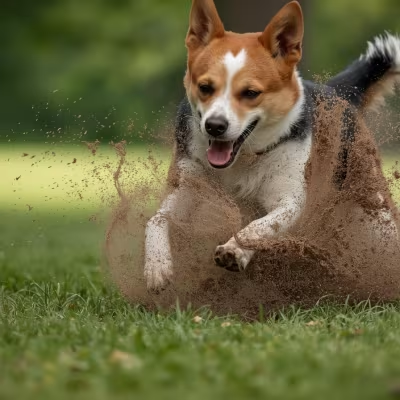
To effectively manage this behavior, we first need to understand its roots. For many dogs, especially certain breeds, the urge to chase is deeply ingrained. It's often referred to as "prey drive" – an instinctual desire to pursue, catch, and sometimes even "dispatch" small, fast-moving animals. This isn't maliciousness; it's a natural, evolutionarily advantageous trait that has been selectively bred into many dog breeds over centuries for hunting, herding, or pest control.
- Instinct: This is the primary driver. Squirrels dart, cats sneak – these movements trigger a chase response.
- Lack of Impulse Control: Even dogs with a moderate prey drive can struggle if they haven't learned to control their impulses. They see, they react.
- Boredom or pent-up energy: A dog that isn't receiving enough physical exercise or mental stimulation might be more prone to channeling that energy into chasing.
- Over-excitement: Some dogs simply get overly stimulated by novel sights, sounds, and smells, and a moving animal can push them over their excitement threshold.
The goal isn't to eliminate prey drive – that's impossible and unnecessary. Instead, it's about managing dog prey drive effectively and teaching your dog that staying calm and focusing on you is far more rewarding than the chase.
Laying the Foundation for Calmness
Before we even think about introducing triggers, we need to build a strong foundation of general calmness and responsiveness. Think of it like building a house – you need a solid foundation before you add the roof.
1. Exercise and Mental Stimulation
A tired dog is often a calmer dog. Ensure your dog is getting adequate physical exercise tailored to their breed and age. This isn't just a walk around the block; it could mean vigorous play, running, or dog sports. But don't forget mental exercise! Puzzle toys, scent work, obedience training sessions, and interactive games can tire a dog's brain just as effectively as physical activity, reducing their overall inclination to seek out external stimulation like squirrels or cats.
2. Basic Obedience and Impulse Control
These are your superpowers in managing reactivity. Your dog needs to reliably respond to core commands in low-distraction environments before we layer in high-distraction ones. Essential commands include:
- "Sit" and "Stay": Teaches self-control and waiting.
- "Come" (Recall): Absolutely critical for safety, especially if your dog slips its leash or is off-leash in appropriate areas.
- "Look at Me" or "Watch Me": Teaches your dog to disengage from distractions and focus on your face.
- "Leave It": The cornerstone of teaching impulse control around wildlife. This command tells your dog to ignore something tempting, whether it's a dropped treat or, eventually, a squirrel.
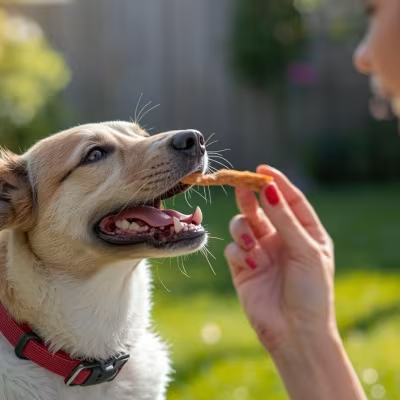
Practice these commands daily in short, fun sessions. Make them positive and rewarding! Use high-value treats – something your dog absolutely loves, like small pieces of cooked chicken, cheese, or specialized training treats.
Step-by-Step Training: Calming an Over-excited Dog on Walks (Around Squirrels)
This process requires patience and consistency. Remember, we're changing a deeply ingrained behavior, not just teaching a trick.
Phase 1: Controlled Environment & Threshold Management
- Start Indoors: Begin practicing "Leave It" with tempting, but inanimate, objects inside your home. Slowly increase the hurdle.
- Identify Your Dog's Threshold: This is the distance at which your dog first notices a squirrel but hasn't yet reacted strongly (no barking, lunging, or sustained staring). For some dogs, this might be across a football field; for others, it might be 50 feet. It's crucial to stay below this threshold during initial training.
- Choose the Right Gear: For many dogs, a front-clip harness or a head halter provides better control and reduces pulling compared to a traditional collar. Consult your vet or a professional trainer for recommendations.
Phase 2: Introducing the "Look at That" Game (LAT)
This game is fantastic for teaching your dog to look at the trigger (squirrel) and then voluntarily look back at you for a reward.
- Spot the Squirrel: When you see a squirrel at a distance where your dog notices it but isn't reacting, quietly say, "Look at that!"
- Wait for the Head Turn: The moment your dog looks at the squirrel, don't say anything yet.
- Reward the Focus Shift: The instant your dog looks back at you (even for a split second, or just shifts their gaze away from the squirrel), mark the behavior with a verbal cue like "Yes!" or a clicker, and immediately give a high-value treat.
- Repeat: Practice this multiple times. The goal is for your dog to learn: "Squirrel equals look at human, human equals delicious treat!"
Phase 3: Engage-Disengage and Redirection
Once your dog is consistently playing the "Look at That" game, you can build on it.
- Engage: Allow your dog to briefly notice the squirrel (within their threshold).
- Redirect: Before they react strongly, use your "Look at Me" command or "Leave It." The moment they comply, reward heavily.
- Disengage: Move away from the squirrel's vicinity, praising and rewarding your dog for their continued focus on you. Sometimes, a simple, calm change of direction on your walk can prevent an escalation.
Phase 4: Gradually Decreasing Distance
Over many, many sessions, and only when your dog is consistently calm and responsive at a greater distance, slowly reduce the distance to squirrels. If your dog starts reacting, you've moved too close, too fast. Increase the distance again and reinforce calmness. This is true desensitization.
Step-by-Step Training: Coexisting with Cats (Indoors & Out)
Whether introducing a new cat or managing an existing chase dynamic, safety is paramount. The goal is peaceful coexistence, not necessarily best friends.
Phase 1: Safety First & Environmental Management
- Supervision is Non-Negotiable: Never leave a dog and a cat unsupervised if the dog has a history of chasing, harassing, or showing aggression towards cats. Use baby gates, closed doors, and crates to separate them when you cannot actively supervise.
- Create Safe Zones for the Cat: Ensure the cat has multiple escape routes and places where the dog cannot reach them – high shelves, cat trees, cat-only rooms (e.g., with a cat door the dog can't fit through).
- Leash Management Indoors: Initially, especially if the chasing is severe, keep your dog on a leash indoors when the cat is present. This allows you to interrupt unwanted behavior immediately and redirect.
Phase 2: Controlled Introductions and Positive Associations (for new cats or severe chasing)
This is critical for safely introducing a dog to a new cat.
- Scent Swapping: Rub a cloth on your cat, then let your dog sniff it (and vice versa). Reward calm investigation. This helps them get used to each other's scent in a non-threatening way.
- Visual Separation (Gate/Crate): Allow them to see each other through a barrier. Keep sessions short and positive. When the dog sees the cat and is calm, reward the dog lavishly. If the dog fixates or tries to chase, calmly redirect and end the session. Never force interaction.
- Supervised On-Leash Interactions: With your dog on a leash (front-clip harness often helps here), allow them into the same room as the cat. Keep the dog focused on you using "Look at Me" or "Sit/Stay" and reward heavily for calm behavior and ignoring the cat. If the dog shows any signs of chase intent, calmly remove them.
- Teaching "Leave It" and "Go to Your Place": These are vital indoors. Teach your dog that "Leave It" applies to the cat, and "Go to Your Place" sends them to a designated, comfortable spot away from the cat, where they will also be rewarded for staying calm.
Phase 3: Rewarding Calmness and Disengagement
Once your dog is more accustomed to the cat's presence, focus on rewarding desirable behaviors.
- Quiet Observation: Reward your dog for simply lying down calmly while the cat walks by.
- Ignoring the Cat: If your dog looks at the cat and then looks away, or doesn't react at all, that's a jackpot! Mark and reward.
- Playing Independently: If your dog is playing with their toys or chewing a bone while the cat is nearby, praise and reward.
Consistency is key. Every time your dog practices the undesirable behavior (chasing), they get better at it. Every time they practice calmness, they get better at that.
Common Mistakes to Avoid
As a veterinarian, I've seen these pitfalls derail many well-intentioned training efforts:
- Punishing Reactivity: Yelling, jerking the leash, or physically punishing your dog when they react to a squirrel or cat often makes the situation worse. It can increase their anxiety and fear, associating the trigger (squirrel/cat) with punishment and your presence with discomfort. This can lead to fear-based aggression or increased reactivity.
- Expecting Too Much Too Soon: This is a marathon, not a sprint. Training takes time, often months or even years. Celebrate small victories and don't get discouraged by setbacks.
- Inconsistency: If you allow your dog to chase sometimes and stop them other times, you're sending mixed signals. Be consistent with your expectations and training.
- Not Using High-Value Rewards: Kibble often won't cut it when competing with the thrill of a chase. Use treats your dog absolutely adores.
- Allowing Rehearsal of Unwanted Behavior: Every time your dog chases, they are practicing and reinforcing that behavior. Avoid situations where they are likely to fail, especially in the early stages. Manage their environment to prevent opportunities for chasing.
- Forcing Interactions: Never force a dog and cat to interact. This can lead to fear, stress, and potential injury.
Pro Tips from Dr. Edward Hale
- Management is Training's Best Friend: Especially in the beginning, managing your dog's environment is just as important as active training. This means keeping your dog on a shorter leash in squirrel-heavy areas, using baby gates at home, and being vigilant. Preventing the unwanted behavior from happening is half the battle.
- The Power of "Find It": When your dog fixates on a squirrel or cat, instead of just saying "Leave It," try scattering a few high-value treats on the ground and saying "Find It!" This redirects their focus to sniffing, a naturally calming behavior, and shifts their energy downward.
- Consider a Behavioral Consultation Early On: If you're struggling, don't wait until the problem is severe. A certified professional dog trainer or a veterinary behaviorist can provide tailored guidance and insights into reducing leash reactivity to small animals and other challenges.
- Enrichment isn't Just a Buzzword: Provide a rich home environment. Rotate toys, offer puzzle feeders, and engage in regular playtime. A mentally stimulated dog is less likely to create their own "fun" by chasing the cat or scanning for squirrels.
- Don't Underestimate Nutrition: A balanced, high-quality diet supports overall health, including brain function. While not a direct solution, a healthy body contributes to a healthy mind, potentially making your dog more receptive to training.
- Safety Gear is Essential: For dogs with a very strong prey drive, or during initial stages of indoor cat training, a secure harness or head halter can provide better control. If aggression towards cats is a concern, a muzzle might be necessary for safety during initial, highly supervised introductions, but always under the guidance of a professional.
When to See a Vet
While most cases of chasing can be managed with consistent positive reinforcement training, there are times when professional veterinary intervention is crucial. Please consult your veterinarian or a veterinary behaviorist if:
- Aggression is Present: If your dog is not just chasing but showing signs of aggression like growling, snapping, biting, or genuinely trying to harm the cat or other small animals.
- Sudden Behavioral Change: Any sudden, unexplained change in your dog's behavior could indicate an underlying medical condition. A vet can rule out pain, thyroid issues, or neurological problems that might be contributing to increased reactivity or anxiety.
- Extreme Fear or Anxiety: If your dog's reactions are coupled with extreme fear, panic, or incessant vocalization that seems out of proportion.
- Training Isn't Progressing: Despite consistent effort with positive, force-free methods, you're not seeing improvement, or the problem is worsening.
- Self-Injury or Injury to Others: Your dog is injuring themselves (e.g., pulling so hard they hurt their neck) or posing a significant risk to other animals or people.
- Consideration of Medication: In some cases, anxiety-reducing or impulse-control medications can be a valuable adjunct to behavior modification training, especially for dogs with severe anxiety or obsessive tendencies related to chasing. This should always be prescribed and monitored by a veterinarian.
FAQ Section
Q: How long does it take to train a dog to ignore squirrels and cats?
A: The timeline varies greatly depending on the dog's age, breed, prey drive level, past experiences, and your consistency. For some, you might see noticeable improvement in a few weeks, while for others, it could be months or even an ongoing management process for life. Patience and persistence are your greatest allies.
Q: Can all dogs be trained to ignore squirrels or cats completely?
A: While most dogs can learn to manage their impulses and significantly reduce their reactivity, expecting a complete disinterest in a small, fast-moving animal might be unrealistic for some dogs, especially those with very high prey drives. The goal is often to teach them to defer to you, stay safe, and be under control, rather than becoming completely oblivious.
Q: What if my dog has a very high prey drive?
A: For dogs with extremely high prey drive, management becomes even more critical. Keep them leashed or in securely fenced areas outdoors. Indoors, use baby gates and crates to ensure the cat's safety. Training will focus intensely on rock-solid "Leave It," "Look at Me," and "Come" commands, often requiring the help of a professional trainer or veterinary behaviorist for tailored strategies.
Q: Should I ever let my dog chase squirrels or cats "just a little bit" to satisfy their instinct?
A: Absolutely not. Allowing any amount of chasing reinforces the unwanted behavior. Every successful chase is a self-rewarding event that makes the behavior stronger and harder to break. It teaches your dog that chasing is a fun and acceptable activity. Consistency in preventing the behavior is key to teaching your dog that chasing is not an option.
Conclusion
Teaching your dog to be calm around squirrels and cats is a journey, not a destination. It requires understanding, patience, consistency, and a commitment to positive reinforcement. Remember, your dog isn't trying to be naughty; they're often just following their instincts or reacting to an exciting environment. By building a strong foundation of obedience, practicing impulse control, and managing their environment, you can guide your dog towards a calmer, more controlled demeanor. And if you ever feel overwhelmed or the behavior becomes aggressive, please don't hesitate to reach out to your veterinarian or a certified professional dog trainer. We're here to help you and your beloved companion thrive together.



0 Comments
No comments yet. Be the first to share your thoughts!
Leave a Comment