Ragdoll Cat: The Floppy, Friendly Giant That Follows You
If you've never owned a ragdoll cat before, you're in for something completely different from your typical aloof feline. These cats won't ignore you from across the room. They'll follow you from bedroom to kitchen to bathroom and back again, waiting outside the door when you shower, and greeting you at the front door when you come home from work like you've been gone for three years.
Ragdolls are basically dogs trapped in cat bodies. They fetch. They come when you call. They flop into your arms like oversized floppy toys when you hold them (which is where the name comes from). They're large, affectionate, and completely devoted to their people in a way that's honestly unusual for cats.
This is also why they're not the right cat for everyone. If you want an independent, low-maintenance pet that coexists peacefully in your home, a ragdoll isn't it. But if you want a cat that actually acts like they're happy to see you? This is your breed.
What Makes Ragdolls Different (The Going Limp Thing)
The most iconic ragdoll trait is their tendency to go completely limp when picked up. Some cats struggle or squirm when you hold them. Ragdolls just... collapse into your arms like a furry sack of potatoes.
This isn't laziness or being calm. It's actually a genetic trait that's been selectively bred into the breed. Ragdolls have lower muscle tone and reduced rigidity, which is why they go limp. Pick up a ragdoll and they'll drape over your arm, their back legs dangling, their front paws hanging down. It's adorable and kind of weird at the same time.
The origin story of this trait is actually disputed. The breed was developed in the 1960s by a breeder named Ann Baker in Riverside, California. She started with a white Angora-type cat named Josephine and bred her with various colorpoint and Siamese cats. The "going limp" trait supposedly showed up in the offspring, and Baker leaned into it, breeding specifically for cats that would go slack when held.
Some people theorize the limpness is related to low pain sensitivity (which turned out to be a myth—ragdolls feel pain just fine). Others say it's just selective breeding for a more relaxed temperament and lower muscle tone. Whatever the cause, it's the breed's signature behavior.
Physical Characteristics: Size, Color, Growth Timeline
Ragdolls are big cats. We're talking substantially larger than your average domestic cat.
Adult males typically weigh 15 to 20 pounds. Some can get even larger—up to 25 pounds if they're from a heavier bloodline. Females are smaller, usually 8 to 15 pounds. But even the smaller females are noticeably larger than most cat breeds.
When you bring home a ragdoll kitten, you won't immediately realize how large they'll get. Kittens are tiny. But ragdolls grow slowly. They don't reach full adult size until around 4 to 5 years old. You'll be watching your kitten gradually turn into this massive, elegant cat over the course of years.
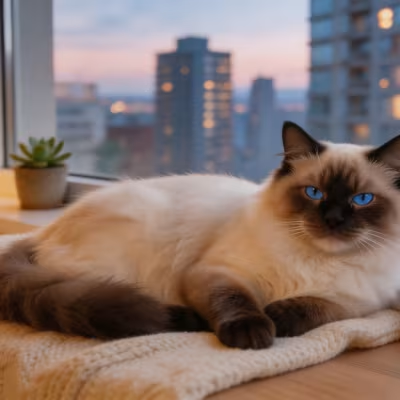
Colorpoint patterns are the signature ragdoll look. This is the same pattern you see in Siamese cats—darker coloring on the face, ears, legs, and tail, with a lighter body. Ragdolls come in several colorpoint variations:
- Seal point (dark brown/black points on cream body)
- Blue point (slate gray points on cream body)
- Chocolate point (milk chocolate points on cream body)
- Lilac point (pinkish-gray points on cream body)
- Flame point (orange/red points on cream body)
- Cream point (cream-colored points on cream body)
All ragdolls have blue eyes—that's part of the breed standard. It's a striking feature. As kittens, their eyes are a pale blue. As they mature, the blue deepens. The combination of large body, blue eyes, and colorpoint pattern is unmistakable.
Body structure is elegant and slightly muscular. Ragdolls have long bodies, long tails, and a sturdy bone structure. They're not stocky or squat like British Shorthairs. They're lean and graceful, built more like Siamese cats than typical domestic shorthairs.
Fur type is semi-long—longer than a regular domestic cat but not as high-maintenance as Persians. The fur is silky and soft, and it sheds noticeably. If you're allergic to cats or you hate vacuuming, a ragdoll is going to drive you nuts.
Personality: The Dog-Like Behavior Deep Dive
Okay, let's talk about why people are obsessed with ragdolls. It's the personality.
Following you everywhere. This isn't an exaggeration. Your ragdoll will follow you from room to room. If you're in the kitchen making breakfast, your ragdoll is in the kitchen. If you move to the living room, your ragdoll gets up and follows you. If you go to the bedroom, your ragdoll is right behind you.
Some people find this adorable. Others find it invasive. There's no in-between. If you value an independent cat that doesn't need you to function, a ragdoll's constant shadowing will drive you up the wall.
Meeting you at the door. When you come home, your ragdoll will actually greet you. Not in a cold, "oh you're home" way. They'll meow at you, rub on your legs, and demand attention. It genuinely feels like your cat missed you, even if you were only gone for eight hours.
Sitting on your lap and demanding attention. Ragdolls are lap cats in a serious way. When you sit down, your ragdoll will jump into your lap and settle in for however long you're sitting there. They like being the center of attention and they're not shy about asking for it.
Playing fetch. Some ragdolls will fetch toys, especially small balls or feather wands. It's not universal—not every ragdoll will do it—but it's common enough that it's noteworthy. Your cat will actually bring you the toy and expect you to throw it again.
Greeting visitors. While many cats hide when guests come over, ragdolls are often curious and social. They might jump on the visitor's lap (with your permission). They're not aggressive or antisocial—they're just interested in the humans.
Meowing and "talking." Ragdolls are vocal. They'll meow at you, meow when you come home, meow when they're hungry, meow when they want playtime. It's not aggressively loud like Siamese cats, but it's noticeably more vocal than many other breeds.
Sleeping with you. A lot of ragdolls like to sleep on their owners' beds. Some will cuddle up next to you. Others will sprawl across the foot of the bed taking up more space than seems physically possible for a single cat.
The core of ragdoll personality is this: they're dependent on their humans in a way that most cats aren't. They crave interaction and attention. They're not aloof. They're not independent free spirits that happen to tolerate living with you. They actually want to be with you, and they'll act pretty sad if you leave them alone for extended periods.
This is great if you work from home and want a constant companion. This is bad if you work long hours and your cat will be alone all day. Ragdolls can develop separation anxiety, destructive behavior, and depression if they're left alone too much.
Health Issues Specific to Ragdolls
Before you fall completely in love with the idea of a ragdoll, let's talk about health. Ragdolls have some breed-specific issues you need to know about.
Hypertrophic Cardiomyopathy (HCM)
This is the big one. HCM is a heart disease where the heart muscle becomes abnormally thick, making it harder for the heart to pump blood effectively. It's relatively common in ragdolls and some other large cat breeds.
Some ragdolls with HCM never show symptoms and live normal lifespans. Others develop congestive heart failure and die in middle age. There's no way to predict which cats will be affected or how severe it will be.
Responsible breeders screen their breeding cats with echocardiograms (ultrasounds of the heart) to try to reduce HCM in their lines. When you're looking for a ragdoll, ask the breeder for proof of HCM screening. Look for documentation that the parents' hearts were examined by a veterinary cardiologist.
Your own ragdoll should have an echocardiogram done—ideally before you buy them (so you know what you're getting into) or early in life so you know their baseline. If your ragdoll does develop HCM, it can be managed with medication, but it's serious.
HCM screening costs $500-$1500 for your cat.
Polycystic Kidney Disease (PKD)
This is a genetic condition where the kidneys develop multiple cysts over time, eventually leading to kidney failure. It's not unique to ragdolls, but it shows up in the breed.
Again, responsible breeders screen their cats. They use genetic testing (a simple DNA test) to identify carriers and avoid breeding cats that carry the PKD gene. When you're looking for a breeder, ask for PKD genetic test results. You want to see proof that both parents tested negative for the PKD gene.
If your ragdoll does inherit PKD, it's manageable for a while with diet and medication, but it will eventually cause kidney failure. Cats with PKD often live into their teens with good management.
A cat with PKD might develop kidney problems starting in their 7s, 8s, or 9s, or they might live their whole life and never show symptoms. Again, it's unpredictable.
Bladder Stones
Some ragdolls are prone to developing bladder stones (uroliths). This is more common in males than females. Symptoms include straining to urinate, frequent urination, blood in urine, and litter box avoidance.
Bladder stones sometimes pass on their own, but often require surgical removal. Prevention involves a diet that promotes healthy urine pH and adequate water intake. Make sure your ragdoll has constant access to fresh water. Some vets recommend wet food over dry food to increase water intake.
Cost of bladder stone surgery is typically $1500-$3000.
Feline Infectious Peritonitis (FIP) Susceptibility
Ragdolls seem to have a higher susceptibility to FIP, a viral disease caused by feline coronavirus. Not all cats infected with feline coronavirus develop FIP, but ragdolls seem more prone to the severe form.
FIP is extremely serious and was historically almost always fatal. There are now newer antiviral medications that show promise, but they're expensive ($4000-$8000+ for a course of treatment) and not universally available yet.
The best prevention is keeping your cat indoors and limiting exposure to other cats who might be infected.
Grooming: It's Easier Than You'd Think
Ragdoll fur is semi-long, which sounds like it would require professional grooming every 6-8 weeks like a Persian. But it's actually much easier than that.
Weekly brushing is your baseline. A slicker brush or a metal comb, once a week for 10-15 minutes, prevents most matting. Ragdolls' fur doesn't mat as easily as longhaired breeds, but it does tangle.
They shed noticeably. The weekly brushing helps manage it, but you'll still find ragdoll hair on your furniture, clothes, and in corners. Budget for regular vacuuming. This isn't a clean cat if you're particular about pet hair.
Bathing is rarely necessary. Most cat owners never bathe their cats. Some ragdoll owners occasionally bathe theirs—maybe once or twice a year—to help manage shedding. Ragdolls tolerate water better than most cats, partly because they're naturally more laid-back, so it's not impossible if you need to do it.
Nail trimming every 2-3 weeks. This isn't specific to ragdolls—all cats need regular nail trims. But it's worth mentioning because it matters.
Ear cleaning monthly. Ragdolls have moderately large ears with furry insides, and they can accumulate wax and debris. A monthly ear cleaning with a cat-safe ear cleaner helps prevent infections.
Dental care. Brush your ragdoll's teeth regularly if you can (a few times a week is ideal, but daily is better). Dental disease is common in cats and it's preventable with good oral hygiene.
The good news: ragdoll grooming is way less intensive than you'd expect for a semi-longhaired cat. The bad news: they shed, and that's just something you accept.
Living with a Ragdoll: What You Actually Need
Indoor only. Please. Ragdolls are not outdoor cats. They're large, trusting, and not street-smart. They have blue eyes that are sensitive to sunlight. They're prey to predators who see a 20-pound cat with the personality of a golden retriever. Keep your ragdoll inside.
This is part of the commitment. Your ragdoll will be 100% dependent on you for enrichment and stimulation. You need to provide vertical space (cat trees), toys, interactive play, and just... company.
Cat-proofing your home. Ragdolls are curious and they follow you everywhere. Secure any toxic plants, medications, or chemicals. Make sure your windows are secure (they're not jumpers generally, but they are curious). Keep elastic bands, string, and other choking hazards away.
Companion animals. Ragdolls are social and often do well with other cats or even dogs. But introduce them slowly and carefully. Ragdolls' trusting nature means they sometimes get bullied by meaner cats or dogs.
Litter box setup. You need at least one litter box per cat, plus one extra. For a single ragdoll, two litter boxes is ideal. Scoop daily. If your ragdoll is having litter box issues, the first place to look is often the litter situation.
Scratching posts. Your ragdoll will scratch. Provide scratching surfaces—posts, pads, or vertical scratchers. This is a biological need, not a behavioral problem.
Vertical space. Cat trees, shelves, and climbing structures. Ragdolls aren't jumpers, but they like to be able to survey their domain from high places.
Playtime and enrichment. Interactive play with toys like feather wands, laser pointers, or balls. Ragdolls are fairly active and they need stimulation, especially if they're indoors full-time.
Cost: From Purchase to Lifetime Care
Purchase price. A ragdoll kitten from a reputable breeder costs $800 to $2500. Sometimes more if the breeder is well-known or if you're getting a show-quality cat.
Why so much? Good breeders invest in health testing (HCM screening, PKD genetic testing), proper nutrition for their breeding cats, veterinary care, and socialization of kittens. They screen potential buyers carefully. They often offer guarantees.
How to find a good breeder: - Ask for references from previous buyers - Request proof of health testing (HCM screening, PKD genetic test results) - Visit the breeder's home if possible - Ask about their return policy (good breeders take cats back if it doesn't work out) - Make sure they're breeding for health and temperament, not just profit - Avoid backyard breeders who have multiple litters and no health testing
Adoption option. Ragdoll rescue organizations exist. Adoption from rescue is cheaper (usually $100-$500) and you get an adult cat whose personality is already established. The downside: you don't know the medical history as well, and health issues might show up later.
Ongoing costs (annual): - Food: $300-$500 (quality food for a large cat) - Litter: $150-$300 - Veterinary care (routine): $300-$500 - Pet insurance (optional but recommended given health concerns): $200-$400/year - Toys, litter boxes, other supplies: $100-$200
Total annual cost for a healthy ragdoll: $1000-$1900
If your ragdoll develops health issues (HCM, PKD, bladder stones), those costs go up significantly. A cat with HCM might need blood pressure medication and regular vet visits. PKD requires monitoring and eventual specialized diet. Unexpected vet emergencies can cost thousands.
Budget for your ragdoll like you would a dog. This is an expensive, high-maintenance pet in terms of both time and money.
FAQ: What You Actually Want to Know
Q: How long do ragdolls live?
With good care, ragdolls typically live 12 to 17 years. Some live into their 20s. A lot depends on genetics, health issues, and how well you manage their care. Regular vet visits, dental care, good nutrition, and early detection of health problems all help.
Q: Do all ragdolls have the same personality?
No. Individual cats have different personalities. Some ragdolls are more independent than others. Some are more vocal. Some are more playful. But in general, ragdolls are more affectionate and dog-like than average cats. If you meet a standoffish ragdoll, it's usually an outlier.
Q: Can I bring a ragdoll to work with me?
Some people do, if their workplace allows it. Ragdolls can travel more easily than some cats because they're laid-back. But it depends on your ragdoll's personality and your work situation. Most ragdolls would prefer to be at home.
Q: Are ragdolls good for families with kids?
Ragdolls are generally patient and gentle with children. Their laid-back nature means they tolerate handling better than many cats. That said, any cat needs supervision with small children. Teaching kids to respect the cat (no pulling tails, no rough play) is essential. Ragdolls aren't toys.
Q: Do ragdolls scratch furniture?
Yes. Cats scratch. It's what they do. You minimize damage by providing acceptable scratching surfaces, but you can't eliminate it. If you can't handle claw marks on furniture, a cat isn't right for you.
Q: What's the difference between a ragdoll and a Birman?
Birmans and ragdolls look similar—both have colorpoint patterns and blue eyes. But Birmans are smaller (7-12 pounds), have white paws (a breed signature), and are typically more independent. Ragdolls are larger and more dog-like in personality. They're distinct breeds.
Q: Can I breed my ragdoll?
Only if you're doing it responsibly—which means health testing (HCM screening, PKD genetic test), genetic knowledge, and a long-term commitment to the breed. Most pet owners shouldn't breed their ragdolls. Talk to your vet about spaying/neutering for health and population control reasons.
Q: What if my ragdoll gets fat?
Ragdolls are prone to obesity, partly because they're laid-back and like to eat. Obesity causes health problems and shortens lifespan. Monitor your ragdoll's weight. Feed measured portions. Encourage play and activity. If your ragdoll is overweight, talk to your vet about diet and exercise.
Q: Are male or female ragdolls better?
Males are slightly larger and sometimes slightly more laid-back. Females are smaller and can be a bit more independent. Personality differences are usually more about the individual cat than the sex. Neutered/spayed cats are calmer and less likely to have behavioral issues than intact ones.
Q: Is pet insurance worth it for ragdolls?
Given the health issues common in the breed (HCM, PKD, bladder stones), pet insurance can make sense. Look for plans that cover genetic conditions and offer good reimbursement. Compare prices—they vary wildly.
Q: How do I know if my breeder is reputable?
They do health testing. They screen buyers. They answer questions. They take cats back if adoption doesn't work out. They're involved in the cat fancy (cat shows, breed clubs). They're not producing litter after litter. Trust your gut. If something feels off, it probably is.
Is a Ragdoll Right for You?
Ragdolls are genuinely wonderful cats if you want a pet that actually wants to be with you. They're affectionate, relatively easy to handle, and genuinely fun to live with.
But they're not for everyone. They need attention. They need play. They need company. If you work long hours and want a low-maintenance pet, a ragdoll will be miserable and destructive.
They have health issues you need to plan for. They shed. They require grooming and vet care and ongoing attention.
If you're ready for that commitment, if you want a cat that follows you around and greets you at the door and sits on your lap, then a ragdoll might be perfect for you. But go in with your eyes open. This is a big, expensive, demanding cat.
Find a responsible breeder who health-tests their cats. Budget for veterinary care. Plan for 12-17 years of commitment. And get ready to fall ridiculously in love with an oversized, floppy, dog-like cat that will follow you everywhere.
It's worth it.

0 Comments
No comments yet. Be the first to share your thoughts!
Leave a Comment