How to Teach Your Dog to Close Doors on Command: A Veterinarian's Comprehensive Guide
Hello, fellow pet parents! Dr. Edward Hale here, your trusted veterinarian with 15 years of experience in pet care and animal behavior. There's a special kind of pride and joy that comes from seeing your dog not just follow commands, but perform a truly helpful, charming trick like closing a door. It's more than just a party trick; it's a wonderful way to engage your dog mentally, strengthen your bond, and even make your daily life a little easier. Imagine your furry friend gently nudging a door shut, keeping drafts out or containing a mischievous sibling. It's a fantastic feat!
In this comprehensive guide, I'll walk you through the entire process, from initial preparations to mastering the "Close!" command. We'll focus on positive reinforcement, patience, and above all, ensuring your dog's safety and well-being every step of the way. Learning how to train your dog to shut the door gently is a rewarding journey for both of you, and I'm here to share my insights and practical tips to make it a success.
Why Teach Your Dog This Trick? Beyond the 'Aww' Factor
While the initial appeal of a dog closing a door is undoubtedly the "aww" factor, there are several significant benefits that go far beyond mere entertainment:
- Mental Stimulation: Just like humans, dogs thrive on mental challenges. Learning a new, complex trick like closing a door provides excellent cognitive enrichment, especially for intelligent breeds that need a job to do. It helps prevent boredom and can reduce unwanted behaviors stemming from under-stimulation.
- Physical Engagement: While not a strenuous activity, the movements involved in pushing a door deliver a mild form of physical exercise and coordination, engaging different muscle groups.
- Enhanced Communication and Bonding: Training sessions are prime opportunities to strengthen the bond with your dog. You're working as a team, building trust and mutual understanding. Success in training boosts your dog's confidence and reinforces their desire to please you.
- Practical Help Around the House: From keeping a room warm, preventing a draft, to keeping the cat out of the dog's food, a dog that can close a door on command can actually be quite helpful. It's a skill that has real-world applications.
- Reinforces Positive Behavior: By consistently rewarding desired actions, you're not just teaching a trick, you're reinforcing the idea that listening to you and performing tasks leads to good things. This can translate into better overall obedience.
Getting Started: Essential Preparations
Before you even think about approaching a door, a little preparation goes a long way in ensuring a smooth and successful training experience. This is a step-by-step guide for teaching a dog to close doors, and proper setup is crucial.
Prerequisites
- Basic Obedience: Your dog should have a solid grasp of basic commands like "sit," "stay," and "come." These are foundational for focus and control during training.
- Comfort with Positive Reinforcement: Your dog should understand that a click (if using a clicker) or a verbal marker ("Yes!" or "Good!") immediately followed by a treat means they've done something right. This clarity is vital for communicating what you want.
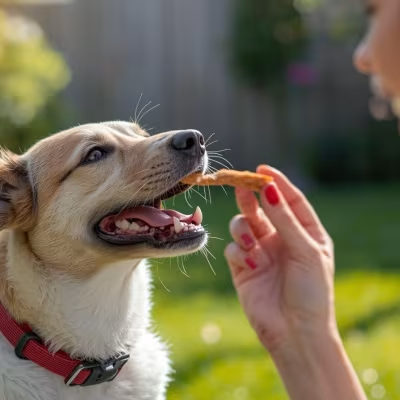
- Motivated by High-Value Treats: For complex tricks, standard kibble might not cut it. Have an array of highly desirable treats ready – small pieces of cooked chicken, cheese, or specialized training treats are often very effective.
Tools You'll Need
- High-Value Treats: As mentioned, make them irresistible!
- Clicker (Optional but Recommended): A clicker provides a precise marker for the exact moment your dog performs the desired action, making learning faster.
- An Easy-to-Open-and-Close Door: Choose an interior door that swings freely and quietly. Avoid heavy, sticky, or squeaky doors, as these can be intimidating or frustrating for your dog. A lighter hollow-core door is ideal to start with.
- A Target Stick or Post-it Note: This will be your initial visual cue to help your dog understand what to touch.
- A Quiet Training Environment: Minimize distractions, especially in the beginning. Choose a time when both you and your dog are calm and focused.
Safety First!
As a veterinarian, I cannot stress enough the importance of safety during any training. This trick involves a door, and doors can be dangerous if not handled properly.
- Prevent Pinched Paws or Tails: Always supervise closely. Ensure your dog doesn't get any part of their body caught in the closing door. Start with the door only slightly ajar so there's minimal risk.
- Avoid Fear or Pain: Never force your dog to interact with the door. If they show any signs of fear, stress, or pain, stop immediately. We want this to be a positive experience.
- Gentle Closing: Encourage a soft, controlled push rather than a forceful slam. This is especially important if you're training a puppy to close doors on command safely, as puppies can be clumsy.
- Door Adjustments: Consider adding a small, soft doorstop or using felt pads on the door frame to cushion the impact and prevent slamming, especially during the learning phase.
The Step-by-Step Guide: Teaching Your Dog to Close Doors on Command
Now, let's get into the heart of the matter. Remember, patience and consistency are your best friends here. Each phase builds on the last, so don't rush through them.
Phase 1: Introducing the "Touch" or "Nose Target"
This is the foundational skill. Your dog needs to understand how to touch a designated object with their nose.
- Hold a target (your open palm, a post-it note, or a target stick) in front of your dog's nose.
- The instant your dog's nose touches the target, say your verbal marker ("Yes!") or click, and immediately give a high-value treat.
- Repeat this 5-10 times in short sessions. Your dog will quickly learn that touching the target with their nose earns a reward.
- Once your dog is reliably touching the target, start moving it slightly further away or to different positions. The goal is for them to actively seek out and touch the target.
Phase 2: Targeting the Door
Now we're going to transfer that "touch" skill to the door itself.
- Position yourself and your dog in front of a slightly open door (just a few inches ajar).
- Place your target stick or post-it note on the door at your dog's nose height.
- Encourage your dog to "touch" the target on the door. The moment their nose makes contact, mark and reward.
- If they're hesitant, you can guide them initially by holding a treat near the target to lure their nose, then quickly remove the treat as they touch the target, marking and rewarding from your other hand.
- Repeat this until your dog confidently and eagerly touches the target on the door.
Phase 3: The "Push"
This is where we start getting the door to move.
- With the door still slightly ajar, place your target stick or post-it note on the door, but this time, position it slightly further back on the door, or at a point where your dog will need to exert a tiny bit of pressure to reach it.
- When your dog pushes their nose into the target, causing the door to move even a millimeter, mark and reward enthusiastically!
- Gradually increase the amount of "push" required. You might move the target further back, or stand slightly further away, encouraging a more deliberate push.
- The goal here is for your dog to understand that pushing the door (and making it move) is the action that earns the treat.
Phase 4: Adding the Verbal Cue
Once your dog is reliably pushing the door with their nose to get to the target, it's time to introduce the verbal command.
- Just before your dog pushes the door (when you know they're about to do it), say your chosen command clearly, such as "Close!", "Door!", or "Shut!"
- As they push, mark and reward.
- Repeat this process. Over time, your dog will associate the verbal cue with the action of pushing the door.
- Once they're responding consistently to the verbal cue, you can start phasing out the target stick or post-it note. You might start by just pointing at the door, then eventually just giving the verbal command.
Phase 5: Closing the Door Fully
Now we refine the action to ensure the door closes completely and gently.
- Gradually increase the distance the door needs to travel to close. Start with the door a bit more open, then even more open, until it's fully ajar.
- Reward for sustained pushing until the door is nearly closed or fully closed. For how to train your dog to shut the door gently, ensure you only reward gentle pushes. If they slam it, wait for a slightly gentler interaction before rewarding, or guide them.
- You might need to physically block the door from fully closing initially to prevent a "slam" and reward just before the soft contact.
- The final step is rewarding when the door makes a soft contact with the frame, or even better, when it clicks shut if that's what you desire.
Phase 6: Generalization and Maintenance
A trick isn't truly learned until it can be performed in various situations.
- Practice with different doors in your house. Some doors might feel different to push.
- Vary your starting position and your dog's starting position.
- Practice in different rooms with varying levels of distraction.
- Keep training sessions short, positive, and fun. Always end on a high note.
- Continue to reinforce the behavior with occasional treats and lots of praise, even after your dog has mastered it. This is one of the best methods for dog door closing training for long-term success.
Common Mistakes to Avoid
Even with the best intentions, it's easy to fall into common training traps. Steering clear of these will save you frustration and ensure your dog enjoys the learning process.
- Rushing the Process: Every dog learns at their own pace. If you skip steps or push too fast, your dog will become confused or discouraged. Be patient and build a strong foundation for each phase.
- Using Punishment or Harsh Corrections: This is a cardinal sin in positive reinforcement training. Yelling, scolding, or physically forcing your dog will only create fear, damage your bond, and make your dog reluctant to try new things.
- Inconsistent Cues or Rewards: If you use different commands or reward inconsistently, your dog won't understand what you want. Be clear and predictable.
- Not Using High-Value Treats: For new and challenging behaviors, standard kibble often isn't motivating enough. Use treats that your dog absolutely loves to keep them engaged.
- Getting Frustrated: Dogs are masters at reading our emotions. If you're frustrated, your dog will feel it and become anxious. Take a break, breathe, and come back to it when you're both in a better mood.
- Ignoring Safety Concerns: As mentioned, always keep an eye on paws and tails. A bad experience with a door can create a lasting fear.
- Allowing Door Slamming: From the beginning, encourage gentle pushes. If a door slams, it can be startling for your dog and potentially damage the door or frame.
Dr. Hale's Pro Tips from the Clinic
My years in veterinary practice have taught me a lot about animal behavior and what truly helps dogs (and their owners!) succeed.
- Start Young, But Never Too Late: While puppies often pick up new tricks quickly due to their developing brains and eagerness to learn, older dogs are absolutely capable of learning new tricks too! Their brains still thrive on stimulation. Just be extra patient and adjust your expectations.
- Observe Body Language: Pay close attention to your dog's signals. Are their ears back? Tail tucked? Yawning excessively? Licking their lips? These can be subtle signs of stress or discomfort. If you notice these, scale back the training or take a break. If you notice your dog is suddenly afraid of closing doors, this is a clear sign to pause and reassess. Fear can come from a startling noise, a previous negative experience, or even a sudden change in the environment.
- Treat Value is Key: I often see owners frustrated when their dog isn't responding, only to find they're using low-value treats. Experiment! Some dogs go crazy for cheese, others for hot dogs, some for special store-bought soft treats. Find your dog's "jackpot" and reserve it for training the really challenging stuff.
- "Jackpot" Rewards: For a truly significant breakthrough – say, the first time your dog fully closes the door without a target – give an extra large, extra delicious reward, maybe even a handful of treats. This "jackpot" powerfully reinforces the correct behavior.
- End on a High Note: Always finish your training sessions with a successful, easy command, even if you had a tough time with the main trick. This leaves your dog feeling positive and eager for the next session.
- Make it a Game: If training feels like a chore, it won't be fun for either of you. Incorporate play, use an enthusiastic tone, and celebrate successes. This builds a positive association with learning.
- Patience is Your Best Tool: This trick can take weeks or even months to master, depending on the dog. Consistency over time, even with short daily sessions, yields better results than infrequent, long, frustrating ones.
- Consider Professional Help: If you're really struggling, or if your dog seems to have developed an aversion or fear, don't hesitate to consult a certified professional dog trainer or a veterinary behaviorist. They can provide tailored guidance and offer solutions for dogs who struggle with closing doors or other complex behaviors.
When to See a Vet
While training is generally a fun and safe activity, it's important to know when a potential issue might go beyond a training challenge and indicate an underlying health concern. As your veterinarian, I always recommend erring on the side of caution.
- Sudden Reluctance or Fear: If your dog suddenly becomes unwilling to participate, shows fear, or develops anxiety around the door or training, this could be a sign of pain or a negative association that needs professional assessment.
- Limping, Pain, or Injury: Any signs of physical discomfort, limping, tenderness, or yelping during or after training warrant an immediate veterinary check-up. We need to rule out sprains, strains, or other injuries.
- Unusual Aggression or Anxiety: While rare, a sudden display of aggression or extreme anxiety during training could signal an underlying medical condition affecting behavior, or a significant stressor.
- Pre-existing Conditions: If your dog has arthritis, neurological issues, or any other health condition, consult with your vet before starting new physical training. We can advise on safe modifications or if the trick is appropriate for your dog.
- Cognitive Changes: For older dogs, a sudden inability to learn or remember commands might indicate a cognitive decline that needs veterinary attention.
Remember, I'm here to ensure your pet's overall well-being. If something feels "off," don't hesitate to reach out to your veterinarian.
Frequently Asked Questions
Can any dog learn to close doors?
With enough patience, positive reinforcement, and consistency, most dogs can learn to close doors! Some breeds might be more naturally inclined due to their intelligence or desire to work, but the key is breaking down the task into small, achievable steps that any dog can understand. Just be prepared that some dogs might take longer than others.
How long does it take to teach this trick?
The timeline varies wildly depending on your dog's individual learning style, your consistency in training, and the amount of time you dedicate. Some dogs might grasp the basics within a few days or weeks, while others might take a few months to fully master the trick reliably in various situations. Focus on progress, not speed.
What if my dog tries to use their paw instead of their nose?
This is common! If your dog starts using a paw, gently redirect them to use their nose. You can do this by slightly holding their paw down or placing the target stick closer to their nose, and only rewarding when their nose makes contact. If they eventually learn to close the door gently with a paw and it's safe, that's perfectly acceptable too, as long as it's a controlled action and not a playful swipe.
My dog just wants to play with the door. What should I do?
If your dog is swatting, mouthing, or jumping on the door in a playful manner, it means they haven't quite understood the specific action required. Stop the session immediately when they play, and only resume when they are calm. Go back to a simpler step where they are reliably pushing with their nose (e.g., just touching the target). Reward only for the desired pushing action, not for playful interaction, and make sure your tone is calm and instructional, not playful, during training.
Conclusion
Teaching your dog to close doors on command is an incredibly rewarding experience that goes beyond just a cool trick. It's an investment in your dog's mental health, a fantastic way to strengthen your bond, and provides a genuinely useful skill. By following this comprehensive, step-by-step guide, prioritizing safety, and embracing positive reinforcement, you're setting both yourself and your furry companion up for success.
Remember, every dog is an individual, so celebrate the small victories, be patient with the setbacks, and most importantly, enjoy the journey together. The joy and connection you'll build through this process are truly invaluable.
Warmly,
Dr. Edward Hale

0 Comments
No comments yet. Be the first to share your thoughts!
Leave a Comment