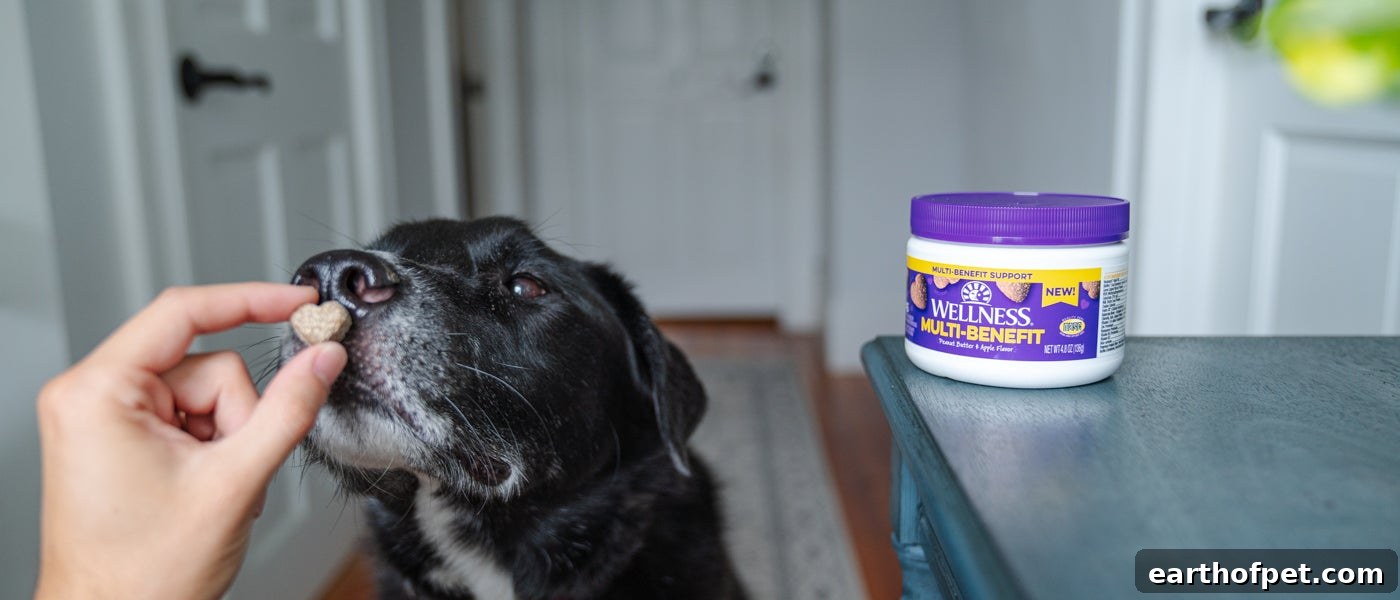
August is National Dog Month — a time to celebrate our canine companions and take extra steps to support their long-term health. Alongside regular exercise, veterinary care, and affection, nutrition is a cornerstone of wellbeing. A high-quality diet combined with a daily multi-benefit supplement can help address the five core signs of wellbeing: skin and coat, joints and mobility, immune health, digestion, and cognitive function. Consider adding a research-backed, multi-benefit supplement to your dog’s routine this month to support overall vitality.
Dogs have complex nutritional needs that sometimes benefit from targeted supplementation. Even when feeding a balanced food, supplements can fill gaps and provide concentrated support for specific systems. The following sections summarize how a thoughtfully formulated multi-benefit supplement supports the whole dog.
- Supporting Skin and Coat: Healthy skin and a glossy coat are often the first visible signs of overall health. Essential nutrients such as zinc support skin cell function and the conversion of fatty acids into forms the body can use. Omega-3 fatty acids from sources like algae oil and green-lipped mussel, together with antioxidants such as vitamin E and beta-carotene, promote sheen, softness, and skin resilience. These nutrients can help maintain a smooth, healthy coat even when a dog already eats a high-quality diet.
- Promoting Joint Health and Mobility: Joint-supporting ingredients commonly found in multi-benefit supplements include green-lipped mussel for anti-inflammatory omega-3s and chondroitin-like components, algal oil as an additional source of EPA and DHA, and antioxidant vitamins C and E. Methylsulfonylmethane (MSM) may reduce inflammation and support cartilage integrity, while calcium fructoborate (a vegan mineral complex) has been studied for joint comfort and mobility. Together, these ingredients aim to reduce discomfort and support mobility across life stages.
- Supporting a Healthy Immune System: Colostrum contains immune-supportive compounds that can influence a dog’s immune response. When combined with prebiotics and probiotics, colostrum’s benefits can be enhanced. Zinc is essential for normal immune cell development and function. Prebiotic fibers such as mannan-oligosaccharides (e.g., Bio-Mos) help support beneficial gut microbes and immune health. Supergreen blends with ingredients like chlorella, kale, spinach, astragalus root, and spirulina deliver additional vitamins and antioxidants that help maintain natural defenses.
- Maintaining Digestive Health: Digestive enzymes support the body’s own digestive processes and help break down nutrients for optimal absorption. Guaranteed live probiotics introduce beneficial bacteria to the intestinal tract, promoting a balanced microbiome. Prebiotics provide fuel for those beneficial microbes so they can thrive, improving digestion and helping to limit the growth of pathogenic organisms.
- Supporting Liver Health: The liver plays a central role in detoxification and metabolism, so keeping it healthy is vital. Milk thistle seed (silymarin) has antioxidant and liver-protective properties and is commonly used to support liver recovery and protection. Choline is important for normal liver gene expression and function, helping to prevent certain liver disorders. Antioxidants such as vitamin A and beta-carotene can reduce oxidative stress and help protect liver cells.
- Supporting Brain and Cognitive Function: Docosahexaenoic acid (DHA), an omega-3 fatty acid present in algal oil and green-lipped mussel, is a major structural component of neural membranes and supports neuronal signaling. DHA supplementation has been associated with improved learning, memory, and problem-solving in young animals and with better cognitive performance in senior dogs. Antioxidants like vitamin E can help protect the aging brain from oxidative damage and maintain cognitive health.
- Supporting Performance and Endurance: B vitamins are essential cofactors in energy metabolism, helping dogs convert carbohydrates, fats, and proteins into usable energy and supporting nerve and muscle function. Manganese supports metabolic enzymes and collagen synthesis, important for connective tissues. Chlorella, a nutrient-dense microalga, provides antioxidants and compounds that may support oxygen delivery and reduce exercise-induced oxidative stress, which can aid recovery and endurance.
Choosing the Right Multi-Benefit Supplement:
With many products on the market, selecting a supplement can feel overwhelming. Use these criteria to guide your choice:
- Backed by Research: Prefer products whose ingredients are supported by peer-reviewed studies and reputable scientific evidence. Research-backed formulations increase the likelihood the product will deliver meaningful benefits and demonstrate the manufacturer’s commitment to safety and efficacy.
- Third-Party Quality Standards: Look for supplements that adhere to recognized quality standards and third-party audits. Independent quality seals and manufacturing transparency indicate that ingredient labels are accurate and production follows good manufacturing practices, which helps ensure product safety and consistency.
Celebrate National Dog Month with a Holistic Approach
Combining a balanced, high-quality diet with a vet-approved, research-backed multi-benefit supplement can offer broad support across skin and coat health, joint function, immune strength, digestion, liver support, cognitive function, and physical endurance. Paired with regular veterinary checkups, exercise, and mental enrichment, these steps help promote a long, healthy, and happy life for your dog. This National Dog Month, consider a thoughtful, multifaceted approach to your pup’s wellbeing beyond toys and treats.
References
- Watson, Tim DG. “Diet and skin disease in dogs and cats.” The Journal of Nutrition 128.12 (1998): S2783-S2789.
- Kaur, Haneet, et al. “Role of omega-3 fatty acids in canine health: a review.” International Journal of Current Microbiology and Applied Sciences 9.3 (2020): 2283-2293.
- White, S. D., et al. “Zinc‐responsive dermatosis in dogs: 41 cases and literature review.” Veterinary Dermatology 12.2 (2001): 101-109.
- Marsh, Katrina A., et al. “Effects of zinc and linoleic acid supplementation on the skin and coat quality of dogs receiving a complete and balanced diet.” Veterinary Dermatology 11.4 (2000): 277-284.
- Patel, J. R., et al. “Nutritional approaches for healthy skin and coat in pet dogs.” Indian Farmer 8 (2021): 43-47.
- Bui, Linh M., and Tiffany L. Bierer. “Influence of green lipped mussels (Perna canaliculus) in alleviating signs of arthritis in dogs.” Veterinary Therapeutics 4.4 (2003): 397-407.
- Bierer, Tiffany Linn, and Linh M. Bui. “Improvement of arthritic signs in dogs fed green-lipped mussel (Perna canaliculus).” The Journal of Nutrition 132.6 (2002): 1634S-1636S.
- Pollard, B., et al. “Clinical efficacy and tolerance of an extract of green-lipped mussel (Perna canaliculus) in dogs presumptively diagnosed with degenerative joint disease.” New Zealand Veterinary Journal 54.3 (2006): 114-118.
- Ezaki, Junko, et al. “Assessment of safety and efficacy of methylsulfonylmethane on bone and knee joints in osteoarthritis animal model.” Journal of Bone and Mineral Metabolism 31 (2013): 16-25.
- Price, Angela K., et al. “Effects of dietary calcium fructoborate supplementation on joint comfort and flexibility and serum inflammatory markers in dogs with osteoarthritis.” Journal of Animal Science 95.7 (2017): 2907-2916.
- Satyaraj, Ebenezer, et al. “Supplementation of diets with bovine colostrum influences immune function in dogs.” British Journal of Nutrition 110.12 (2013): 2216-2221.
- Alonge, Salvatore, et al. “Pre-and probiotics to increase the immune power of colostrum in dogs.” Frontiers in Veterinary Science 7 (2020): 570414.
- Shankar, Anuraj H., and Ananda S. Prasad. “Zinc and immune function: the biological basis of altered resistance to infection.” The American Journal of Clinical Nutrition 68.2 (1998): 447S-463S.
- Spring, P., et al. “A review of 733 published trials on Bio-Mos®, a mannan oligosaccharide, and Actigen®, a second generation mannose rich fraction, on farm and companion animals.” Journal of Applied Animal Nutrition 3 (2015): e8.
- Kocher, A. N. D. R. E. A. S., and L. U. C. Y. Tucker. “The ‘gut health’ response to dietary Bio-Mos®: effects on gut microbiology, intestinal morphology and immune response.” (2005): 383-388.
- Perini, Mariana Pamplona, et al. “Potential Effects of Prebiotics on Gastrointestinal and Immunological Modulation in the Feeding of Healthy Dogs: A Review.” Fermentation 9.7 (2023): 693.
- Beynen, Anton C. “Microalgae in petfood.” Creat. Companion 40.7 (2019).
- Sivamaruthi, Bhagavathi Sundaram, Periyanaina Kesika, and Chaiyavat Chaiyasut. “Influence of probiotic supplementation on health status of the dogs: A review.” Applied Sciences 11.23 (2021): 11384.
- Giannetto, Claudia, et al. “Antioxidant and hepatoprotective effect of a nutritional supplement with silymarin phytosome, choline chloride, l-cystine, artichoke, and vitamin E in dogs.” Antioxidants 11.12 (2022): 2339.
- Au, A. Y., J. M. Hasenwinkel, and C. G. Frondoza. “Silybin inhibits interleukin‐1β‐induced production of pro‐inflammatory mediators in canine hepatocyte cultures.” Journal of Veterinary Pharmacology and Therapeutics 34.2 (2011): 120-129.
- Saeed, Muhammad, et al. “Beneficial impacts of choline in animal and human with special reference to its role against fatty liver syndrome.” (2017): 589-598.
- Williams, R. S., & Innis, S. M. “Dietary docosahexaenoic acid and brain development in animals and humans.” The American Journal of Clinical Nutrition 93.4 (2011): 1457S-1466S.
- Lands, B., Hernandez, M., Fallon, S., & Sinclair, A. J. (2003). “The effect of elevated dietary n-3 polyunsaturated fatty acids on learning and memory in rats.” Behavioural Brain Research 147(1-2): 23-30.
- Lands, B., & Weiser, H. (2007). “Omega-3 PUFA deficiency and risk of dementia and cognitive decline.” BMC Geriatrics 7(1): 1.
- Zicker, Steven C., et al. “Evaluation of cognitive learning, memory, psychomotor, immunologic, and retinal functions in healthy puppies fed foods fortified with docosahexaenoic acid–rich fish oil from 8 to 52 weeks of age.” Journal of the American Veterinary Medical Association 241.5 (2012): 583-594.
- National Research Council. Nutrient Requirements of Dogs and Cats. National Academies Press, 2006.
- Erickson MH, Kudrna D, Smith TJ, et al. “Comparison of chlorella supplementation on simulated altitude training in healthy adults.” Int J Sport Nutr Exerc Metab. 2011;21(3):210-7.
- Jin J, Sun W, Xie Z. “Effects of Chlorella pyrenoidosa on antioxidant activity in plasma and erythrocytes in exhausted rats.” J Food Biochem. 2008;32(2):252-8.
- Rodríguez, Cristina Castillo, Fernando Wittwer Menge, and José Joaquin Cerón. “Oxidative stress in veterinary medicine.” Veterinary Medicine International 2011 (2011).
- González, José A. Morales, et al. “The Protective Effect of Antioxidants in Alcohol Liver Damage.” Liver Regeneration (2012): 99.
- Head, Elizabeth. “Oxidative damage and cognitive dysfunction: antioxidant treatments to promote healthy brain aging.” Neurochemical Research 34 (2009): 670-678.
- Head, Elizabeth. “Combining an Antioxidant‐Fortified Diet with Behavioral Enrichment Leads to Cognitive Improvement and Reduced Brain Pathology in Aging Canines: Strategies for Healthy Aging.” Annals of the New York Academy of Sciences 1114.1 (2007): 398-406.
- Head, Elizabeth, and Steven C. Zicker. “Oxidative stress, cognitive dysfunction, and brain aging.” Studies on Veterinary Medicine (2011): 101-111.