You already know that offering your dog a quality dental chew every day can help support healthier teeth and reduce plaque and tartar. Regular dental chews can complement brushing and professional cleanings, supporting better oral hygiene and contributing to overall well-being. The question many pet parents ask is: when is the best time to give a dog a dental chew, and what are the practical safety steps to follow?
Options of the Best Time to Give Your Dog a Dental Chew
Dr. Danielle Bernal, our resident veterinarian at Wellness Pet Company, recommends picking a consistent daily moment so the habit isn’t missed. Consistency is more important than a specific clock time. When a dental chew becomes part of your daily routine, both you and your dog will benefit from predictable care.
Here are simple, practical moments many owners find work well:
- When you brush your own teeth in the morning or evening — a paired routine helps build habit.
- While you make your morning coffee or tea — a short predictable task you do every day.
- After your dog’s daily walk, when they are calm and ready to relax.
- During kitchen cleanup after dinner, so it’s part of your end-of-day routine.
- Shortly after your dog’s evening meal — if you feed once or twice a day, after dinner can be a natural time.
Dr. Danielle emphasizes: “There is no single best time that fits every household. The most important point is to deliver the dental chew consistently once a day.” Overuse of treat-type dental chews can unbalance calories and nutrition, so stick to the recommended daily serving.
Below are additional practical tips from Dr. Danielle for giving dental chews safely and effectively:
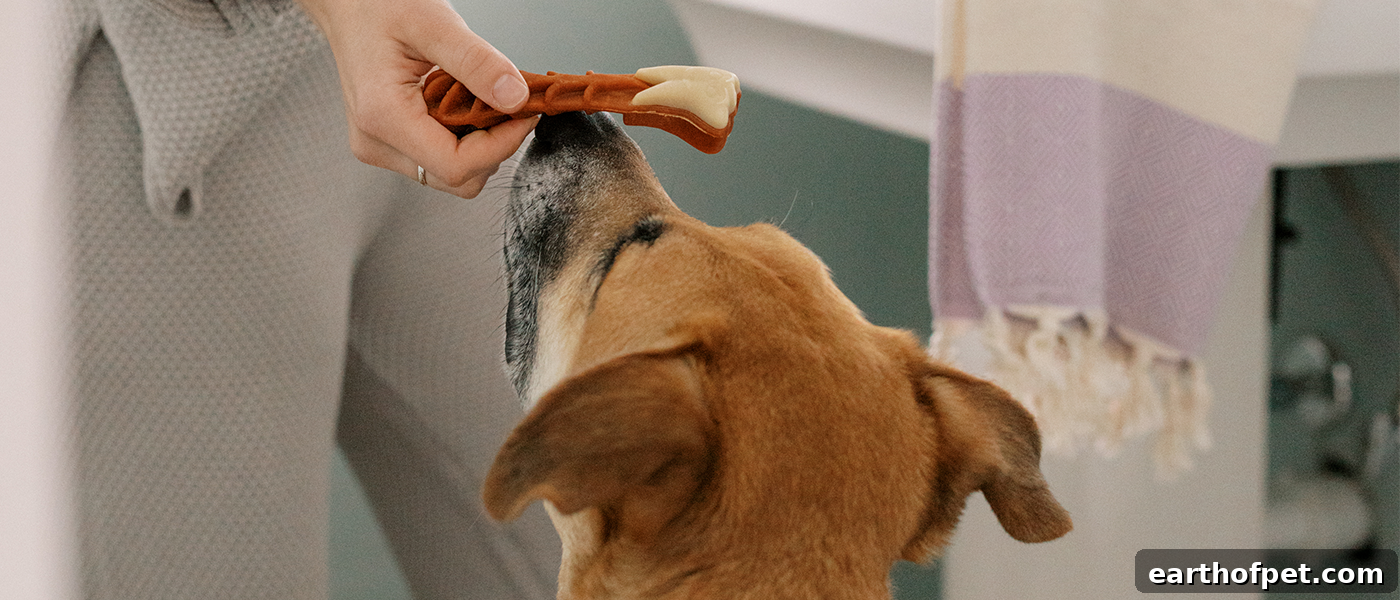
- Use dental chews, such as Wellness WHIMZEES, as a reward for good behavior or training to reinforce positive actions before offering the treat.
- Treats are supplemental—always make sure your dog eats their regular balanced meals to meet daily nutritional needs before counting chews as part of their diet.
- Supervise your dog while they eat a dental chew. Watching how they chew helps you spot any signs of trouble, like choking or destructive chewing that could create large, unsafe pieces.
- Choose the right size chew for your dog’s body weight and chewing strength. An appropriately sized chew reduces the risk of swallowing large fragments and improves safe, effective chewing.
- Have your dog chew in a calm, supervised area so they focus on the treat rather than playing or running, which can increase risk of choking.
- Ensure fresh water is available throughout the day. Hydration supports general health and makes chewing more comfortable.
Additional safety considerations and best practices
Dental chews are a helpful part of an oral care routine but not a replacement for other preventive measures. Regular tooth brushing with a dog-safe toothpaste and routine veterinary dental exams are still essential. If your dog has a history of dental disease, missing teeth, a sensitive jaw, or a tendency to gulp large pieces, consult your veterinarian before introducing a new type of chew.
Watch for signs that a chew might not be suitable: difficulty breathing, persistent coughing, pawing at the mouth, gagging, vomiting, or any change in eating behavior. If you observe any of these signs, remove the chew and contact your vet.
Storage and portion control
Store dental chews in a cool, dry place and follow the manufacturer’s feeding recommendations to manage calorie intake. For multi-dog households, supervise distribution to prevent resource guarding and make sure each dog receives the right size and number of chews for their weight and needs.
Choosing the right product
When selecting a dental chew, consider texture, size, and ingredient list. Look for chews designed to promote mechanical scrubbing action and that match your dog’s chewing habits. If you need help choosing the right chew for your dog, ask your veterinarian for a recommendation tailored to your pet’s oral health and dietary needs.
Making the choice
Once you decide on the timing and the right style of dental chew for your dog—whether it’s a daily Wellness WHIMZEES or another vet-recommended option—the key is consistency, supervision, and combining chews with regular dental care practices. With those steps, you’ll be supporting your dog’s oral health and daily happiness.