
Patient Condition and History
Chester is a 10-year-old, 43 lb male American Cocker Spaniel presented to MediVet Warbreck House Veterinary Centre in Liverpool, UK with 24 hours of weakness, lethargy and labored breathing. His medical history included chronic kidney disease (IRIS stage 2), hypothyroidism, systemic hypertension, previous anterior cruciate ligament repair and recurrent otitis externa. Chester has been maintained on long-term medications for these conditions.
On physical examination, Dr. Andrew McVey noted an increased respiratory rate with marked inspiratory effort. Bloodwork revealed moderate, stable azotemia consistent with his chronic kidney disease. Thoracic radiographs showed pulmonary edema and pronounced cardiomegaly. An echocardiogram demonstrated marked left-sided dilation and decreased fractional shortening. The working diagnosis was dilated cardiomyopathy (DCM) with secondary congestive heart failure (CHF).
Dilated cardiomyopathy is a myocardial disease characterized by enlargement of the heart chambers and reduced contractile function. As the heart’s ability to pump declines, chambers dilate in compensation, which can ultimately progress to congestive heart failure with fluid accumulation in the lungs and other body cavities.
Chester was hospitalized for stabilization. He received intravenous pimobendan to improve myocardial contractility, along with supportive care and close monitoring. Because of his pre-existing azotemia, diuretics were initially avoided. A PetPace collar was fitted to enable continuous monitoring during hospitalization and after discharge to support ongoing management at home.
Monitoring Data
Chester was discharged wearing the PetPace collar and continues to wear it continuously. Objective data from the collar showed a rapid and clear improvement in pulse indices after administration of pimobendan (first IV, then oral). Heart rate variability (HRV) also improved markedly after the first day of treatment. These physiologic changes correlated with the patient’s clinical stabilization and supported the effectiveness of the chosen therapy.
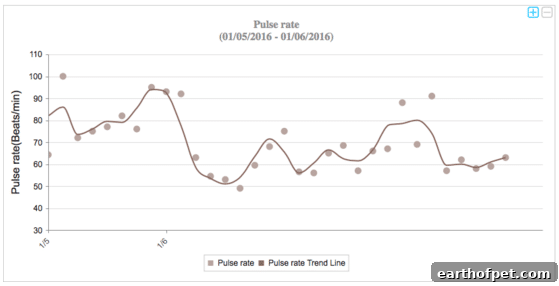
* CHESTER’S AGGREGATED PULSE DATA DURING THE FIRST 2 DAYS, SHOWING AN OVERALL DECREASED PULSE RATE (INDICATIVE OF IMPROVED CARDIAC PERFORMANCE) ON THE SECOND DAY.
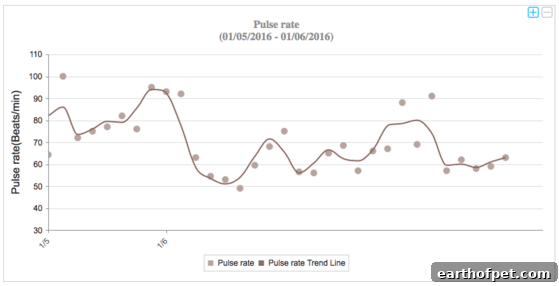
* DAILY AVERAGE, MAXIMUM AND MINIMUM PULSE RATES, SHOWING IMPROVEMENTS ON DAYS 2 AND 3 FOLLOWING INTRODUCTION OF PIMOBENDAN.
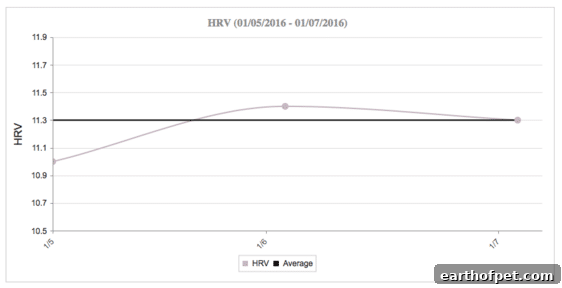
* DAILY HRV (VVTI) SHOWS SIGNIFICANT IMPROVEMENT AFTER THE FIRST DAY OF TREATMENT.
Follow-up monitoring over the subsequent weeks showed that Chester’s pulse and respiratory rates—continuously tracked by the PetPace collar—remained slightly elevated compared with population norms but were stable. HRV metrics and activity levels also remained steady. Re-examinations at the clinic confirmed recovery from the acute CHF episode; Chester was clinically stable but requires lifelong medical management and routine monitoring.
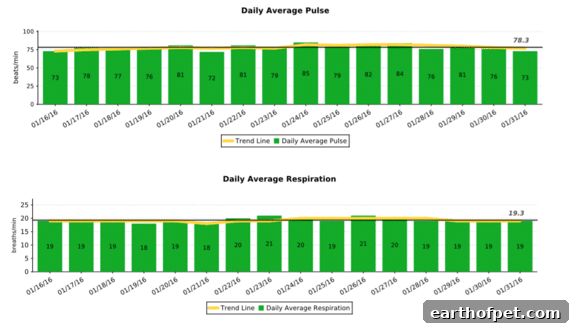
* DAILY AVERAGE PULSE AND RESPIRATORY RATES WERE SLIGHTLY HIGHER THAN NORMAL BUT STABLE.
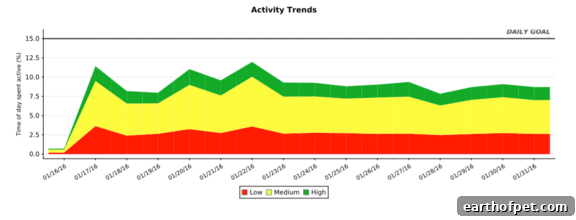
* DAILY ACTIVITY SHOWING STABLE VALUES AT HOME.
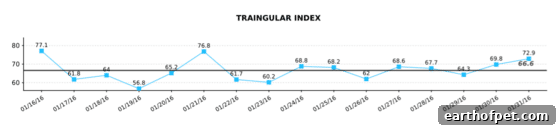
* DAILY HRV (TRIANGULAR INDEX) SHOWING STABLE VALUES AT HOME.
Discussion
American Cocker Spaniels are predisposed to developing dilated cardiomyopathy. While DCM cannot be cured, many patients can be maintained in a stable or asymptomatic state for months or years with appropriate medical management. Nonetheless, these patients remain at increased risk for severe complications such as recurrent heart failure episodes or fatal arrhythmias.
Continuous monitoring of pulse rate, respiratory rate, heart rate variability and activity provides essential objective data for managing DCM. The PetPace collar delivers high-resolution, real-time and long-term trend data that helps clinicians and owners assess disease severity, evaluate response to therapy and detect early signs of deterioration that may warrant intervention.
Conclusions
The PetPace collar accurately captured short- and long-term changes in clinically relevant parameters for a dog with DCM. In Chester’s case, collar data correlated with clinical findings and owner observations, helping the veterinary team confirm stabilization in hospital and monitor recovery at home. These objective metrics can assist clinicians in tailoring treatment plans, detecting early trends that precede overt clinical decline, and improving long-term care for patients with chronic cardiac disease.
Dr. Andrew McVey, Veterinary Surgeon and Partner at MediVet Warbreck House Veterinary Centre, noted that the collar supplied high-resolution clinical data both in hospital and during home care, which was instrumental in decision-making and in assessing the patient’s condition over time. Dr. Asaf Dagan, DVM, Diplomate ABVP and PetPace’s Chief Veterinarian, emphasized that detailed, home-generated physiologic data will enhance understanding of chronic cardiac disease progression and improve strategies for long-term treatment.