Best Dog Food Ingredients: A Nutrition Label Guide
You stand in the pet food aisle, reading ingredient lists, trying to decipher what's good and what's garbage. "Chicken meal" vs. "chicken by-product meal." "Wheat" vs. "corn gluten meal." What actually matters?
Understanding dog food ingredients help you to make good choices. It's not complicated once you know what to look for. Let's break down what makes an ingredient list good or concerning.
How to Read an Ingredient List
Ingredients are listed by weight, from most to least. This tells you what's predominant in the food.
However, there's a trick: water weight. Chicken contains significant water, so "chicken" on a label weighs more than "chicken meal" (which is dehydrated). Once water is removed during processing, the actual chicken protein content might be less than a food listing "chicken meal" earlier.
This doesn't make "chicken meal" better than "chicken," but understand that weight on a label doesn't directly translate to nutritional composition.
High-Quality Protein Sources
Look for:
Named meat sources: Chicken, beef, fish, lamb, turkey, duck. These are identifiable, whole animal products.
Meat meals: Chicken meal, beef meal, fish meal. These are dried, concentrated meat products. Actually contain more protein per unit weight than whole meat.
Muscle meat: Sometimes listed as "chicken muscle meat" or similar. High-quality protein source.
Proteins to Be Cautious About
Meat by-products or meat by-product meal: Includes non-muscle meat parts (organs, hooves, beaks, etc.). Not inherently bad (organs have nutritional value), but less desirable than muscle meat.
Generic "meat meal" or "poultry meal": Doesn't specify the source. Could be chicken, turkey, or other sources.
"Meat" or "poultry": Too vague. Could be anything.
These aren't necessarily dangerous, but they're lower quality than named meat sources.
Fats and Oils
Look for:
Named fat sources: Chicken fat, fish oil, beef tallow. You know the source.
Avoid:
Generic "animal fat": Could be from any animal source.
Excessive plant-based oils: While not harmful, meat-based fats have better nutritional profiles for dogs.
Grains and Carbohydrates
Quality grain sources:
Whole grains: Brown rice, oatmeal, barley. Contain the whole grain kernel with fiber and nutrients.
Named grain products: Wheat flour, corn meal. Still okay, though less ideal than whole grains.
Avoid:
"Corn gluten meal" or "wheat gluten" as early ingredients: These are protein extracts used to boost protein percentages artificially. They're cheaper than actual meat protein.
Excessive corn or corn products: Very cheap filler. Appears frequently in low-quality foods.
Vague grain sources: "Grain" or "meal" without specification.
This said, grains themselves aren't bad for dogs. The issue is cheap, low-quality grains used as primary ingredients in low-quality foods.
Additives and Preservatives
Natural preservatives: Vitamin E (mixed tocopherols), vitamin C (ascorbic acid). Safe and effective.
Chemical preservatives: BHA, BHT, ETHOXYQUIN — linked to potential health issues. Avoid if possible.
Vegetables and Fruits
Quality foods include identifiable vegetables and fruits:
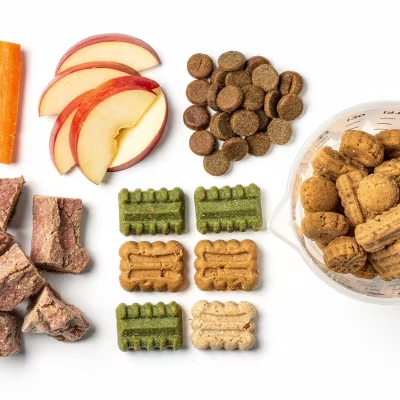
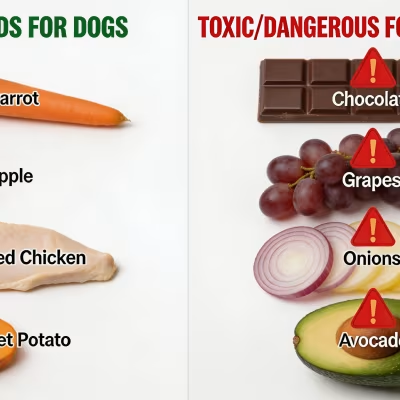
Named vegetables: Peas, carrots, sweet potato, broccoli.
Named fruits: Apples, blueberries, pumpkin.
These provide fiber, vitamins, and minerals.
Avoid:
Vague "vegetable meal" or "plant meal": Could be anything.
Excessive vegetable proteins: Pea protein, potato starch listed very early. Often used to artificially boost protein percentages.
Fiber Sources
Dogs need fiber for digestive health.
Good sources: Whole grains, Vegetables, Fruits, and Beet pulp (controversial but provides good fiber).
Supplements and Nutritional Additions
Quality foods include:
Probiotics: Beneficial bacteria for digestive health.
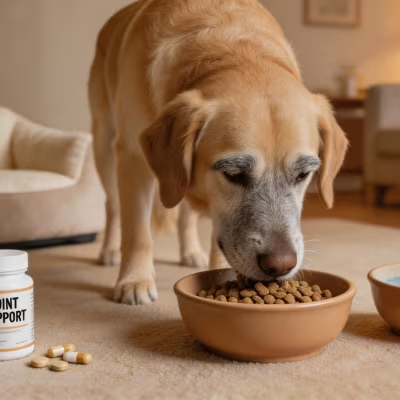
Glucosamine and chondroitin: Support joint health.
Taurine: Essential amino acid, important for cats, beneficial for some dogs.
DHA and EPA (omega-3s): Support brain and heart health.
These additions show the manufacturer is thinking about complete nutrition.
What a Great Ingredient List Looks Like
Here's an example of a high-quality ingredient list:
"Chicken, chicken meal, turkey, fish meal, sweet potato, peas, chicken fat, carrots, apples, fish oil, vitamin E, probiotics..."
What makes this good:
- Starts with named meat proteins
- Includes identifiable grains and vegetables
- Uses named fat sources
- Includes beneficial supplements
- No vague or questionable ingredients
Red Flag Ingredients
By-products or by-product meals: Low-quality, unidentifiable parts.
Multiple corn products listed early: Signs of cheap filler.
"Meat" or "poultry" without specification: Could be anything.
BHA, BHT, or ethoxyquin: Chemical preservatives potentially associated with health issues.
Artificial colors: Unnecessary and potentially concerning.
Excessive plant proteins (pea protein, corn gluten meal, soy) as primary ingredients: Artificially boosting protein percentages.
No named fat sources: Generic "animal fat" is vague and concerning.
Extremely long ingredient list: Sometimes a sign of low-quality filler.
AAFCO Certification
Look for statement: "Complete and balanced nutrition for [life stage] according to AAFCO standards."
This means the food has been formulated to meet nutritional requirements (either through lab analysis or feeding trials).
Without this statement, you have no assurance the food is actually nutritionally complete.
Expensive Doesn't Always Mean Better
Some premium-priced foods are excellent. Others are expensive because of marketing.
An expensive food with great marketing but an ingredient list starting with corn might be worse than a mid-range food with quality meat sources.
Read labels. Don't assume price reflects quality.
Generic vs. Name-Brand Foods
Some generic store brands have excellent ingredient lists. Some name brands have mediocre ingredients.
Judge the food itself, not the brand or price.
Specialty Diets
Limited ingredient foods: Designed for dogs with allergies. Usually contain one protein source and minimal ingredients. Good if your dog has identified allergies.
High-protein foods: 30-40%+ protein. Not necessary for most healthy dogs, but not harmful.
Grain-free foods: Contain no grains, usually replace them with other carbs. Not necessarily better than foods with grains.
Prescription diets: Formulated for specific health conditions. Use these only as directed by your vet.
Reading Between the Lines
Manufacturers use language strategically:
"Natural": No legal definition. Can be misused.
"Premium": No legal definition. Marketing term.
"Human-grade": Means ingredients fit for human consumption, but this doesn't guarantee better nutrition for dogs.
"Grain-free": Not inherently better; often just marketing.
"All-natural": Includes vague, undefined ingredients in many cases.
These terms are marketing, not nutritional indicators.
Making Your Choice
Good dog food doesn't have to be the most expensive or most trendy. Look for: AAFCO certification, Named meat sources early, Identifiable ingredients, Appropriate protein and fat levels, and Your dog thrives on it (good energy, healthy weight, good coat).
If your dog does well on a food with a good ingredient list, stick with it. Consistency matters more than constantly switching foods.
Common Ingredient Questions
Is chicken meal as good as whole chicken? Actually, it contains more concentrated protein, though whole meat seems more appealing.
Is corn bad for dogs? Not inherently, but low-quality foods use excessive corn as cheap filler.
What about by-products? Controversial. Not inherently terrible (organs have nutrition), but lower quality than muscle meat.
Do dogs need grain-free food? Only if they have grain allergies. Most dogs do fine with grains.
Is brown rice better than white rice? Brown rice has more nutrients and fiber, but both are acceptable.
What's the difference between dog food brands? Ingredient quality, sourcing, manufacturing standards vary. Some are genuinely better than others.


0 Comments
No comments yet. Be the first to share your thoughts!
Leave a Comment