How to trim cat nails
Trimming your cat’s nails may not be an enjoyable chore, but it’s an essential part of responsible cat care. Even cats with access to a scratching post often benefit from regular nail trims. Keeping claws trimmed protects your cat’s paws from painful problems—such as nails growing into the paw pads—and helps reduce damage to furniture, curtains, and skin. If you want to know how often to trim your cat’s nails and the safest way to do it, this guide will walk you through every step.
Why Trim Your Cat’s Nails
There are several important reasons to keep your cat’s nails at a healthy length. Trimmed nails blunt the sharp points that can cause injury to people, other pets, and household items. Shorter nails are less likely to get snagged on fabric, carpet, or scratching posts, which reduces the risk of painful breaks and jagged edges.
Another key reason is preventing ingrown nails. Overly long nails can curl and grow into the paw pad, a condition that is more common in older or less active cats that aren’t naturally wearing their nails down. Ingrown nails can become infected and may require veterinary treatment. Regular trimming helps avoid these painful problems and contributes to your cat’s overall comfort and mobility.
How Often to Trim Your Cat’s Nails
As a general rule, aim to trim your cat’s nails about once every two weeks. Many cat guardians find a twice-monthly routine works well, particularly for indoor cats whose nails tend to stay sharper and grow more quickly. Outdoor cats, or cats that regularly use rough surfaces, may wear their nails down naturally and require trims less often.
Rather than strictly following a calendar, check your cat’s nails regularly. Look at the front claws for sharpness and length—these are usually the best indicators. Only trim back to the point before the quick (the blood vessel and nerve inside the nail), and trim back as needed based on how long the nails have grown.
How to Keep Your Cat Calm While You Trim Their Nails
Keeping your cat relaxed during a nail trim is crucial for safety and a positive experience. Try these techniques to create a calm atmosphere:
- Choose a quiet, comfortable spot, such as the couch or a bed, where your cat feels safe.
- Schedule trims for times when your cat is naturally drowsy or relaxed, like after a meal or during nap time.
- Desensitize your cat to paw handling by regularly touching and gently massaging their paws during play or petting sessions.
- Acclimate your cat to the sound of clippers by practicing on an object that makes a similar noise, or by mimicking the action without cutting at first.
- Use treats, gentle praise, and short sessions to build a positive association with nail trims.
How to Trim a Cat’s Nails
Approach nail trims with patience and a gentle voice. Speak softly to reassure your cat and move slowly. Follow these steps:
- Sit in a comfortable position with your cat in your lap or beside you. It can help to have the cat facing away from you so they feel secure.
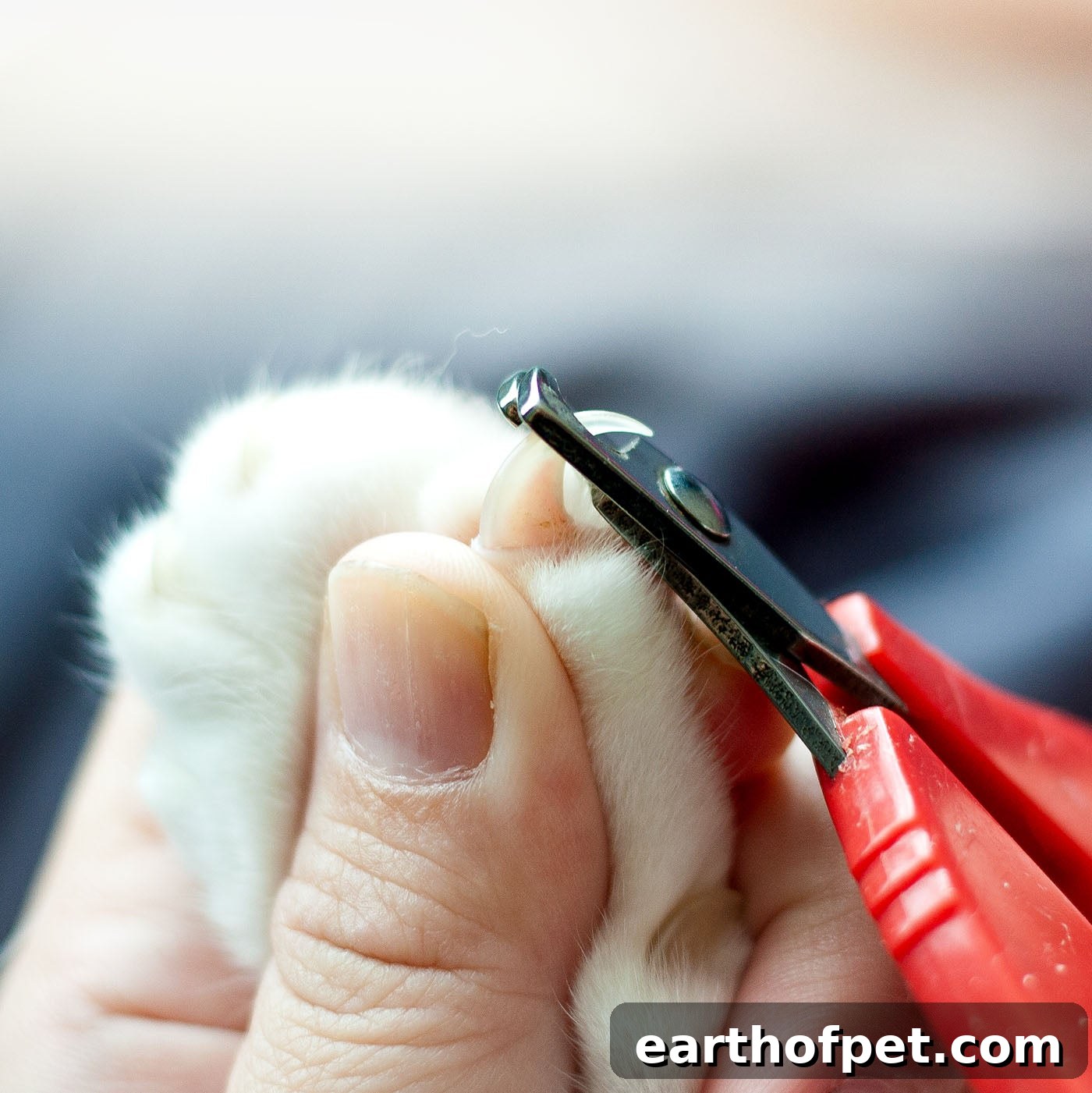
- Hold the paw and gently press the toe pad to extend the nail. Take your time until the nail is clearly visible.
- Look for the quick: in light-colored nails you can usually see a pink area inside. Avoid cutting into this area. For dark nails, trim only small amounts at a time to reduce the risk of cutting the quick.
- Use sharp, purpose-made cat nail clippers—either scissor-style or guillotine-style—and make a clean, quick cut at the white or clear tip of the nail. Avoid crushing the nail or cutting at an angle that could splinter it.
- If you’re new to trimming, start by clipping one or two nails per session and gradually increase as your cat becomes more comfortable. Short, positive sessions are better than trying to do all nails at once if your cat resists.
- Reward your cat with a small treat or extra affection immediately after the trim to reinforce positive behavior.
Aftercare and What to Do if You Cut the Quick
If you accidentally cut the quick, remain calm—your cat will likely be startled and there may be some bleeding. Apply gentle pressure with a clean cloth or gauze to stop bleeding. Commercial styptic powders or cornstarch can help clot the blood quickly; apply sparingly and follow product instructions if available. If bleeding does not stop within a few minutes, or if the paw appears swollen, red, or painful, contact your veterinarian for advice.
Watch trimmed paws for signs of soreness or infection over the next few days. Normal behavior might include brief favoring of the paw, but persistent limping, swelling, discharge, or foul odor are reasons to seek veterinary attention.
Tools and Tips
Choose good-quality clippers designed for cats and keep them sharp—dull blades can crush the nail and cause discomfort. Nail files or emery boards can be used for smoothing rough edges after clipping. If your cat strongly resists handling, you can ask a veterinarian or professional groomer for assistance or demonstration. For elderly or unwell cats, professional handling may be the safest option.
Consistency is key: regular trims, gentle handling, and positive reinforcement will make nail care easier over time. Pair nail trimming with general paw checks to look for cuts, swelling, or foreign objects, and ensure your cat’s overall paw health is maintained.
Regular nail care is an important part of overall feline health. In addition to trimming, a balanced diet and appropriate grooming help support strong nails, healthy skin, and a shiny coat. If you have concerns about your cat’s nails or behavior during trimming, consult your veterinarian for personalized advice.