
Patient Condition and History
Chester is a 10-year-old, 43 lb male American Cocker Spaniel presented to MediVet Warbreck House Veterinary Centre in Liverpool, UK, after 24 hours of weakness, lethargy and labored breathing. His medical record included chronic kidney disease (IRIS stage 2), hypothyroidism, hypertension, a prior anterior cruciate repair and recurrent otitis externa. He was already on long-term medications to manage these conditions.
On physical examination, Dr. Andrew McVey observed an elevated respiratory rate with increased inspiratory effort. Bloodwork demonstrated moderate, stable azotemia consistent with his chronic kidney disease. Thoracic radiographs revealed pulmonary edema and marked cardiomegaly. An echocardiogram confirmed significant left-sided dilation with decreased fractional shortening. The working clinical diagnosis was dilated cardiomyopathy (DCM) with secondary congestive heart failure (CHF).
Dilated cardiomyopathy is a primary heart muscle disease in which one or more chambers enlarge and systolic function declines. The weakened contractility forces the heart to dilate in an attempt to maintain output. Over time, this process can progress to congestive heart failure, with fluid accumulation in the lungs and other body cavities. In breeds like the American Cocker Spaniel, clinicians remain alert for this disease because of breed predisposition.
Chester was admitted for inpatient care and received intravenous pimobendan to support cardiac contractility; this was later transitioned to an oral formulation. He was given supportive therapy and monitored closely. Diuretics were withheld during hospitalization because of his pre-existing azotemia. To enable continuous monitoring in hospital and following discharge, a PetPace smart-sensing collar was placed on Chester.
Monitoring Data
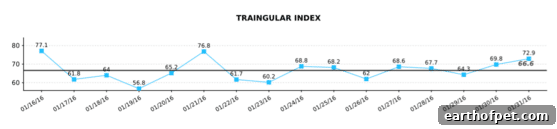
Chester continued wearing the PetPace collar at home to provide continuous physiological monitoring during his recovery. After initiating pimobendan therapy, Chester’s pulse indices showed an immediate and sustained improvement. Heart rate variability (HRV) metrics also rose significantly after the first day of treatment, consistent with a favourable clinical response to therapy. These objective telemetry trends supported the clinical impression that medical management was stabilizing his cardiac function.
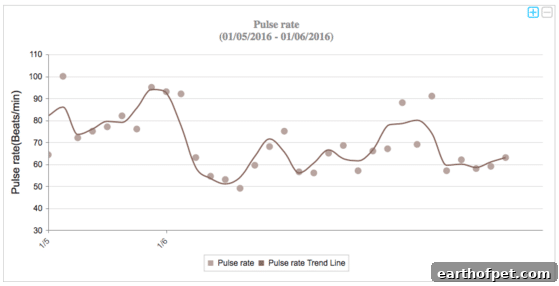
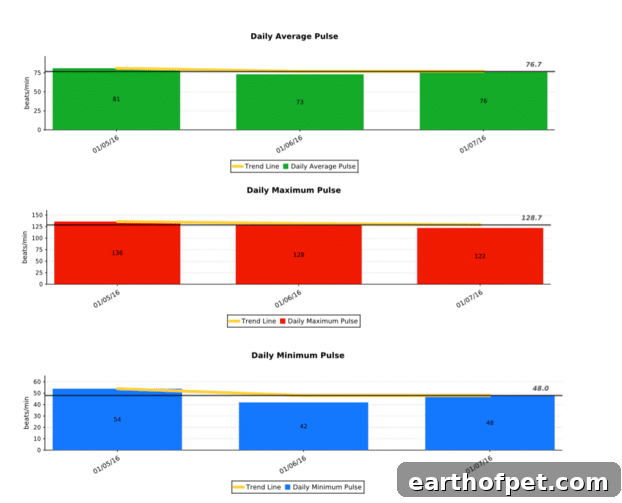
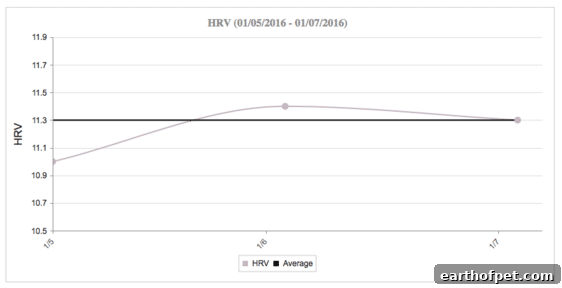
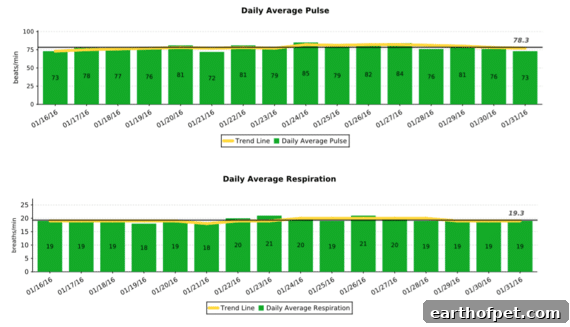
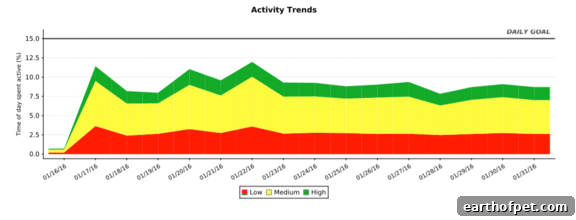
In follow-up graphs recorded several weeks after hospitalization, Chester’s pulse and respiratory rates—continually tracked by his PetPace collar—remained slightly above normal but stable. HRV and activity patterns were likewise stable and consistent with recovery from the acute congestive episode. Repeated clinical examinations confirmed resolution of CHF signs and that Chester was clinically well, provided he continued his prescribed medications on a regular schedule.
Discussion
DCM in dogs is a progressive condition without a cure, but appropriate medical management can often keep affected patients stable or asymptomatic for extended periods. These patients remain at risk for acute decompensation, including heart failure or life-threatening arrhythmias, so ongoing monitoring is critical. Objective, continuous measurements—such as pulse rate, respiratory rate and HRV—provide clinicians and owners with quantifiable trends that help detect deterioration early and guide timely adjustments in therapy.
Wearable telemetry devices like the PetPace collar supply clinicians with high-resolution, real-world physiological data both in hospital and at home. For patients with chronic cardiac conditions, data collected during normal daily life are often more representative of the animal’s baseline state than periodic clinic measurements. Those longitudinal trends aid in assessing disease severity, gauging response to medications such as pimobendan, and identifying early signs of relapse.
Conclusions
The PetPace smart-sensing collar demonstrated value in Chester’s case by detecting short- and long-term changes in physiologic parameters relevant to DCM and CHF. Continuous monitoring enabled the clinical team to evaluate treatment response, confirm recovery from the acute congestive episode, and track stability after discharge. Access to detailed, time-stamped trends supports informed clinical decision-making and may allow earlier intervention in the preclinical phases of disease when trend changes first appear.
Dr. Andrew McVey, Veterinary Surgeon and Partner at MediVet Warbreck House Veterinary Centre in Liverpool, UK, said: “The PetPace collar provided us with high-resolution clinical data at the hospital, which helped stabilize the patient. More importantly, the collar monitored the patient at home, after discharge. The data, which correlated well with the owner’s subjective reports and the findings of our follow-up examinations, was instrumental in assessing the patient’s condition and making clinical decisions. This technology, never before available to veterinarians, can raise patient care and the customer relationship to a new level.”
Dr. Asaf Dagan, DVM, Diplomate ABVP (Canine and Feline practice) and PetPace Chief Veterinarian, added: “Most dogs and cats with chronic heart diseases are treated at home, often taking combinations of medications for months or years. It is challenging for clinicians to manage these cases when they rarely receive objective, quantifiable data. In traditional measurement paradigms, such data can be generated only at a veterinary facility, and not at home, where data is often more representative of the patient’s true condition. I am confident that the availability of highly detailed, clinically oriented data, reports and analytics will change what we know about the natural course of diseases and the most effective ways to treat them.”
For clinicians managing canine cardiomyopathy and other chronic diseases, integrating continuous remote monitoring into care plans can improve detection of subtle changes, support medication management, and strengthen communication between veterinary teams and pet owners.