Why Cleaning Your Dog’s Ears Matters
Cleaning your dog’s ears is an essential part of regular grooming and overall health care. Ears play multiple roles for dogs — hearing, balance, communication, and comfort — so keeping them clean helps prevent pain, infections, and long-term damage. Regular ear care supports your dog’s wellbeing and reduces the likelihood of costly veterinary treatment later on.
Deaf Dogs and Ear Health
Dogs with hearing loss can live full, happy lives with proper care and a supportive environment. Even so, many cases of hearing loss are preventable. Untreated ear infections, chronic wax buildup, and prolonged inflammation can all contribute to hearing decline. Whether your dog already has reduced hearing or not, maintaining healthy ears is important for comfort, safety, and quality of life.
Because canine ears are sensitive and can develop a variety of issues, learning safe and effective ear-cleaning techniques can help your pet stay comfortable and avoid avoidable problems.
How Often Should You Clean Your Dog’s Ears?
There’s no single schedule that fits every dog. Frequency depends on your dog’s breed, ear shape, activity level (swimming or bathing), and history of ear problems. Dogs with floppy ears or hairy ear canals — such as Cocker Spaniels, Basset Hounds, and many spaniel breeds — are often more prone to moisture and debris buildup, but any breed can develop ear issues.
Use these guidelines to determine how often to clean your dog’s ears:
- Ask your veterinarian – Your vet can recommend a cleaning frequency tailored to your dog’s ear health and risk factors.
- Check with your groomer – Many groomers include ear cleaning in routine grooming, which may reduce the need for extra at-home sessions.
- Inspect regularly – Look for signs of moisture, wax buildup, redness, smell, or discharge, especially after baths or time in water. Clean when you see early signs or as your vet advises.
Be careful not to over-clean. Excessive cleaning can strip protective oils and lead to irritation or infection. Learn to recognize normal, healthy ears so you know when cleaning is necessary and when to seek professional care.
Signs of an Ear Infection or Other Problems
Healthy ears are generally clean, pink (depending on skin tone), free of odor, and not painful to the touch. Watch for these common signs of infection, parasites, or inflammation:
- Strong, unpleasant, or yeasty odor
- Frequent head shaking or tilting
- Pawing or rubbing at the ears
- Redness, swelling, or inflamed skin
- Discharge that is sticky, watery, or colored
- Ear feels hot or overly warm
- Dog pulls away or shows pain when you touch the ear
If you notice any of these symptoms, consult your veterinarian. Some conditions require medication, ear mite treatment, allergy management, or other veterinary interventions rather than at-home cleaning.
Materials You’ll Need
To clean your dog’s ears safely at home, gather a few basic supplies:
- Towels
- Clothes you don’t mind getting wet
- Cotton balls or gauze pads
- Veterinarian-recommended ear wash solution
- Tweezers or thinning scissors (only if the ear canal is hairy and you are comfortable trimming; if in doubt, have a groomer or vet do it)
The Best Ear Cleaning Solutions
It’s safest to use a veterinarian-approved ear-cleaning product. Avoid home remedies containing hydrogen peroxide or rubbing alcohol, as these can irritate or damage delicate ear tissue. Your vet can recommend a suitable ear wash for your dog’s specific needs and may offer products designed for cleaning, drying, or soothing inflamed ears.
How to Clean Your Dog’s Ears: Step-by-Step
Follow these steps to clean one ear at a time in a calm, controlled way:
- Restrict movement – Keep your dog steady and comfortable. Hold them gently in a sitting or lying position to reduce head shaking during the procedure.
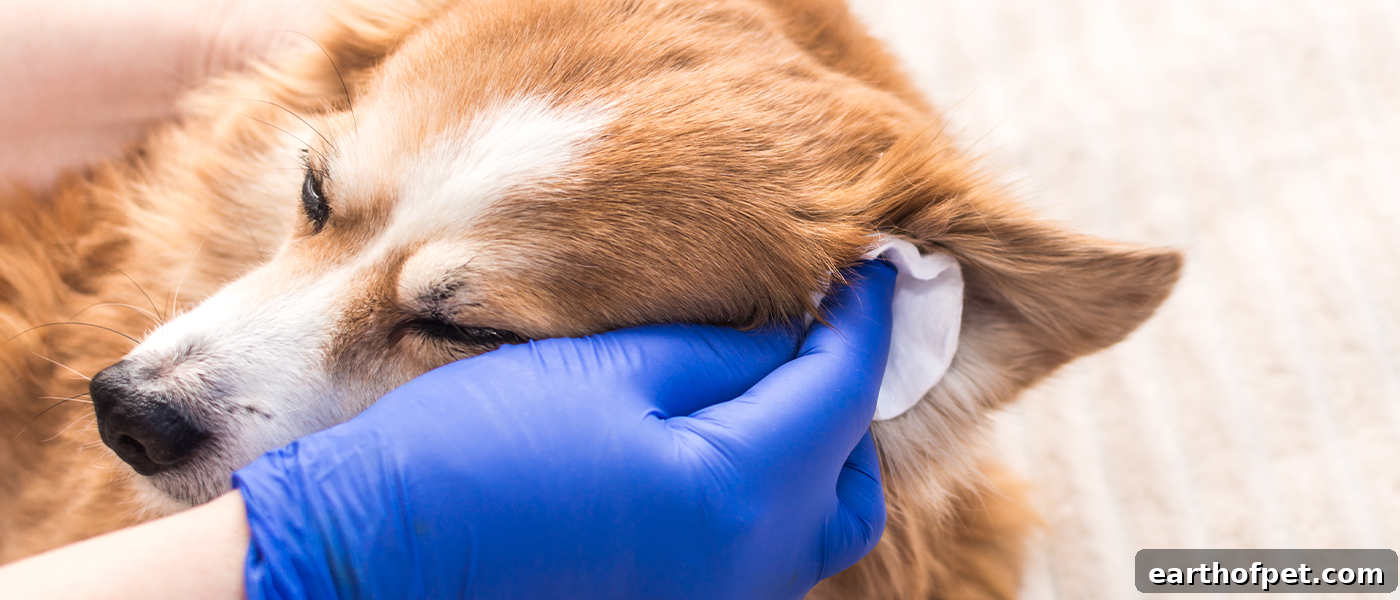
- Apply ear wash – Gently squeeze the veterinarian-recommended solution into the ear canal so it fills slightly. Do not insert the applicator tip deep into the ear.
- Massage the base – Massage the base of the ear for about 20–30 seconds to work the solution into the canal. You may hear a squishing sound, which is normal and helps dislodge wax and debris.
- Allow a shake – Let your dog shake their head to expel loosened debris. This is a natural and helpful step.
- Wipe away residue – Use a cotton ball or gauze to gently remove liquid and debris from the outer ear and ear flap. Avoid probing deep into the canal.
- Reward your dog – Offer praise and a treat to build a positive association with ear care.
Repeat on the other ear. Keep sessions calm, brief, and consistent to help your dog accept ear care as part of routine grooming.
Practical Tips
- Trim excess hair – If your dog has a lot of hair around or inside the ear flap, trimming or thinning it (by a groomer or vet) can improve airflow and reduce debris accumulation.
- Start young – Introduce ear-handling early so your dog becomes accustomed to touch and the cleaning routine.
- Make it positive – Use treats, calm praise, and short sessions to make ear cleaning a pleasant experience.
- Stay calm – Your dog will pick up on your mood. A relaxed, confident approach helps them stay relaxed too.
Common Mistakes to Avoid
Avoid these frequent errors when cleaning your dog’s ears:
- Do not use cotton swabs – Swabs can push debris deeper and damage the ear canal.
- Do not insert objects too deeply – Limit insertion to the outer ear; avoid going more than one knuckle deep to prevent trauma.
- Do not let the applicator tip touch the ear – Contact can contaminate the bottle and introduce bacteria.
- Avoid harsh chemicals – Never use hydrogen peroxide or rubbing alcohol unless explicitly directed by your veterinarian.
Regular, gentle ear care combined with routine veterinary checks will help keep your dog comfortable and reduce the risk of infections and hearing loss. For more guidance on pet health, behavior, and nutrition, see our Live Well Blog for helpful articles and tips.