Dogs rarely display pain the way people do. Often, discomfort develops slowly and shows up as small changes in behavior, movement or vital signs long before obvious symptoms become visible.
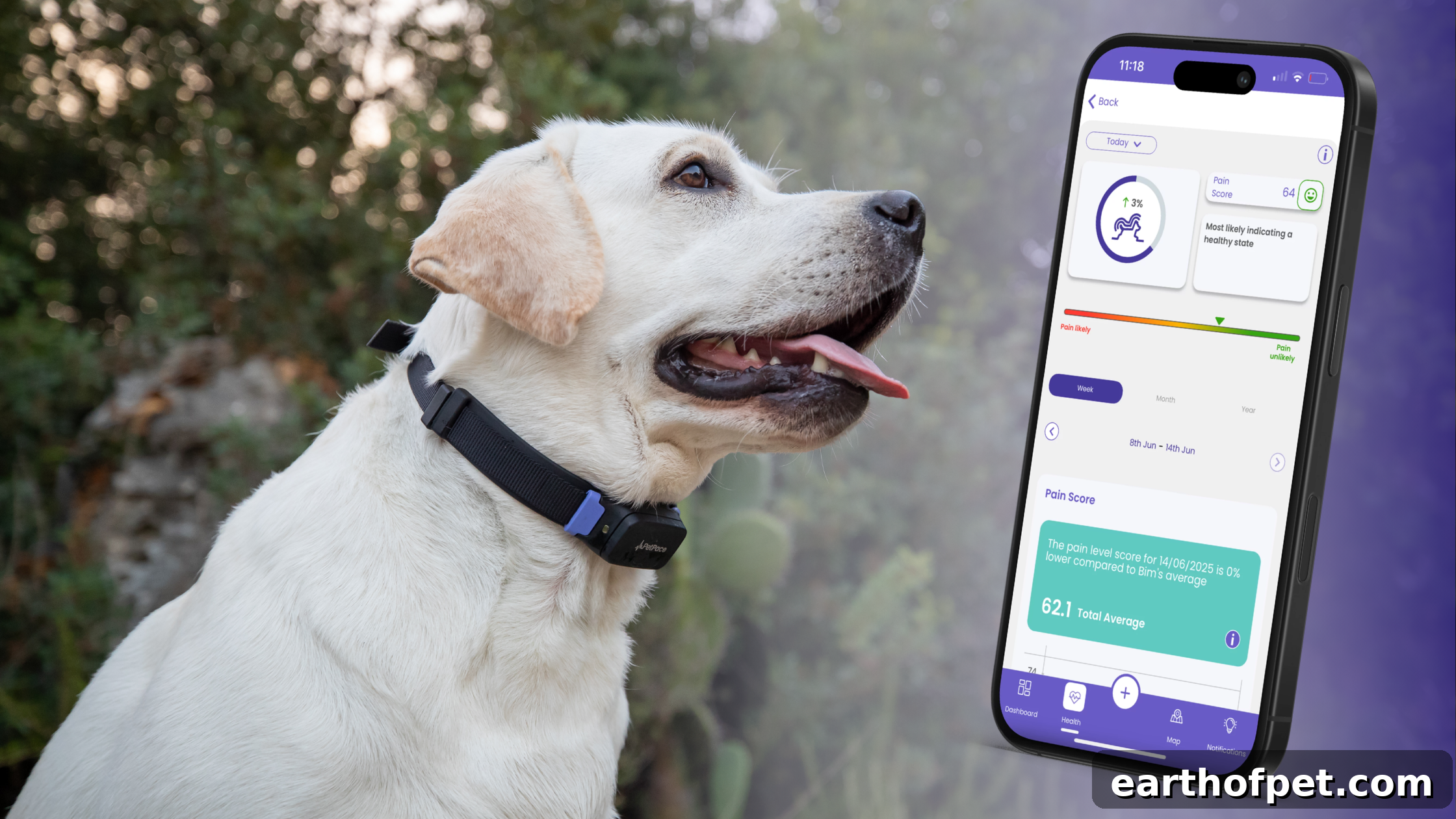
PetPace helps reveal those early signals by continuously tracking your dog’s vital signs and activity. The system analyzes this data to generate a daily Pain Score, a straightforward metric that highlights trends and flags potential discomfort sooner than sporadic observations.
This guide explains how the PetPace Pain Score works and how to include it in your dog’s health monitoring routine.
What is the PetPace Pain Score?
The PetPace Pain Score is a near real-time indicator derived from continuous biometric and behavioral data. Rather than relying on a single reading, the system evaluates multiple physiological signals together to detect patterns commonly associated with pain or discomfort.
Key signals monitored include:
- Heart rate variability (HRV)
- Respiration rate
- Body temperature
- Activity levels
- Posture and mobility patterns
PetPace’s AI-driven pain detection compares these signals with clinically validated datasets related to inflammation, mobility issues and other discomfort-related responses. The result is a clear daily score and an alert system that helps you notice concerning trends earlier.
How the collar detects pain
The PetPace collar identifies potential pain by recognizing combinations of changes in vital signs and movement that tend to occur when a dog is uncomfortable. Because it tracks these metrics continuously, it can detect subtle shifts that may not be obvious during a short clinic visit.
Typical physiological and behavioral responses linked to pain include:
- Altered heart rate variability
- Increased restlessness or changes in posture
- Shifts in activity or mobility
- Changes in respiration patterns
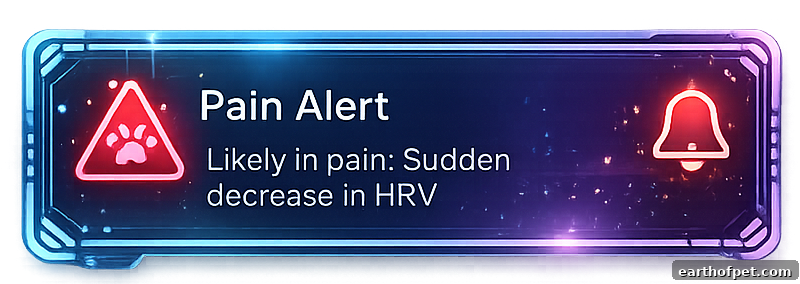
When the monitored signals match known pain signatures, the system generates a Pain Score update or alert so you and your veterinarian can investigate sooner.
Why dogs hide pain
Many animals, including dogs, instinctively conceal weakness or discomfort. In natural settings, displaying pain could increase vulnerability, so dogs often mask their symptoms until the issue becomes more severe.
Because of this tendency, owners may only notice pain after behavior changes become pronounced. Early, subtler signs to watch for include:
- Reluctance to jump or climb stairs
- Stiffness after resting
- Sleeping in unusual locations
- Reduced activity or playfulness
- Changes in grooming habits
- Irritability or withdrawal
These behaviors can be mistaken for aging or mood shifts, which is why continuous monitoring provides valuable context and helps distinguish temporary changes from persistent problems.
How to use the PetPace Pain Score in the app
The Pain Score is designed for everyday use and to be easy to interpret. Use it alongside your observations to form a more complete picture of your dog’s health.
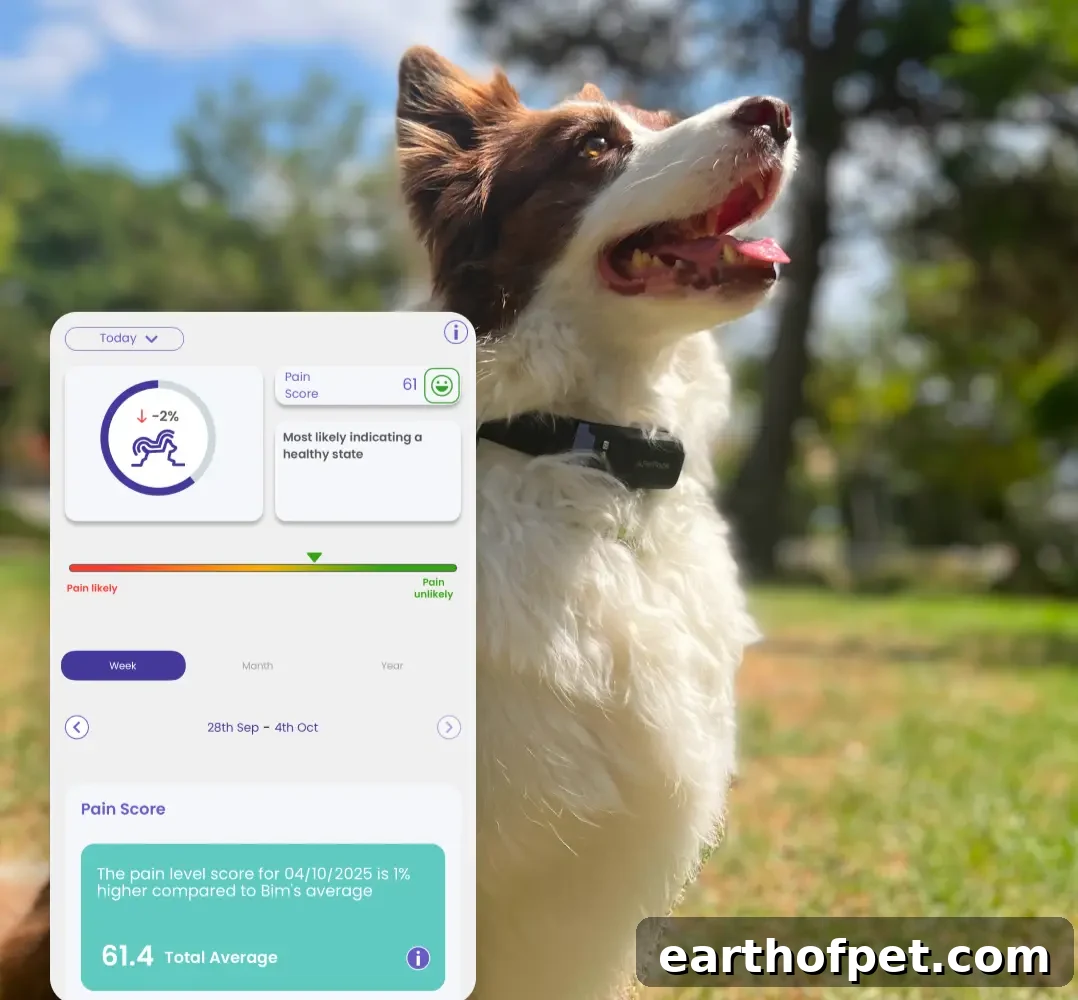
1. Check daily scores and trends
Focus on patterns over several days or weeks rather than a single reading. Gradual increases in the Pain Score can indicate developing discomfort. Trend graphs in the app help you see whether the score is stable, improving or rising.
2. Pay attention to alerts
If the system detects a pattern consistent with pain, it may send an alert. Alerts offer an early signal that something in your dog’s condition is changing, prompting closer observation or a timely call to your veterinarian.
3. Combine data with your observations
The Pain Score is most useful when paired with what you notice at home. For example, reduced mobility, stiffness after exercise or a lower appetite combined with an upward Pain Score trend can help you and your vet understand the situation faster.
4. Share trends with your veterinarian
Trend graphs and recorded data are particularly valuable during veterinary visits. Continuous home monitoring captures rest, play and sleep—states that are rarely observed during brief clinic exams—giving your vet better insight into patterns over time.
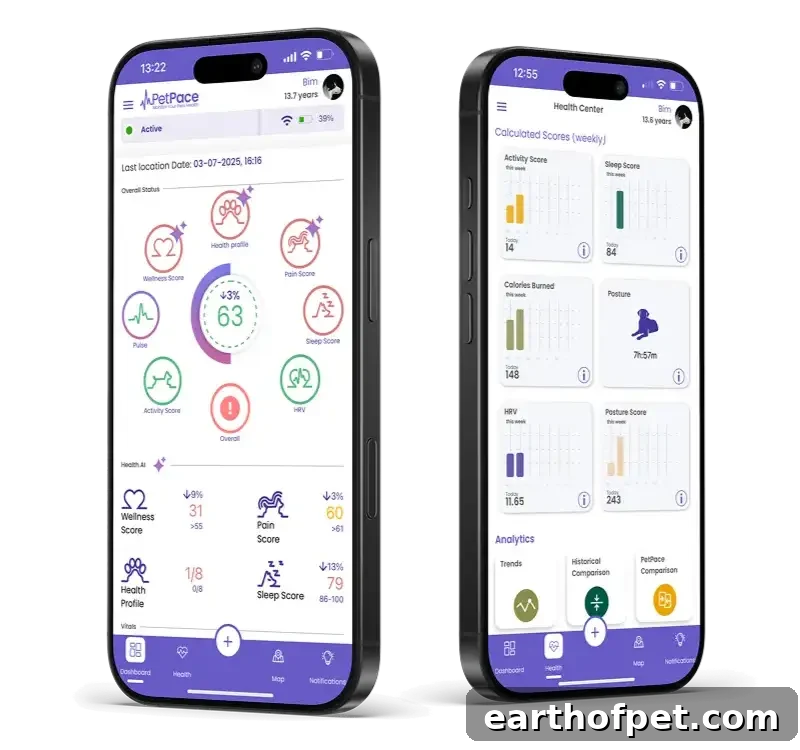
Monitoring after surgery and during chronic conditions
Continuous monitoring is especially helpful when pets are recovering from surgery or living with chronic conditions such as arthritis or hip dysplasia. In these cases, the Pain Score can help identify:
- Post-surgical discomfort
- Flare-ups in chronic pain
- Responses to medication adjustments
- Changes in mobility over time
Regular tracking can help you and your veterinarian evaluate how your dog is responding to treatment or recovery and make informed decisions about care.
Why continuous monitoring matters
Veterinary exams are essential, but they capture only a single point in time. Continuous monitoring reveals long-term patterns across rest, activity, sleep and daily routines. These patterns can uncover gradual shifts—like increasing stiffness or subtle changes in heart rate variability—before clear symptoms appear.
Listening to your dog’s body
Your dog may not be able to tell you when something hurts, but their body often signals trouble earlier than behavior alone reveals. The PetPace Pain Score converts those signals into clear trends and alerts, helping you stay aware of changes in your dog’s well-being.
By reviewing the Pain Score regularly and sharing relevant data with your veterinarian, you can use continuous monitoring as part of a proactive approach to maintaining your dog’s health.