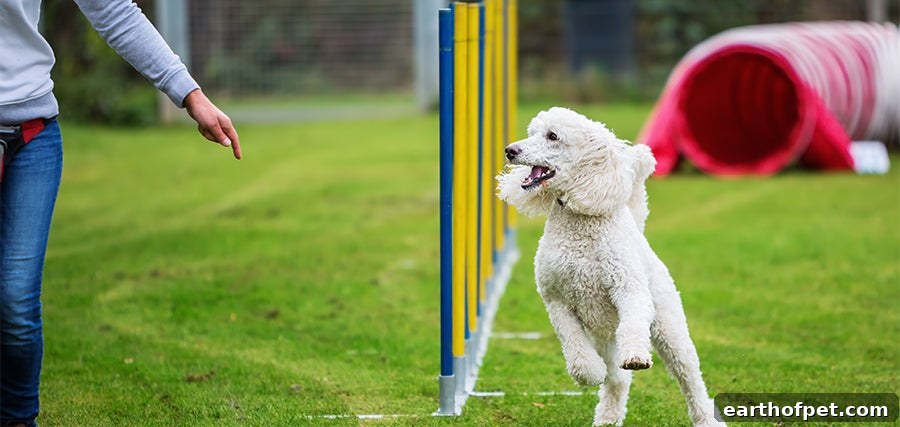
Canine intelligence is a popular and enduring topic. Pet owners want to know whether that affectionate, goofy companion on the couch is also clever. Fortunately, some of the smartest dog breeds come in a wide variety of sizes and temperaments, making it easier to find a bright, compatible canine companion for any household.
What Constitutes A “Smart” Dog Breed?
According to the American Kennel Club (AKC), most dogs are intelligent in different ways. Working breeds can learn tasks quickly due to instincts and innate abilities, while other breeds may be highly motivated by a desire to please their humans. Intelligence alone does not automatically make an ideal pet. To bring out a dog’s natural abilities, owners need to learn about the breed, invest time in consistent training, and understand characteristics such as whether a dog is a fast learner or more methodical.
Canine psychologist Stanley Coren, author of The Intelligence of Dogs, describes several types of intelligence:
- Adaptive intelligence – how a dog figures things out and solves problems.
- Working intelligence – how well a dog learns from and follows human commands.
- Instinctive intelligence – the natural skills a dog was bred to perform.
- Spatial intelligence – the ability to form and manipulate mental images of space and objects.
- Kinesthetic intelligence – the physical awareness and coordination used when a dog learns by moving, pawing, or manipulating objects.
Coren surveyed 199 dog obedience judges to rank breeds by how quickly they learn new commands and how often they obey. He organized breeds into six tiers: the top tier includes breeds that typically learn a command in fewer than five repetitions and obey about 95% of the time, while the lowest tier lists breeds that often need more than 100 repetitions and obey roughly 30% of the time.
Stanley Coren’s Six-tier List of The Smartest Dog Breeds
Tier One – Breeds that tend to learn a new command in fewer than five repetitions and obey at least 95% of the time:
- Border Collie
- Poodle
- German Shepherd
- Golden Retriever
- Doberman Pinscher
- Shetland Sheepdog
- Labrador Retriever
- Papillon
- Rottweiler
- Australian Cattle Dog
Tier Two – Breeds that usually learn a new command after five to 15 repetitions and obey at least 85% of the time:
- Pembroke Welsh Corgi
- Miniature Schnauzer
- English Springer Spaniel
- Belgian Tervuren
- Schipperke
- Belgian Sheepdog
- Collie
- Keeshond
- German Shorthaired Pointer
- Flat-Coated Retriever
- English Cocker Spaniel
- Standard Schnauzer
- Brittany Spaniel
- Cocker Spaniel
- Nova Scotia Duck Tolling Retriever
- Weimaraner
- Belgian Malinois
- Bernese Mountain Dog
- Pomeranian
- Irish Water Spaniel
- Vizsla
- Cardigan Welsh Corgi
Coren’s full ranking spans six tiers and includes 79 breeds listed in his book. Each breed tends to emphasize different forms of intelligence. Some behaviorists also point out that a dog’s social intelligence grows with time spent around people—hence the importance of puppy socialization. The more exposure a dog has to a variety of people, places, and experiences, the better its understanding of human cues and the stronger the bond it will form with its family.
Bonding Over Pet Food
Feeding time is an excellent opportunity to strengthen the human–dog bond. When welcoming a bright, active dog into your home, consider offering high-quality, flavorful pet food formulated for complete nutrition across life stages. Choosing a recipe that suits your dog’s age, activity level, and health needs helps support cognitive function and overall well-being. Mealtime routines and positive reinforcement around food can also reinforce training and good behavior.
Dog Brain Games
Mental stimulation is essential for intelligent breeds and curious dogs of any type. Puzzle feeders and treat-dispensing toys are a fun way to challenge problem-solving skills while reinforcing patience and persistence. These products vary in complexity, requiring dogs to nose, paw, or slide components to reveal treats. Using puzzles during feeding or as reward-based enrichment helps prevent boredom and reduces undesirable behaviors rooted in frustration or excess energy.
Dognition Assessment Tests:
There are science-based assessment tools and interactive games designed by canine cognition researchers to give owners insight into how their dog thinks. These tests typically measure aspects such as empathy, communication, memory, reasoning, and problem-solving. After completing a series of games, owners receive a profile that highlights their dog’s cognitive strengths and tendencies. While such assessments can be illuminating, they complement—rather than replace—good training, socialization, and daily mental and physical exercise.
Ultimately, intelligence in dogs is multifaceted. Whether a dog excels at obedience, problem-solving, or social interaction, consistent training, enrichment, and a loving environment will help any dog reach its potential and become a happy, well-adjusted member of the family.