
Patient Condition and History
To determine whether Dottie’s weight loss resulted from burning more calories than she consumed, she was fitted with a PetPace smart collar to accurately measure activity levels and estimate caloric expenditure.
Dottie is a five-year-old, spayed female Boston Terrier weighing 16 lb. She was boarding at VetCare Harris Animal Hospital in Tampa, Florida, when staff noted gradual weight loss despite her appearing healthy. Her caregivers wanted objective data to understand why she was losing weight while under supervision.
Monitoring Data
At admission for boarding, Dottie weighed 16.2 lb. Within a week her weight dropped to 14.1 lb. She had no known medical issues, maintained a normal appetite and feeding schedule (twice daily), and was consistently very active.
The PetPace collar recorded Dottie’s activity continuously, revealing frequent, intense activity bursts, including during night hours when the hospital was closed. These nocturnal activity episodes were not observable by staff without continuous monitoring, making the collar’s data especially valuable.
*AN EXAMPLE OF A DAILY ACTIVITY CHART DURING BOARDING, SHOWING HIGH ACTIVITY LEVELS
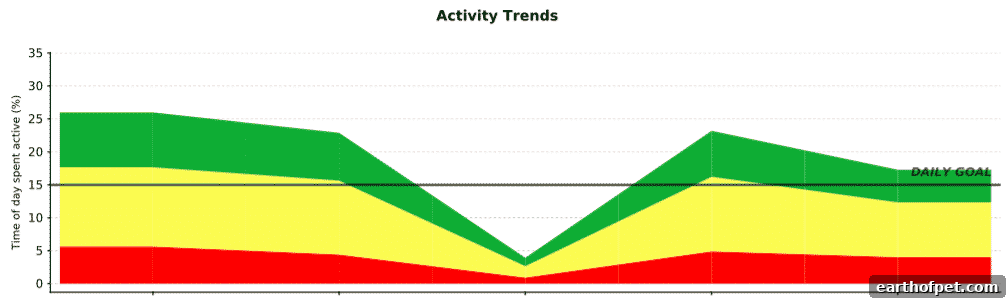
*DOTTIE’S ACTIVITY TREND CHART DURING BOARDING, SHOWING SUSTAINED HIGH ACTIVITY LEVEL (EXCEPT FOR ONE DAY DURING WHICH THE COLLAR WAS WORN FOR ONLY A FEW HOURS)
The collar tracked both the duration and intensity of activity. The aggregated activity breakdown shows the proportion of time Dottie spent at different intensity levels across the monitored period.
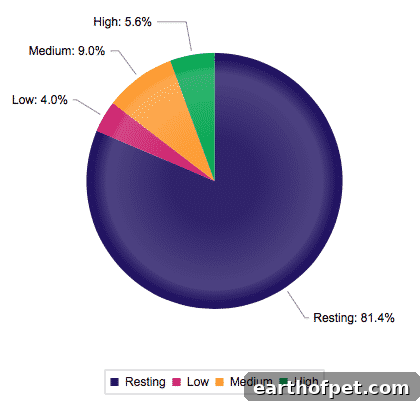
*DOTTIE’S ACCUMULATED ACTIVITY DATA DIVIDED INTO INTENSITY LEVELS. THE VALUES REPRESENT THE RELATIVE AMOUNT OF TIME SPENT IN EACH ACTIVITY LEVEL.
PetPace also calculates an Overall Activity Score that summarizes intensity, frequency and duration into a single benchmarked value. Dottie’s overall activity score during boarding was 17.2—among the highest PetPace has recorded. For reference, healthy active dogs typically score around 11.
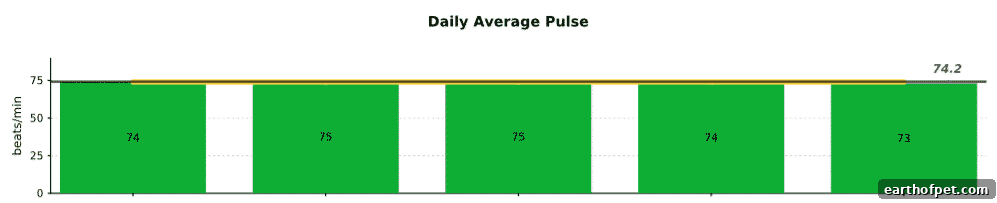
All other physiologic measures monitored by the collar—pulse rate indices, respiration indices, and heart rate variability (HRV)—remained within normal ranges and were stable throughout the monitoring period.
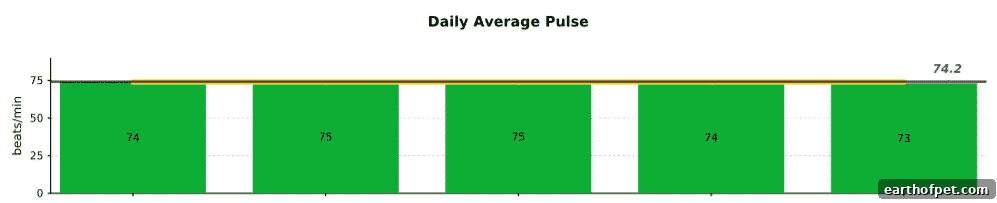
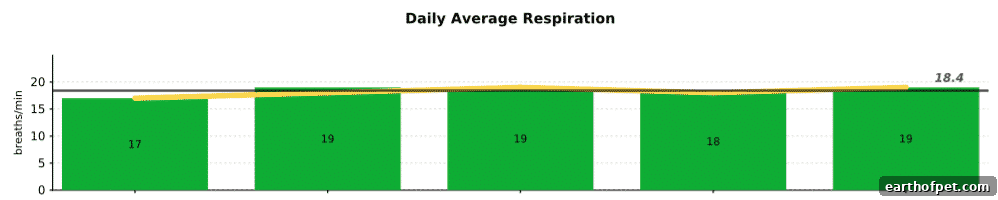

*Sample trend graphs showing normal and stable pulse, respiration and HRV values for a hyperactive boarding dog with weight loss.
PetPace’s experimental VVTI (Vaso-Vagal Tonus Index) plotted against pulse rate also showed a normal distribution for Dottie, suggesting overall good autonomic balance and well-being during the monitoring period.
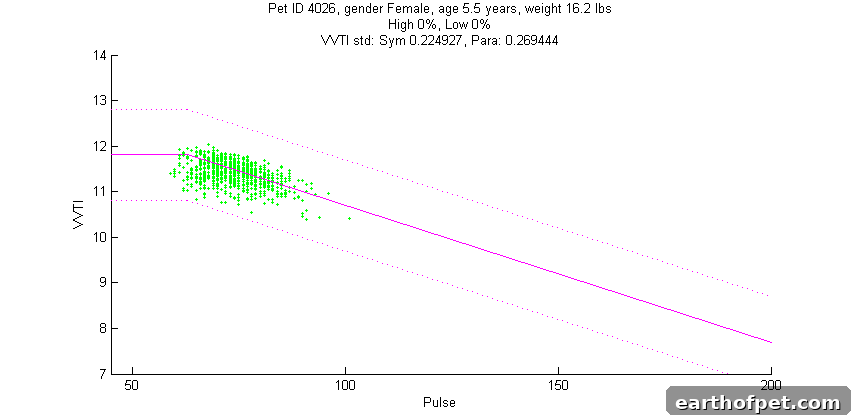
*VVTI (HRV INDEX) VS. PULSE SHOWING NORMAL DISTRIBUTION, LIKELY INDICATING GOOD HEALTH STATUS.
Using Dottie’s signalment (age, weight, neuter status) and activity data, PetPace provided an estimate of caloric expenditure. This estimate helped caregivers understand how much energy Dottie burned while boarding and guided feeding adjustments.
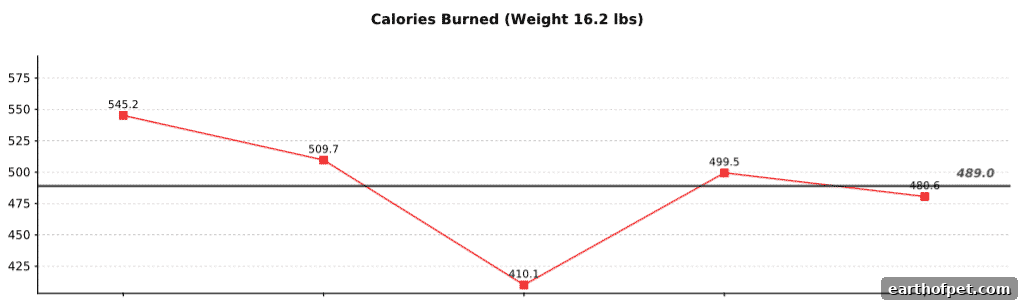
*CALORIC EXPENDITURE ESTIMATE FOR AN ACTIVE BOARDING DOG.
After reviewing the activity and caloric data, hospital staff increased Dottie’s food portions, and she began to gain weight.
Discussion
Weight management in dogs is closely linked to activity levels and patterns. Quantifying intensity, duration, frequency and consistency of activity provides actionable insights for pet owners and veterinary teams working to help pets gain, lose or maintain weight.
Highly active pets—working dogs, very playful individuals, or anxious dogs that move frequently—often require increased caloric intake to meet their energy demands. Objective activity measurements combined with caloric expenditure estimates make feeding plans more precise and easier to implement and share among caregivers.
Activity analytics also contribute to overall health assessment. PetPace’s ability to present activity data alongside physiologic indicators (pulse, respiration, HRV and VVTI) gives clinicians a fuller picture of a pet’s condition than activity trackers alone. In Dottie’s case, stable physiologic parameters alongside extremely high activity levels supported the conclusion that weight loss was due to increased energy expenditure rather than an underlying illness.
Conclusions
Detailed activity analysis is a valuable tool for managing canine and feline weight and for broader health monitoring. Activity data must be interpreted in the context of other health indicators and the animal’s medical history.
Dr. Asaf Dagan, DVM, Diplomate ABVP (Canine and Feline Practice) and PetPace Chief Veterinarian, commented, “Activity data analytics are instrumental for weight control programs by making the process more accurate, objective and data-driven. However, this data has implications that reach far beyond trendy exercise tracking devices. Changes in activity or in weight may be associated with medical conditions and should be interpreted in the context of the health status of the pet.”
Dottie’s veterinarian, Dr. Brian Shaw of VetCare Harris Animal Hospital in Tampa, added, “Using PetPace collars in the hospital helps us evaluate our patients’ needs and wellbeing. It is one thing to see a hyperactive dog bouncing around, but being able to see objective, accurate data provides us with a more solid ground for clinical decisions, including caloric intake determination.”