A Peaceful Partnership: How to Train Your Dog to Ignore Distractions on Walks
Hello everyone, Dr. Edward Hale here, your trusted veterinarian with 15 years of experience in helping pets and their people live happier, healthier lives. Today, I want to tackle a topic that I hear about constantly in my practice: the challenge of walking a distracted dog. If your daily strolls often feel more like a tug-of-war, with your furry friend lunging at squirrels, barking at other dogs, or pulling relentlessly towards every interesting smell, you are certainly not alone. It's a common frustration, but I assure you, with patience, consistency, and the right approach, you can transform chaotic walks into calm, enjoyable outings for both of you.
A well-behaved dog on a leash isn't just about good manners; it's about safety. It prevents potential injuries from sudden pulls, keeps your dog safe from traffic, and creates a more harmonious relationship. More importantly, it allows your dog to experience the world in a more relaxed way, rather than being constantly overwhelmed by every stimulus. Our goal here isn't to suppress your dog's natural curiosity entirely, but to teach them to defer to you, to trust your guidance, and to understand that their focus on you brings the best rewards.
Understanding Distractions: Why Do Dogs Get So Sidetracked?
Before we dive into training, it's helpful to understand the world from your dog's perspective. Walks are an olfactory wonderland, a visual spectacle, and often, a social event. Their noses are infinitely more powerful than ours, picking up scents we can't even imagine. Their prey drive can be ignited by a darting squirrel, and their social instincts by another dog or person. For some dogs, distractions stem from excitement; for others, it's fear, anxiety, or even frustration. Recognizing the underlying cause can sometimes help tailor your approach, but generally, the principles of building focus remain the same.
Building the Foundation: Before You Even Step Outside
Successful outdoor training begins long before you even open the front door. We need to establish a strong bond, clear communication, and a solid understanding of basic commands in a low-distraction environment. This initial phase is crucial for building a strong foundation for dog focus and teaching your dog that paying attention to you is highly rewarding.
- Master Basic Obedience Indoors: Ensure your dog reliably responds to commands like "Sit," "Stay," "Come," and especially "Look at Me" (or "Watch Me") in a quiet environment. These aren't just tricks; they're vital communication tools.
- Practice Loose Leash Walking Indoors: Put the leash on your dog inside your home or a very quiet, fenced yard. Practice walking without tension on the leash. Reward every step they take beside you with a slack leash. This teaches them the desired behavior without the added complexity of external stimuli.
- Build Focus Games: Play games that encourage eye contact and attention. The "Look at Me" game is paramount. Hold a treat near your nose, say "Look at Me!" When your dog makes eye contact, even for a second, mark it (with a verbal marker like "Yes!" or a clicker) and immediately reward. Gradually increase the duration of eye contact required. This is key to teaching your dog how to get your dog to pay attention to you indoors and transfer that focus outside.
The Gradual Exposure Method: Your Step-by-Step Training Guide
This is where we systematically introduce distractions, ensuring your dog can cope and focus on you at each stage. Remember, the goal is always to set your dog up for success, not to overwhelm them.
Step 1: The 'Look at Me' Game in Low-Distraction Outdoor Environments
Once your dog reliably focuses indoors, take the "Look at Me" game outside. Start in your backyard or a very quiet park at an off-peak time – somewhere there are minimal sights, sounds, or smells to compete with you. Practice the same game: "Look at Me!" Reward eye contact generously. Keep sessions short, positive, and fun. If your dog struggles, you've gone too far too fast; reduce the level of distraction.
Step 2: Introducing Low-Level Distractions & the Engage-Disengage Game
Now, let's introduce very mild distractions. Find a slightly busier area, but where distractions are still at a distance and not overwhelming. Think of a quiet street where other dogs or people might be walking far away, or a park bench where you can observe without being directly involved. This step is crucial for teaching how to stop dog barking at other dogs on walks and manage other common triggers.
- Identify a Distraction: Spot a potential distraction (e.g., another dog, a person, a cyclist) at a distance your dog notices but isn't reacting to strongly (no barking, lunging, or intense staring).
- Mark and Reward for Looking at Distraction (Initial Phase): The first few times, as soon as your dog notices the distraction (turns their head, ears perk up) but before they react, mark (e.g., "Yes!") and reward them. The idea is to associate the presence of the distraction with good things happening.
- The 'Engage-Disengage' Game: This is a powerful technique.
- When your dog notices a distraction at a comfortable distance, wait.
- The moment your dog looks away from the distraction voluntarily (even for a split second), mark and reward them with a high-value treat.
- Repeat this. Your dog learns, "Oh, distraction appears, I look at it, then I look back at my human, and BAM! Treat!"
This teaches your dog that disengaging from the distraction and refocusing on you is the most rewarding behavior. It's also excellent for teaching how to teach your dog to ignore squirrels, joggers, and other common triggers.
Step 3: Gradually Increasing Distractions
As your dog masters Step 2, slowly increase the intensity and proximity of distractions. This means moving to slightly busier streets, encountering distractions a little closer, or training during slightly busier times.
- Vary Environments: Practice in different locations with varying levels of distractions. A park, a quiet neighborhood, eventually a bustling area.
- Short Durations: Keep training sessions short and sweet. Aim for 5-10 minutes of focused work, ending on a positive note before your dog gets tired or overwhelmed.
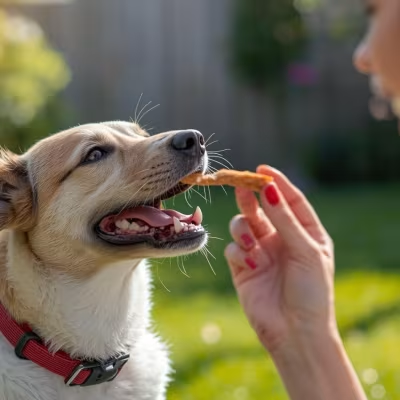
- High-Value Treats are Key: In distracting environments, your standard kibble won't cut it. Use soft, smelly, pea-sized treats that your dog absolutely loves (e.g., cooked chicken, cheese, hot dogs). These are essential for grabbing and holding their attention.
Step 4: Consistent Practice and Generalization
Like any skill, ignoring distractions requires consistent practice. Don't expect perfection overnight. This isn't a "fix it once" situation; it's an ongoing journey of reinforcement.
- Incorporate into Every Walk: Every walk is a training opportunity. Start each walk by getting your dog's focus before you even leave the driveway.
- Be Patient: There will be good days and bad days. Don't get discouraged by setbacks. Revert to an easier level if your dog is struggling.
- Celebrate Small Victories: Did your dog glance at a jogger and then look back at you? That's a huge win! Acknowledge and reward it.
Essential Tools and Techniques for Success
- High-Value Treats: As mentioned, these are non-negotiable for outdoor training. Their appeal needs to outweigh the appeal of the distraction.
- Appropriate Leash and Harness: Use a standard 6-foot leash (not retractable, which can teach pulling and be dangerous). A front-clip harness or a head halter can be very helpful for managing pulling without causing pain or discomfort. I strongly advise against using prong collars or choke chains, as they rely on pain and fear, which can damage your bond and exacerbate behavioral issues. Focus on positive reinforcement techniques for leash training.
- Verbal Marker or Clicker: A consistent sound (like "Yes!" or a clicker) immediately followed by a treat helps your dog understand exactly what behavior they are being rewarded for.
- Your Attitude: Stay calm, positive, and encouraging. Your dog picks up on your emotions. If you're stressed, they're more likely to be stressed.
Common Mistakes Pet Owners Make
I see these frequently in my clinic, and they can really hinder progress when it comes to building focus and attention for a reactive dog or even a generally distracted one.
- Going Too Fast, Too Soon: This is probably the number one mistake. If you introduce your dog to a chaotic environment before they're ready, you'll overwhelm them, and they'll likely react poorly, reinforcing the unwanted behavior.
- Punishing Distraction: Yelling, yanking the leash, or scolding your dog when they react to a distraction is counterproductive. It creates negative associations with the distraction (and potentially with you), increasing anxiety and reactivity. It doesn't teach them what to do, only what not to do, often in a fearful way.
- Inconsistent Training: Training must be consistent across all family members and every walk. One person allowing pulling or ignoring commands can undo weeks of progress.
- Not Using High-Value Rewards: If your dog values a squirrel more than your treat, your treat isn't high-value enough. Elevate your rewards when training in distracting environments.
- Making Walks Only About Training: While training is crucial, dogs also need mental and physical enrichment. Allow time for sniffing and exploring once they've demonstrated focus. A walk shouldn't feel like a constant pop quiz.
- Giving Up Too Soon: Training takes time. Some dogs learn faster than others, but all dogs can improve with dedication.
Pro Tips from Dr. Hale's Clinical Experience
From years of working with countless dogs and their owners, here are some insights that I find particularly helpful:
- Manage Your Expectations: This is a journey, not a destination. Your dog will have good days and bad days. Celebrate the small victories and don't get discouraged by setbacks. Even a small improvement in what to do when your dog pulls on the leash constantly is progress.
- Pre-Walk Exercise Can Help: A quick game of fetch or some indoor mental stimulation before a training walk can help burn off some excess energy, making your dog more receptive to learning and less likely to be overstimulated.
- Be Your Dog's Advocate: If you see a particularly intense distraction approaching (e.g., a dog that you know your dog struggles with, or a child on a scooter), it's okay to create distance. Cross the street, turn around, or step behind a car. Don't put your dog in a situation where they're guaranteed to fail. This is especially true for training a puppy to ignore distractions outdoors, where their world is still so new and overwhelming.
- Observe Your Dog's Stress Signals: Learn to read your dog's body language. Are their ears pinned back? Are they licking their lips? Yawning excessively? Panting when not hot? These are subtle signs of stress. If you see them, reduce the intensity of the training or environment.
- The "Emergency U-Turn": If a distraction becomes too much and your dog is getting overstimulated, simply say "Let's Go!" (or "This Way!"), turn 180 degrees, and briskly walk in the opposite direction, rewarding them for coming with you. This physically removes them from the trigger and helps them refocus.
- Scent Work Can Be a Great Focus Builder: Incorporate some nose work into your routine. Hiding treats around the house or in a snuffle mat can tire your dog out mentally and enhance their ability to focus, which translates to better attention outdoors.
When to See a Vet or Professional Trainer
While I encourage you to implement these training techniques, there are times when professional help is essential. Always prioritize your pet's safety and well-being.
- Sudden Behavioral Changes: If your dog suddenly becomes extremely reactive or anxious on walks when they weren't before, it could indicate an underlying medical issue. Pain, discomfort, or neurological changes can all manifest as behavioral problems. A veterinary check-up is crucial in such cases.
- Extreme Anxiety or Fear: If your dog exhibits severe anxiety, phobias, or panic attacks in certain outdoor situations despite your best training efforts (e.g., shaking uncontrollably, incessant whining, attempts to escape), consult your veterinarian. They may recommend medication to help manage anxiety while you continue behavior modification, or refer you to a veterinary behaviorist.
- Aggression Towards Distractions: If your dog displays aggression (growling, lunging with intent, snapping, biting) towards other dogs, people, or objects, this is a serious safety concern that requires immediate professional intervention. A certified professional dog trainer specializing in reactivity, or a veterinary behaviorist, can provide a tailored behavior modification plan.
- No Progress After Consistent Training: If you've diligently followed a positive reinforcement training plan for several weeks or months and see no discernible improvement, it might be time for an expert to evaluate your technique or your dog's specific needs.
Remember, your veterinarian is always your first point of contact for any health or significant behavioral concerns. We can rule out medical issues and help guide you to the right resources.
Frequently Asked Questions
Q1: How long does it take to train a dog to ignore distractions?
A: The timeline varies greatly depending on your dog's age, breed, temperament, past experiences, and the consistency of your training. For some dogs, significant improvement might be seen in a few weeks; for others, it could take many months or even be an ongoing process throughout their lives. Patience and persistence are far more important than speed.
Q2: My dog is too excited to take treats outside. What do I do?
A: This is a very common issue! It means the environment is too stimulating for your dog right now. Go back to basics: find a much quieter location with fewer distractions, or try training at a less busy time of day. Your treats also need to be incredibly high-value – think boiled chicken, cheese, or hot dogs – not just kibble. If they still refuse, you're in an environment where they are too over threshold to learn effectively.
Q3: Should I use a prong collar or choke chain to control my dog on walks?
A: Absolutely not. As a veterinarian, I strongly advise against using aversive tools like prong collars, choke chains, or electronic collars. While they may offer a quick fix by causing pain or fear to suppress unwanted behavior, they do not teach your dog what to do. Instead, they can lead to increased anxiety, fear, aggression, and can severely damage the trust and bond you share with your dog. They can also cause physical injury to your dog's neck. Positive reinforcement methods are safer, more humane, and more effective in the long run for building a confident, well-behaved companion.
Q4: What if my dog just won't focus, even with high-value treats?
A: If your dog genuinely cannot focus on you even with their absolute favorite treats in a relatively low-distraction environment, it's a sign they are "over threshold." This means they're too overwhelmed or overstimulated to learn. In this situation, the best course of action is to reduce the level of distraction even further. Try training inside your home, then your backyard, and slowly work your way up. For some dogs, especially highly anxious or reactive ones, professional help from a certified dog trainer or veterinary behaviorist might be needed to help manage their emotional state before effective training can begin.
Conclusion: The Reward of a Harmonious Walk
Training your dog to ignore distractions on walks is one of the most rewarding endeavors you can undertake as a pet owner. It fosters a deeper bond, builds mutual trust, and transforms what can be a stressful experience into a joyous one. Imagine strolling with your dog by your side, both of you relaxed, enjoying the fresh air and each other's company, instead of bracing for the next squirrel or passing dog. This is not an impossible dream!
Remember, consistency, patience, and positive reinforcement are your greatest tools. Celebrate every small success, don't be afraid to take a step back if needed, and always prioritize your dog's comfort and emotional well-being. With dedication, you'll soon be enjoying those peaceful, focused walks you've always dreamed of, making your dog walks more enjoyable for both of you. And if you ever feel stuck, or if behavioral issues escalate, please don't hesitate to reach out to your veterinarian or a certified professional dog trainer. We're here to help you and your beloved companion thrive!


0 Comments
No comments yet. Be the first to share your thoughts!
Leave a Comment