Hello everyone, Dr. Edward Hale here, your trusted veterinarian with 15 years of experience helping pet parents just like you navigate the wonderful, sometimes challenging, world of dog ownership. Today, we're tackling a common, and often quite annoying, behavior: when your dog nips at your ankles while you're walking. It's frustrating, it can hurt, and it definitely makes you feel like you're playing a perpetual game of tag with your own furry friend. Rest assured, you're not alone, and more importantly, this is a behavior we can absolutely work to resolve together.
My clinic sees countless cases of owners seeking effective ways to stop ankle nipping in dogs, from playful puppies to spirited adults. This isn't just about discomfort; it’s about establishing clear boundaries, ensuring safety for both you and your pet, and fostering a harmonious relationship built on understanding. So, let’s roll up our sleeves and delve into why this happens and, most importantly, how to stop puppy biting feet while walking or prevent an adult dog nipping ankles when I move.
Understanding Why Your Dog Nips at Your Ankles
Before we can fix a behavior, we need to understand its roots. Dogs don't nip out of malice; there's always an underlying reason. From a veterinary behavior perspective, these reasons typically fall into a few categories:
1. Puppy Play and Exploration
For young puppies, nipping and mouthing are completely natural. It's how they explore their world, communicate with their littermates, and learn bite inhibition. When your puppy mouths your ankles, it's often an extension of this exploratory and playful behavior. They haven't yet learned that human skin is sensitive and not meant for rough play. They might also be teething, and your moving feet offer a tantalizing, movable chew toy!
2. Herding Instincts
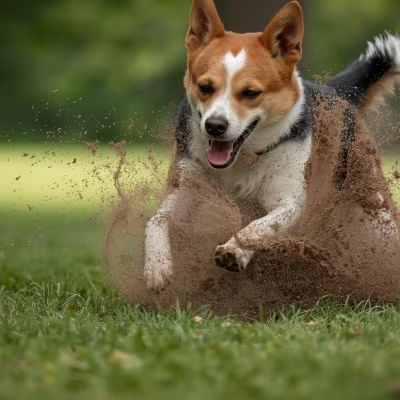
This is a big one, especially for certain breeds. Dogs like Border Collies, Australian Shepherds, Corgis, Shelties, and even some terriers were bred for centuries to herd livestock. Their instinct is to "gather" and "control" movement, often by nipping at the heels or flanks of animals. When you walk away, your moving ankles can trigger this deep-seated, genetic programming. They're not trying to hurt you; they're trying to move you, much like they would a stray sheep. For owners with these breeds, preventing herding dog ankle biting requires a specific understanding of their instincts.
3. Attention-Seeking Behavior
Dogs are smart. They quickly learn what gets your attention. If nipping your ankles elicits a reaction – even a negative one like a gasp, a shout, or a sudden stop – it still counts as attention to them. For a dog that might not be getting enough mental or physical stimulation, even negative attention is better than none at all. This is a classic example of operant conditioning at play.
4. Over-Excitement or Frustration
Sometimes, a dog that is over-excited or overly stimulated, especially during playtime or when greeting you, might resort to nipping. They have so much energy and enthusiasm that they don't know how to channel it appropriately. Similarly, if they are frustrated (e.g., you’re ignoring them, or they can’t reach a toy), nipping can be an outlet for that frustration.
5. Lack of Exercise and Mental Stimulation
A tired dog is a well-behaved dog – that old adage holds a lot of truth! If your dog isn't getting enough physical exercise or mental engagement through training and puzzle toys, they will have pent-up energy. This excess energy often manifests in undesirable ways, including nipping at your ankles. A bored dog will find their own entertainment, and sometimes that entertainment involves your feet.
6. Fear or Anxiety (Less Common for Nipping, More for Biting)
While less common for simple nipping, it's always worth considering. In some cases, a dog experiencing fear or anxiety might nip as a defensive mechanism. This is usually accompanied by other signs of stress like flattened ears, tucked tail, or lip licking. If you suspect fear, it's a more serious concern that warrants immediate professional help.
Stopping the Nipping: A Step-by-Step Guide
Now that we understand the 'why,' let's move on to the 'how.' Successfully stopping ankle nipping requires consistency, patience, and a multi-faceted approach. We're going to focus on management, redirection, and positive reinforcement.
Step 1: Immediate Management and Prevention
The first step is always to prevent the behavior from happening in the first place, or to immediately stop it when it does. This helps break the habit.
- Use a Leash Indoors: This might sound odd, but if your dog (especially a puppy) frequently nips you inside the house, keeping them on a short leash attached to your belt or held in your hand can prevent them from getting close enough to your ankles. This gives you immediate control and allows you to calmly redirect them before they nip.
- Create Barriers: Use baby gates or close doors to limit your dog's access to you when you know they are prone to nipping. This is particularly useful during busy times when you can't give them your full attention.
- Wear Protective Clothing: While not a solution, wearing sturdy shoes and thick pants can prevent injury and make the experience less rewarding for your dog, as they don't get the desired "feel" of your skin.
- Keep Appropriate Chew Toys Handy: Always have a favorite toy readily available. The moment your dog approaches your feet, offer the toy instead.
Step 2: Redirection and Positive Reinforcement
This is the cornerstone of effective training. We want to teach your dog what they should do instead of nipping, and then reward them for it.
- Interrupt and Redirect: The moment you anticipate a nip, or if it happens, make a calm, non-emotional noise like "Oops!" or "Ah-ah!" and immediately offer a suitable chew toy. When they take the toy, praise them lavishly and gently ("Good chew!"). This teaches them: "My feet are not for biting; this toy is."
- Reward Calmness: Actively seek out moments when your dog is not nipping your ankles, especially when you are moving around. If they are lying calmly nearby, or simply ignoring your feet as you walk, toss a treat, offer soft praise, or even a quiet pat. We want to reward the absence of the unwanted behavior. This is crucial for training dog not to nip at heels and reinforces the desired behavior.
- Teach "Leave It" and "Off": These commands are invaluable. Practice "Leave It" with tempting objects on the floor, gradually moving to your feet (when stationary). "Off" can be used to teach them to remove their mouth from something. Reward generously when they comply.
- "Freeze" and "Disengage": If your dog nips, immediately freeze in place. Don't run, don't yell, don't kick (this can escalate the behavior or be seen as play). Simply stand still. Often, without the motion to chase, the dog will lose interest. Once they disengage, even for a second, offer a toy or calmly walk away if they don't redirect.
Step 3: Managing Energy Levels and Mental Stimulation
As I mentioned, a tired dog is a good dog. This is especially true for energetic breeds prone to herding behaviors.
- Increase Physical Exercise: Ensure your dog gets plenty of appropriate exercise for their breed and age. This could mean longer walks, vigorous games of fetch, or trips to a secure dog park. A mentally and physically tired dog is less likely to have excess energy to channel into ankle nipping.
- Provide Mental Stimulation: Physical exercise alone isn't always enough. Engage their minds with puzzle toys, snuffle mats, chew items (like KONGs stuffed with treats), and regular short training sessions. Teaching latest tricks or practicing obedience commands can be just as tiring as a long walk. This can effectively curb my dog keeps nipping my ankles indoors when bored.
Step 4: Practice Bite Inhibition (for Puppies)
If you have a puppy, teaching bite inhibition is key. This is how they learn the appropriate pressure of their bite.
- The "Yelp" and Withdraw Method: When your puppy nips too hard, let out a sharp "Yelp!" or "Ouch!" immediately. Then, withdraw your attention completely. Cross your arms, turn your back, or even leave the room for 10-20 seconds. This mimics how littermates teach each other not to bite too hard – the play stops. Return and resume play after the brief time-out.
- Consistency is Key: Ensure everyone in the household uses the same method. Inconsistent responses will confuse your puppy.
Common Mistakes Owners Make
Even with the best intentions, it's easy to fall into certain traps that can inadvertently reinforce the nipping behavior. As a vet, I've seen these countless times:
- Yelling or Punishing: This almost never works in the long run and can often make things worse. Yelling can either frighten your dog (leading to more anxiety-driven behaviors) or be interpreted as attention, which reinforces the nipping. Physical punishment is never acceptable and can damage your bond, leading to fear and aggression.
- Running Away or Kicking: This often turns the nipping into a fun game of chase for your dog, especially for those with high prey or herding drives. To them, your frantic movements are an invitation to play, or an indication that they are successfully "herding" you.
- Inconsistency: If some family members allow nipping or react differently, your dog will get mixed signals, making it much harder for them to learn. Everyone must be on the same page.
- Not Providing Alternatives: If you tell your dog "no" to nipping your ankles but don't give them an appropriate outlet (like a toy or mental stimulation), they're left without guidance and will likely continue the unwanted behavior.
- Giving Attention (Even Negative) for Nipping: As mentioned, any attention can be rewarding. If you engage with your dog at all when they are nipping, you are essentially telling them that nipping works to get your focus.
Pro Tips from Dr. Hale's Clinic
Beyond the basics, here are a few insights from my years of clinical experience that can make a big difference:
- Observe the Patterns: Pay close attention to when and where the nipping occurs. Is it only when you walk into the kitchen? Only in the evenings? Only with certain people? Identifying triggers can help you proactively manage and prevent the behavior. For example, if it's always at a specific time, preemptively engage them in a game or offer a chew toy.
- The "No-Bite Zone" on Your Pants: For herding breeds or particularly persistent puppies, try a trick: get some old pants or socks you don't mind sacrificing. Put a tiny dab of a bitter apple spray (available at pet stores) on the lower part of the pants. This creates an unpleasant taste, teaching them that your legs are not for mouthing, without harming them. Always test a small area first to ensure no skin irritation for you or your dog.
- Rotate Toys Regularly: Keep your dog's interest high by rotating their chew toys. Don't leave all toys out all the time. Bring out a few new ones each day or week to make them feel novel and exciting. This makes them more appealing than your ankles.
- Enlist the Whole Family: If you live with others, everyone must follow the same rules and training methods. One person allowing or reacting differently can undo weeks of progress. Hold a family meeting to ensure consistency.
- Consider a Harness and Leash for Walks: If the nipping happens during walks outside, a front-clip harness can give you better control and make redirection easier without putting pressure on their neck. It also allows you to quickly guide them away from your feet if they start to get mouthy.
When to See a Vet
While most ankle-nipping can be resolved with consistent training and management, there are situations where a consultation with your veterinarian, or a certified professional dog trainer/behaviorist, is absolutely necessary:
- Escalation to Biting: If the nipping starts breaking skin, drawing blood, or becoming overtly aggressive (accompanied by growling, snapping, or lunging), this is no longer just nipping and requires immediate professional intervention.
- Sudden Change in Behavior: If your dog suddenly starts nipping when they never have before, or if the intensity dramatically increases, it could indicate an underlying medical issue causing pain, discomfort, or neurological changes. A vet check-up is crucial.
- Signs of Fear or Anxiety: If you suspect the nipping is rooted in fear, anxiety, or aggression, rather than play or instinct, a veterinary behaviorist can help diagnose the underlying cause and develop a comprehensive treatment plan.
- Inability to Manage: If you've diligently applied the advice above for several weeks and see no improvement, or the behavior seems to be worsening, don't hesitate to seek help. A professional can observe your dog's specific behavior, identify nuanced triggers, and tailor a plan specifically for your situation.
Frequently Asked Questions (FAQ)
Q1: Is it normal for puppies to nip ankles, or is mine particularly naughty?
A: It's completely normal for puppies to nip and mouth. It's how they explore and play. Your puppy isn't "naughty"; they're simply acting like a puppy! The key is to guide them towards appropriate behaviors and teach them bite inhibition early on. With consistent training, they will learn.
Q2: My adult dog only nips at my ankles, not my partner's. Why?
A: There could be several reasons. Your dog might perceive you differently – perhaps you're more animated, you move faster, or you react in a way that encourages the behavior (even unintentionally). It could also be that you're the primary person who exercises or feeds them, and they're channeling excitement or attention-seeking towards you. Consistency between all household members is vital to resolve this.
Q3: Does ankle nipping ever go away on its own if I just ignore it?
A: Rarely. While puppies might outgrow some mouthing as they mature, ankle nipping, especially if driven by herding instincts or attention-seeking, usually requires active intervention. Ignoring it can sometimes make it worse, as the dog may escalate the behavior to get a reaction, or the habit can become deeply ingrained. Consistent training is the most effective path to resolution.
Q4: Can an older dog learn to stop nipping, or is it too late?
A: It is absolutely never too late to teach an old dog new tricks – or to stop an old habit! While it might take a bit more patience and consistency with an older dog who has practiced the behavior for a long time, dogs are highly adaptable and capable of learning at any age. The same principles of management, redirection, and positive reinforcement apply.
Conclusion
Watching your dog nip at your ankles can be a deeply frustrating experience, but it’s a hurdle that nearly every pet owner can overcome with the right approach. Remember, your dog isn't trying to be malicious; they're communicating, playing, or acting on instinct. By understanding the root causes, implementing consistent management and training strategies, and showering them with positive reinforcement for desired behaviors, you can teach your dog that your ankles are off-limits.
Patience is your best friend on this journey, and celebrate every small victory. Before you know it, you'll be enjoying peaceful walks around the house and neighborhood, free from those tiny, persistent nips. If you ever feel overwhelmed or the behavior escalates, please don't hesitate to reach out to your veterinarian or a certified professional dog trainer. We're here to help you and your furry companion live your best lives together.
Warmly,
Dr. Edward Hale




0 Comments
No comments yet. Be the first to share your thoughts!
Leave a Comment