Therapy Dog Certification
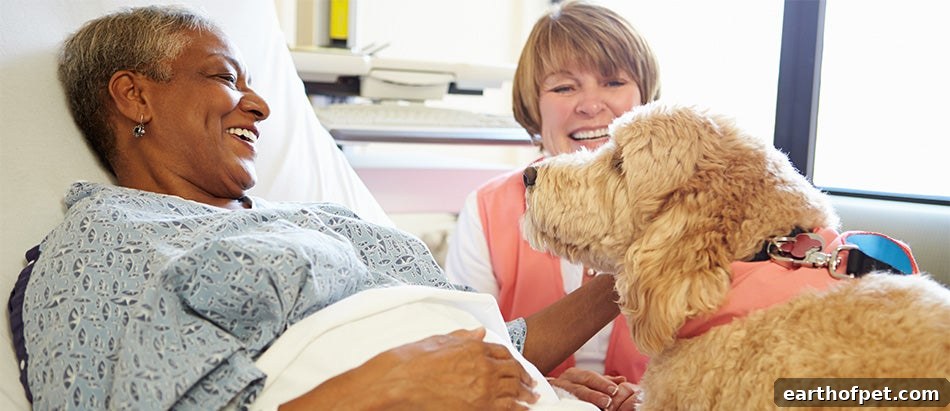
Therapy dog certification opens the door to meaningful visits that benefit people in hospitals, nursing homes, schools, and community programs. A certified therapy dog provides comfort, companionship, and emotional support in volunteer settings, while the handler gains a rewarding way to give back. Before starting the certification process, assess whether your dog’s temperament, training level, and health make them well suited to this role. Ideal therapy dogs are friendly, calm around strangers, adaptable to new environments, and comfortable with consistent handling and gentle interactions.
Therapy Certification Basics:
To pursue therapy dog certification you will need to take care of a few practical requirements. First, ensure your dog is in good physical condition: up-to-date vaccinations, a recent health check, and any routine preventive care recommended by your veterinarian. Many organizations require a written health certificate from a licensed veterinarian to confirm your dog is fit for regular public visits.
Training is essential. A therapy dog should respond reliably to basic obedience commands such as sit, down, stay, and come. They must walk calmly on a leash without pulling and tolerate handling such as petting, brushing, and light medical or gown adjustments when necessary. Socialization is equally important—your dog should remain relaxed around unfamiliar people, sudden noises, mobility equipment, and other animals.
Most therapy organizations require that your dog pass the American Kennel Club’s Canine Good Citizen (CGC) test or an equivalent evaluation that focuses on manners, obedience, and social behavior. The CGC test demonstrates that your dog can behave predictably and politely in a variety of everyday situations. In addition to the CGC, some groups may have their own testing criteria, orientation sessions, or supervised visit requirements, so check with the organization you plan to volunteer with for any additional steps.
The 10 Tests Your Dog Must Pass To Get Certified As A Therapy Dog:
- Accepting a friendly stranger — the dog should allow a new person to approach and interact without fear or aggression.
- Sitting politely for petting — the dog remains calm while being petted by strangers and does not jump up.
- Appearance and grooming — the dog tolerates basic handling such as grooming, light medical checks, and leash removal if needed.
- Walking on a loose lead — the dog walks beside the handler without pulling, choking, or lunging.
- Walking through a crowd — the dog stays controlled and focused amid groups of people and moving activity.
- Sit and stay commands — the dog maintains position on cue and demonstrates impulse control when requested.
- Coming when called — the dog reliably returns to the handler from a reasonable distance in a distracting environment.
- Reaction to another dog — the dog responds appropriately to encountering other dogs without escalating stress or aggression.
- Reaction to distraction — the dog remains composed with common distractions such as sudden noises, toys, or unusual sights.
- Supervised separation from owner — the dog can remain calm when briefly handled by another person while the handler steps away.
These ten elements form the core of many therapy evaluations, but remember that additional requirements can vary. Some organizations require specific temperament testing, proof of insurance for volunteers, handler training, or demonstration visits before full placement. Always verify requirements with your chosen therapy group so you can prepare accordingly.
Preparing your dog for certification is a gradual process. Start training early, practicing obedience in varied locations and around different people. Introduce grooming, medical handling, and noisy or crowded environments in short, positive sessions to build confidence. Reward calm behavior and use consistent commands so your dog understands expectations. Enroll in a CGC or therapy preparation class if available—these classes offer structured practice and feedback from experienced trainers.
On the day of testing or volunteer visits, bring up-to-date vaccination records, a current health certificate if required, proper identification for your dog, and essential supplies such as a sturdy leash, waste bags, and a blanket or mat for the dog to rest on. Dress professionally and be prepared to follow facility rules about pet interactions. As a handler, your role includes advocating for your dog’s comfort and safety and monitoring the environment to ensure visits remain positive for both the people you serve and your canine partner.
Becoming a certified therapy dog team takes preparation, patience, and responsible care, but it leads to meaningful and often emotional interactions that improve quality of life for many people. If you are committed to training and maintaining your dog’s wellbeing, therapy dog certification can be a fulfilling way to volunteer your pet’s naturally caring temperament.