Patient Condition and History
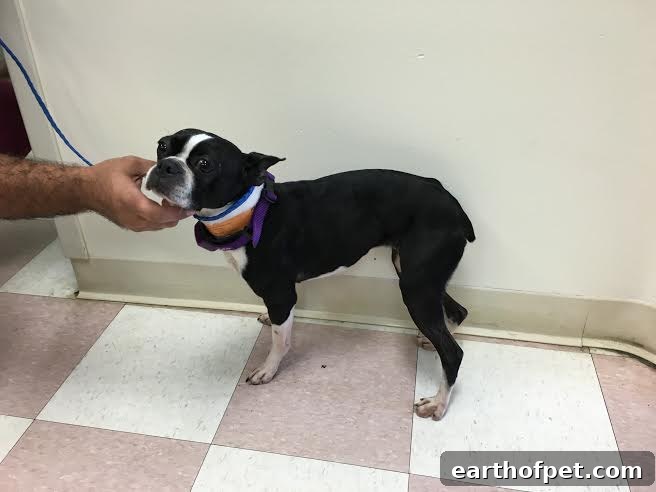
Dottie is a five-year-old, 16 lb spayed female Boston Terrier boarding at VetCare Harris Animal Hospital in Tampa, Florida. While in the hospital’s care she experienced unexplained weight loss despite appearing otherwise healthy and eating her regular meals.
To determine whether excessive energy expenditure could explain the weight loss, the hospital fitted Dottie with a PetPace smart collar to accurately record activity levels and estimate caloric burn during her stay.
Monitoring Data
On admission Dottie weighed 16.2 lb; within a week her weight had dropped to 14.1 lb. She had no known medical issues, ate twice daily, and showed very high levels of activity. Because the staff could not continuously observe Dottie, the PetPace collar provided objective insights into her daily and nightly movement patterns.
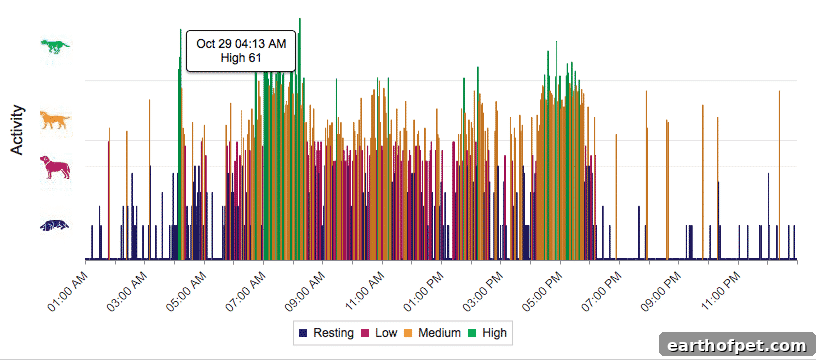
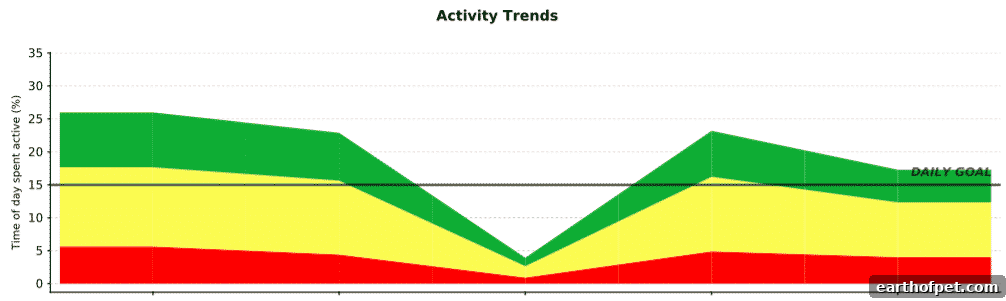
The activity data revealed frequent, intense bursts of movement, including during nighttime hours when the facility was closed. Without remote monitoring, caregivers would not have known about this persistent nighttime activity.
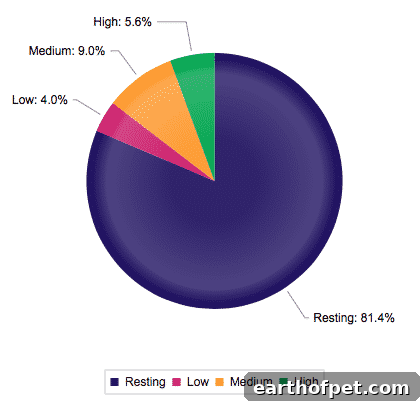
Beyond timing and duration, the collar measured activity intensity. Over the monitoring period Dottie’s activity was heavily skewed toward higher intensity levels, indicating vigorous and sustained movement rather than brief, low-energy activity.
PetPace also assigns an Overall Activity Score that combines intensity, frequency and duration on a proprietary scale to enable comparison across time periods and with other pets. Dottie’s Overall Activity Score was 17.2 during boarding—well above the typical score of around 11 for healthy, active dogs and among the highest documented by PetPace.
All other monitored physiologic measures remained within normal ranges. Daily averages and trend charts for pulse rate, respiration rate and heart rate variability (VVTI) showed stable values consistent with good general health.
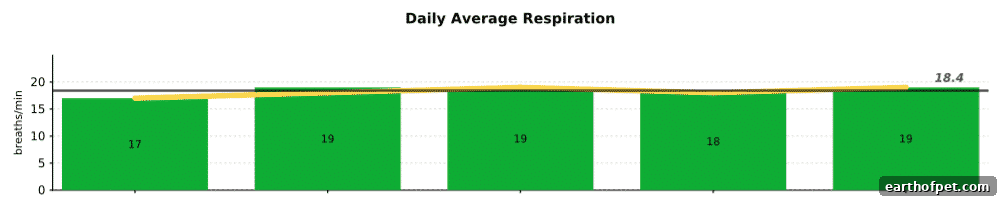

Sample trend graphs showing normal and stable physiologic values for a hyperactive boarding dog with weight loss.
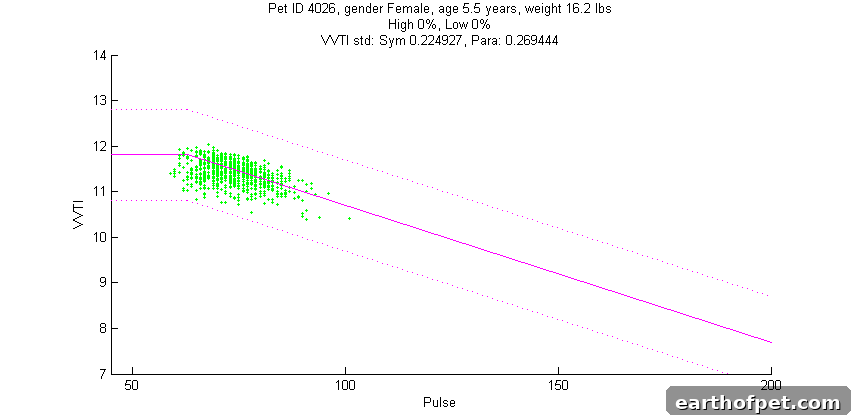
VVTI (HRV index) vs. pulse showing a normal distribution, indicating healthy autonomic balance.
The PetPace system also estimates caloric expenditure using patient signalment (age, weight, neuter status) combined with measured activity. The collar estimated Dottie’s energy use during boarding was substantially higher than expected for her baseline, supporting the conclusion that activity-related caloric burn caused her weight loss.
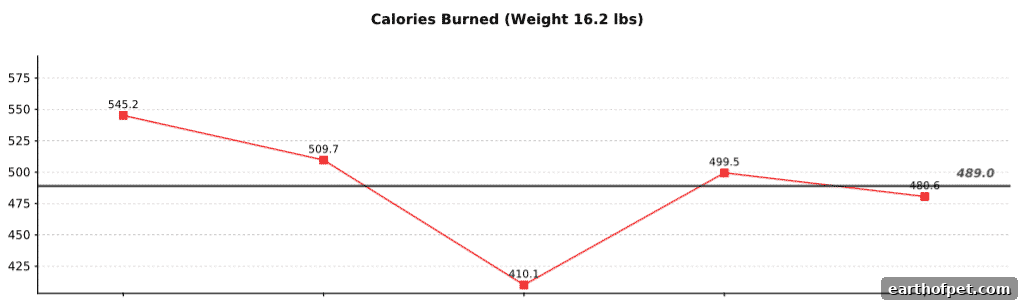
Caloric expenditure estimate for an active boarding dog.
Armed with these data, hospital staff increased Dottie’s daily food allowance and she began to regain weight.
Discussion
Body weight reflects the balance between caloric intake and energy expenditure. Accurately quantifying activity—by intensity, duration, frequency and consistency—provides actionable information for veterinarians and caregivers managing a dog’s weight.
Very active dogs, including working or highly playful breeds, often require increased caloric intake to maintain healthy body condition. Using objective activity data together with estimated caloric expenditure makes feeding plans more precise and easier to track and share with others involved in the animal’s care.
Integrating activity metrics with physiologic indicators strengthens clinical interpretation. In Dottie’s case, the combination of extremely high activity scores and normal vital sign trends allowed the medical team to conclude that insufficient caloric intake, not illness, was the most likely cause of her weight loss.
Conclusions
Detailed activity analysis is a valuable tool for managing canine weight and contributes to broader health assessments. Activity metrics should always be interpreted alongside other health indicators and the animal’s medical history.
Dr. Asaf Dagan, DVM, Diplomate ABVP and PetPace Chief Veterinarian, observed that activity analytics make weight control programs more accurate and data-driven, and that changes in activity or weight can signal medical issues that require clinical context for proper interpretation.
Dr. Brian Shaw, DVM, owner of VetCare Harris Animal Hospital in Tampa, added that objective data from PetPace collars improves clinical decision-making. Seeing a dog seem hyperactive is useful, but having reliable, quantifiable measures provides firmer evidence when adjusting caloric intake and monitoring patient well-being.