Patient Condition and History
Dottie is a five-year-old, spayed female Boston Terrier who weighed 16.2 lb when she was admitted for boarding at VetCare Harris Animal Hospital in Tampa, Florida. During her stay the hospital staff noticed a steady weight decline despite an otherwise healthy appearance and a good appetite. To evaluate whether her weight loss was caused by greater caloric expenditure than caloric intake, Dottie was fitted with a PetPace smart collar to quantify her activity levels and estimate energy use.
Monitoring Data
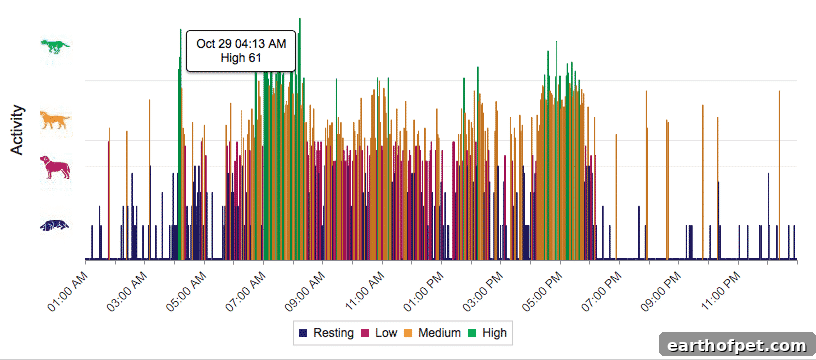
Within a week of boarding, Dottie’s weight dropped from 16.2 lb to 14.1 lb. She had no known medical issues, was fed twice daily, and displayed very high activity levels. Caregivers were especially interested in understanding her overnight behavior, which is not visible when staff are off duty.
The PetPace collar recorded frequent, intense bursts of activity throughout the day and night. This objective monitoring revealed persistent restlessness and high activity during hours when the hospital was closed, information that helped explain the unexpected weight loss.
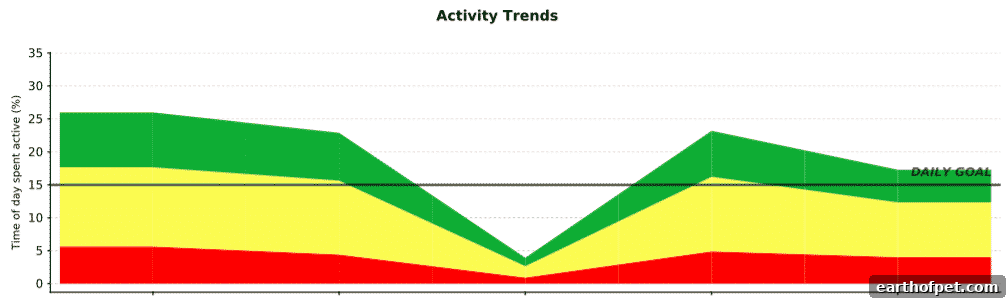
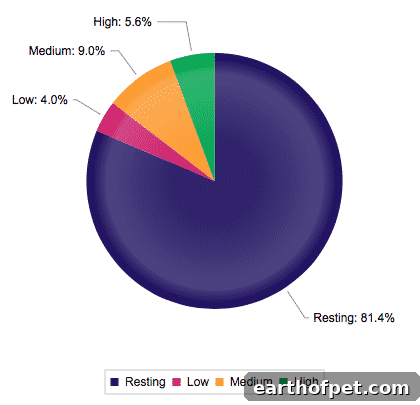
In addition to tracking active time, the collar measured activity intensity. The accumulated activity distribution shows how much time Dottie spent at different intensity levels, making it possible to distinguish light movement from intense play or pacing.
The PetPace collar also provides an Overall Activity Score that combines intensity, frequency and duration into a single benchmark. Dottie’s score during boarding was 17.2—one of the highest scores recorded by PetPace—while typical active, healthy dogs score around 11. This objective score underscored that her energy expenditure was unusually high for her size and routine.
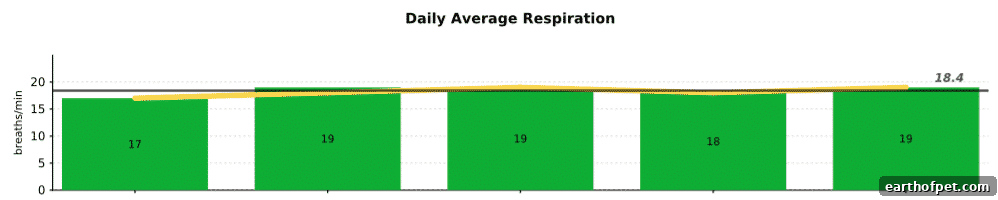
Other physiologic parameters monitored by the collar—daily average pulse, respiration, and heart rate variability (VVTI)—remained within normal ranges and were stable throughout the monitoring period. These trends helped the team rule out acute medical causes for weight loss and focus on caloric balance as the primary factor.

PetPace also estimates caloric expenditure using the dog’s signalment (age, weight, neuter status) combined with the recorded activity. The estimated calories-burned graph for Dottie demonstrated that her daily energy use was significantly elevated for her size, helping clinicians determine that her food intake was insufficient for her activity level.
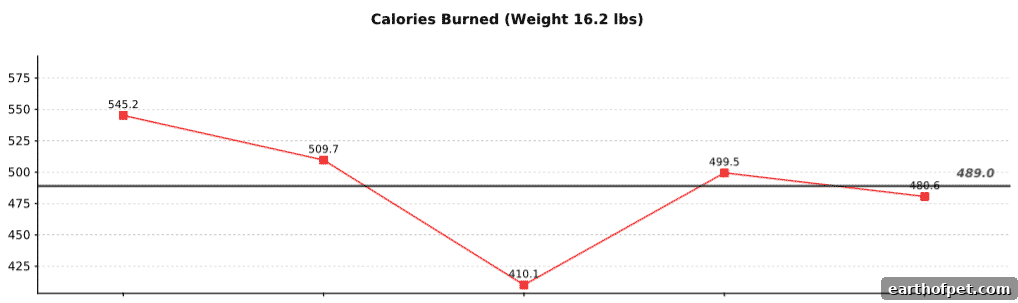
After reviewing the data, caregivers increased Dottie’s daily food ration, and she began to regain weight. The combination of activity quantification and caloric estimates made the adjustment straightforward and data-driven.
Discussion
Weight management is closely linked to activity patterns. Measuring activity with detail—in terms of intensity, duration, frequency and timing—provides practical, actionable insight for owners and veterinary teams managing weight gain, loss, or maintenance. Very active pets, such as working breeds or playful house pets, may require substantially more calories than less active animals of the same size.
Activity analytics also contribute to broader health assessments. The ability to view activity data alongside physiologic indicators—pulse, respiration, and heart rate variability—sets PetPace apart from basic activity trackers. In Dottie’s case, normal physiologic readings together with exceptionally high activity supported the conclusion that caloric deficit, not illness, was the primary cause of weight loss.
Conclusions
Detailed activity monitoring helps veterinarians and pet owners make objective, data-driven decisions about feeding and care. Activity data should always be interpreted in the context of other health indicators and any existing medical conditions.
Dr. Asaf Dagan, DVM, Diplomate ABVP (Canine and Feline practice) and PetPace’s Chief Veterinarian, emphasized that activity analytics are instrumental for weight-control programs because they add accuracy and objectivity. He noted that changes in activity or weight can reflect medical issues and must be evaluated alongside the pet’s overall health status.
Dr. Brian Shaw, DVM, owner of VetCare Harris Animal Hospital in Tampa, added that using PetPace collars in the hospital provides clear, objective data to guide clinical decisions. Observing a hyperactive dog is one thing; having precise measurements of activity and caloric expenditure gives clinicians a firmer basis for recommendations about diet and care.