
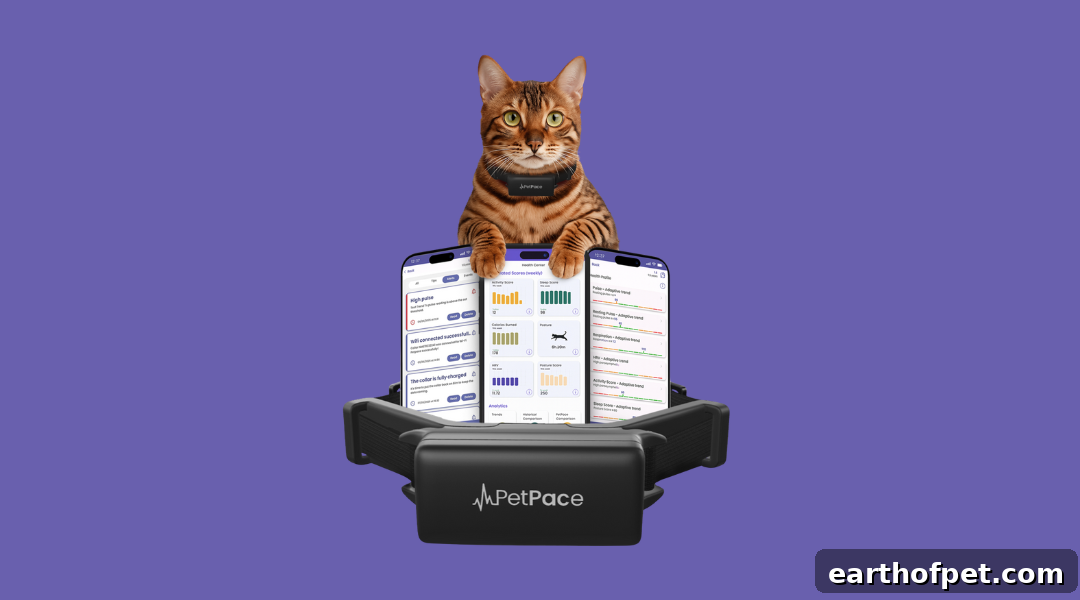
Smart IoT pet health-monitoring collar enables early detection and effective treatment of hyperthyroidism in an asymptomatic cat
Burlington, MA (PRWEB) April 21, 2016
Early detection through continuous remote monitoring
PetPace, a company offering an innovative Internet of Things (IoT) collar for continuous, real-time monitoring and analysis of pet vital signs and activity, has published a detailed medical case study demonstrating how its technology supported an early diagnosis of feline hyperthyroidism. The case documents how routine, remote monitoring identified concerning physiological trends in a cat that showed no outward clinical symptoms, prompting veterinary evaluation and timely intervention.
The case: an asymptomatic cat diagnosed early
Mya, a 14-year-old spayed female domestic shorthair weighing 13 lb and living exclusively indoors, had no previously known medical issues. Her owner, who works in pet healthcare, initiated routine screening with the PetPace collar. The collar recorded elevated heart rate values (average pulse 182 bpm; maximum 231 bpm; minimum 130 bpm) alongside a low heart rate variability measurement (VVTI 8.2). These abnormal readings triggered further investigation by a veterinarian.
Subsequent veterinary examination and bloodwork confirmed the presence of hyperthyroidism. Laboratory results showed a markedly elevated thyroid hormone level (T4 = 12.4 µg/dL; reference range 0.8–4.7 µg/dL) and a slightly elevated red blood cell count (RBC = 11.6 million/µL; reference range 7.12–11.4 million/µL). No other clinical abnormalities were found during the exam; Mya remained asymptomatic in every observable way.
Understanding feline hyperthyroidism
Hyperthyroidism in cats is a common endocrine disorder in older animals caused by excessive production of thyroid hormones from the thyroid gland in the neck. Because thyroid hormones regulate metabolism and influence many physiological systems, the disease can affect nearly any organ, producing a wide range of clinical signs. Typical symptoms—such as weight loss, increased appetite, restlessness, vomiting, or cardiac changes—may develop gradually, and by the time visible signs appear the disease can already have caused significant internal changes.
Early detection is therefore crucial. Identifying subtle physiological shifts before clinical signs emerge enables veterinarians to begin treatment earlier, potentially reducing the risk of long-term organ damage and improving overall outcomes.
Treatment and follow-up
Following diagnosis, Mya was placed on an appropriate course of oral medication to manage excess thyroid hormone production. Three months after starting treatment, a continuous 24-hour assessment with the PetPace collar revealed significant improvements across monitored parameters, indicating that medical management effectively reduced thyroid hormone levels and stabilized cardiovascular indicators.
How continuous monitoring improves pet care
The Mya case illustrates the value of continuous, noninvasive monitoring in detecting early deviations from an individual pet’s normal physiological patterns. By providing trend data and analytics, the smart collar can reveal non-specific but clinically relevant changes that might otherwise go unnoticed until overt symptoms develop. These early alerts allow pet owners to seek veterinary assessment sooner, enabling timely diagnostic testing and intervention.
Comments from veterinary professionals
Dr. Cari Bowlin, Medical Director at Southern Tier Veterinary Associates, commented on the experience: “The data provided by the PetPace collar was what prompted us to thoroughly examine a presumably healthy cat. It enabled a timely diagnosis of a serious disease and turned my staff into believers in this innovative technology.”
Dr. Asaf Dagan, DVM, Diplomate ABVP (Canine and Feline practice) and PetPace’s Chief Veterinarian, added: “The PetPace collar enables clinics to run routine periodic screening of their clients, for example as part of an annual work-up. This can be invaluable in early detection of chronic diseases and – as exemplified in this case – can dramatically improve pet health.”
Conclusion
This documented case demonstrates how IoT-enabled pet health monitoring can contribute to earlier detection of chronic conditions such as feline hyperthyroidism, even when an animal appears clinically normal. Continuous tracking of heart rate, activity levels, and heart rate variability can alert owners and veterinarians to subtle, meaningful changes, supporting prompt diagnosis and improving the chances for successful medical management. For veterinarians and proactive pet owners, integrating remote monitoring into routine preventive care offers a powerful tool for safeguarding long-term health.
Source: WAFB