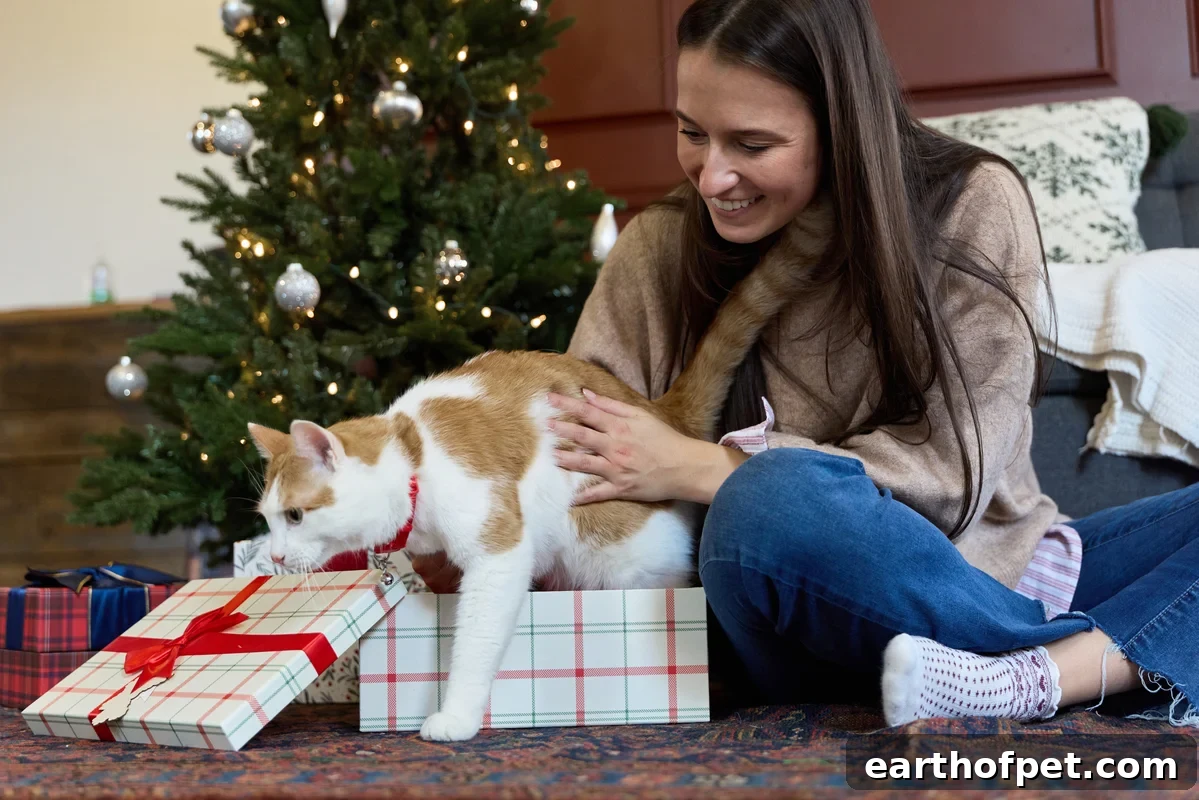
The tree is decorated, stockings are in place, and festive accents bring holiday cheer — until your cat decides those decorations look like a snack.
Cats don’t always tell the difference between décor and dinner. A dangling leaf, bright berry, or fragrant blossom can be irresistible, and while some plants cause only mild stomach upset, others can cause serious illness, including acute kidney failure.
Many people assume the plants with the worst reputations are the most dangerous, but that’s not always true. For example, poinsettias are generally only mildly toxic, while true lilies can be deadly to cats.
Before you bring holiday greenery into your home, here’s a clear guide to which Christmas plants are hazardous to cats, which are safer options, and what to do if your pet samples something they shouldn’t.
Are Christmas Plants Poisonous to Cats? It Depends on the Plant.
Not all holiday plants pose the same risk. Some produce mild irritation in the mouth and gut; others affect major organs or can cause life-threatening reactions. Reliable resources such as the ASPCA maintain databases of toxic and non-toxic plants for pets, and those listings make one thing clear: identifying the exact plant is essential.
Common holiday plants and their risks include:
| Holiday plant | Risk to cats |
| Christmas cactus | Non-toxic |
| Poinsettia | Mildly toxic; mouth and stomach irritation |
| Mistletoe | Toxic; potentially serious symptoms |
| Holly | Mildly toxic; gastrointestinal irritation |
| True lilies and daylilies | Extremely toxic; kidney failure |
| Amaryllis | Toxic; gastrointestinal and neurological effects |
Below is a closer look at the most significant holiday plants and how to handle exposures.
1. Christmas Cactus: Is Christmas Cactus Toxic to Cats?
Good news: Christmas cactus (Schlumbergera species) is considered non-toxic to cats. Its trailing stems and colorful blooms are a pet-friendlier choice for holiday décor.
Is Christmas Cactus Safe for Cats to Chew?
Non-toxic doesn’t mean edible. Chewing plant material can still cause vomiting or diarrhea, especially if a cat eats a large amount. Keep Christmas cactus out of reach, remove fallen pieces promptly, avoid treated soil or pesticides, and discourage repeated chewing.
2. Poinsettias: Separating Folklore from Facts
Poinsettias (Euphorbia pulcherrima) carry a big reputation, but their toxicity to cats is generally mild. The white sap can irritate the mouth, skin, and digestive tract, usually causing temporary drooling, mouth irritation, vomiting, or mild diarrhea rather than severe poisoning.
Poinsettia Cat Poisoning Symptoms
- Excessive drooling or lip licking
- Mouth or skin irritation
- Vomiting
- Occasional diarrhea
- Eye irritation if sap contacts the eyes
If your cat nibbles a poinsettia, remove access, note how much was eaten, and call your veterinarian if symptoms develop. Avoid inducing vomiting or giving home remedies without veterinary instruction.
3. Mistletoe: Keep It Out of Reach
Mistletoe is toxic to cats. Certain varieties contain lectins and phoratoxins that can cause gastrointestinal upset and, in larger exposures, cardiovascular problems such as low blood pressure and slow heart rate.
What Happens If a Cat Eats Mistletoe?
- Vomiting and diarrhea
- Excessive drooling
- Weakness or difficulty breathing
- Signs of cardiovascular distress in severe cases
Because serious symptoms can occur, contact your veterinarian or a poison control specialist promptly if you suspect mistletoe ingestion. Consider artificial mistletoe to preserve the look without the risk.
4. Holly: Festive but Potentially Irritating
Holly (Ilex species) is another common holiday accent, but its leaves and bright red berries contain saponins that can irritate a cat’s digestive system. Symptoms typically include vomiting, diarrhea, drooling, and lethargy. The leaves’ sharp edges can also irritate the mouth.
My Cat Ate Holly Leaves: What Should I Do?
Remove remaining plant material, save a sample or photo for identification, and call your veterinarian for guidance. While most holly exposures are not life-threatening, professional advice helps determine whether monitoring or treatment is needed.
5. Lilies and Amaryllis: Serious Threats
Are Christmas Lilies Toxic to Cats? Absolutely.
True lilies (Lilium genus) and daylilies (Hemerocallis genus) are extremely toxic to cats. Ingestion of any part — flowers, leaves, stems, pollen, or even water from a vase containing lilies — can cause acute kidney injury and potentially fatal kidney failure. Early signs may appear within 1–3 hours and include vomiting, drooling, loss of appetite, and lethargy. Immediate veterinary care is critical; delays beyond about 18 hours can lead to irreversible damage.
If you suspect any lily exposure, seek emergency veterinary attention right away.
Amaryllis: Beautiful but Toxic
Amaryllis (Hippeastrum species) contains alkaloids that affect the digestive and nervous systems. The bulb is especially concentrated with toxins. Symptoms can include vomiting, diarrhea, excessive drooling, abdominal discomfort, weakness, and in severe cases, tremors or seizures. Keep amaryllis bulbs and plants away from curious pets and call your veterinarian if ingestion is suspected.
6. Is a Christmas Tree Toxic to Cats?
Fir, pine, and spruce trees are not generally highly toxic to cats, but they present other hazards. Chewing needles can cause mouth and stomach irritation; swallowed needles can injure the digestive tract. Tree water can harbor bacteria and may contain preservatives or additives that are harmful if ingested. Tinsel, ribbons, and string are especially dangerous if swallowed because they can cause intestinal obstruction.
- Secure the tree to prevent tipping.
- Cover the tree stand and prevent cats from drinking the water.
- Avoid chemical additives.
- Keep tinsel and strings out of reach.
- Sweep up fallen needles regularly.
7. Holiday Plants That Are Safer for Cats
You can still have festive greenery without risking your cat’s health. Several attractive houseplants are considered non-toxic to cats, including Christmas cactus, African violet, spider plant, Phalaenopsis orchid, and Boston fern. Even non-toxic plants can cause gastrointestinal upset if eaten, and fertilizers or pesticides can add risk, so supervise pets and choose untreated soil and decorations.
| Plant | Cat safety |
| Christmas cactus | Non-toxic |
| African violet | Non-toxic |
| Spider plant | Non-toxic |
| Phalaenopsis orchid | Non-toxic |
| Boston fern | Non-toxic |
8. How to Make Your Home Safer for Cats During the Holidays
Protecting your cat doesn’t mean eliminating all decorations. Use these practical steps:
- Research a plant’s scientific name before bringing it home.
- Avoid bringing true lilies, mistletoe, and holly into homes with cats.
- Choose safer plants like Christmas cactus or orchids.
- Secure decorations and avoid small, swallowable pieces.
- Consider artificial greenery that’s sturdy and free of small detachable parts.
- Keep fallen leaves, berries, and needles off the floor.
9. What to Do If Your Cat Eats a Toxic Holiday Plant
Act quickly. If you catch your cat chewing or find evidence of ingestion:
- Remove the plant and keep your cat away from any remaining material.
- Identify the plant — take a photo or save a sample.
- Estimate how much was eaten and when.
- Call your veterinarian and follow their instructions.
- Seek emergency care immediately for any suspected lily exposure.
Never induce vomiting or give medications without veterinary guidance. Poison control resources such as the ASPCA Animal Poison Control Center and Pet Poison Helpline can provide expert advice; your veterinarian or nearest emergency clinic can also assist.
Make the Holidays Safer for Your Cat
The holidays should be joyful, not stressful. Knowing which plants are hazardous to cats—and treating certain decorations with caution—lets you enjoy festive greenery while protecting your pet. Choose safer plants, secure decorations, and respond quickly if your cat eats something suspicious. A few careful choices can keep your celebrations merry and your cat healthy.