A little planning can make holiday travel with your dog or cat much easier. Below you’ll find what to pack, how to keep their routine steady, and tips to keep them safe, hydrated, and comfortable on the road or in the air.
Travelers fall into two camps: those who plan every detail well in advance, and those who figure things out as they go. Add a pet and even careful travelers can start asking: did I pack enough food? Where’s the leash? Does the hotel allow pets? With a few simple steps ahead of time, traveling with pets doesn’t have to be stressful.
Holiday travel with pets brings extra challenges: longer days, busier roads and airports, colder weather, and unfamiliar environments. Your pet may face new people, noises, smells, and energetic children. You don’t need to recreate home perfectly — just bring enough of it so your pet feels safe, fed, and comfortable.
Your Holiday Pet Travel Checklist
Start with the essentials before you sort out travel details like flights or long road trips.
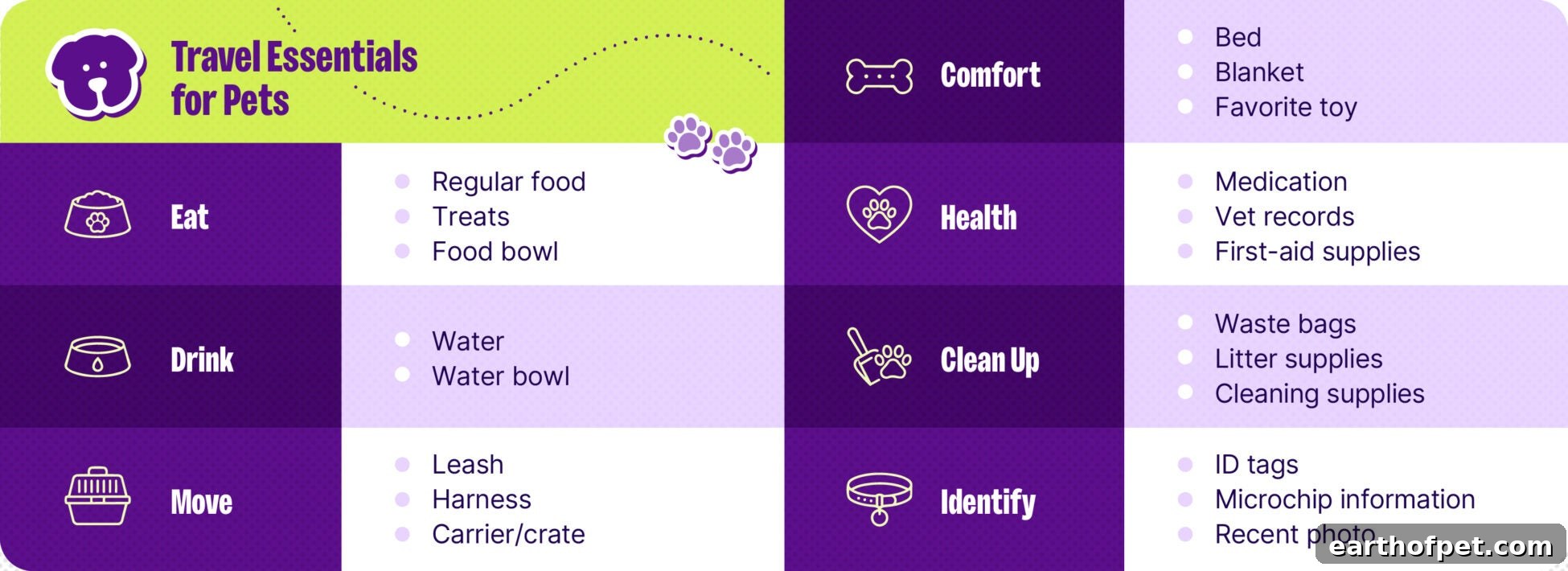
What to Pack for Your Pet
Whether you’re traveling with a dog or a cat, pack a compact “carry-on” for your pet and keep important items with you rather than in checked luggage.
| Pet Travel Essentials | Why It Matters |
| Regular food | Maintains routine and reduces digestive upset |
| Treats | Useful for comfort and training during travel |
| Food and water bowls | Collapsible bowls save space and are easy to clean |
| Plenty of water | Essential for longer trips and cold, dry conditions |
| Leash and harness | Keep pet safe during stops and in new places |
| Carrier or travel crate | Necessary for cats and recommended for many dogs |
| Waste bags / litter supplies | Plan for bathroom breaks—accidents happen |
| Medications | Bring enough for the trip plus a small extra supply |
| Veterinary records | Required for some travel and helpful in emergencies |
| ID tags and microchip info | Speeds reunification if your pet gets lost |
| Bedding or a familiar blanket | Comforting scent helps reduce stress |
| Favorite toy | Provides a familiar comfort item |
| Pet first-aid supplies | Handy for minor injuries or issues |
| Recent photo of your pet | Essential if you need to make lost-pet posters or alerts |
| Cleaning supplies | Be a considerate guest—bring materials for accidents |
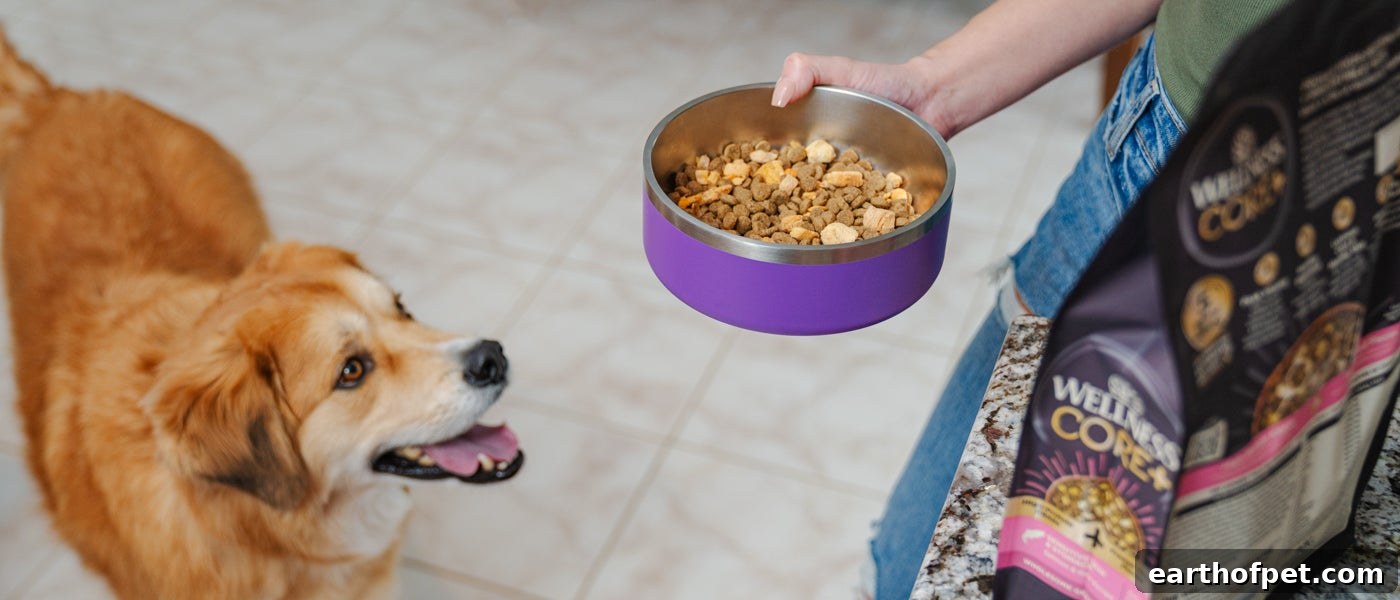
These basics cover most needs away from home. Keep food sealed and protected from heat and moisture, and consider shelf-stable options if refrigeration is limited. Dry food is often the easiest to transport.
The Golden Rule: Don’t Reinvent Your Pet’s Routine
Keep feeding, bathroom, and exercise schedules as close to normal as possible. Sudden dietary changes combined with travel are a common cause of stomach upset. For road trips, feed a light meal a few hours before departure rather than a large meal while the vehicle is moving, and offer water regularly.
A Simple Travel-Day Rhythm
| When | What to Do |
| 3–4 hours before departure | Offer a light meal if that matches their routine |
| Before leaving | Bathroom break and some exercise |
| During travel | Offer water at regular intervals |
| Every few hours by car | Stop for bathroom and stretch breaks |
| At your destination | Re-establish normal feeding and bathroom routines |
Adjust timing for your pet’s age, health, and your veterinarian’s advice. The key is to be consistent.
How Much Food Should You Bring?
Bring more food than you think you’ll need: plan for the trip length plus two to three extra days. That buffer covers delays, weather, or unexpected overnight stays. Store food properly and consider convenience—dry and shelf-stable meals are easiest for travel.
Avoid switching diets immediately before or during a trip. Use familiar, complete and balanced food that your pet tolerates well.
Traveling With Pets by Car: Safety First
Secure your pet properly. The safest options are a secured crate, carrier, or a restraint designed for pets. Pets should not ride in the front seat where airbags can harm them. If your pet is not used to longer drives, acclimate them with short practice trips.
Dogs
Use an appropriately sized travel crate or a crash-tested restraint system made for dogs.
Cats
Keep cats in a secure carrier at all times. A loose cat in a moving car is dangerous for both the pet and passengers.
Everyone
Keep food, medications, and small items out of reach. Never leave your pet unattended in a parked car—temperature extremes are dangerous even in winter.
Flying With Pets? Start Early
Air travel needs extra planning. Check airline pet policies before booking, and verify destination requirements well in advance—especially for international travel, which can require vaccinations, health certificates, and permits. Talk to your veterinarian about whether air travel is appropriate for your pet and what carrier and feeding recommendations apply.
Airport Reality Check
Airports are overwhelming for pets: unfamiliar smells, loud noises, crowds, and security checkpoints. Practice carriers and short trips beforehand so your pet is comfortable with the routine.
How to Keep Pets Calm While Traveling
You can’t explain travel to a pet, but you can reduce unfamiliar stimuli. Familiar items—blankets, toys, and usual food—help. Keep routines, allow exercise before long stretches, and consult your veterinarian about motion sickness or anxiety treatments rather than improvising medications.
Don’t Forget Hydration
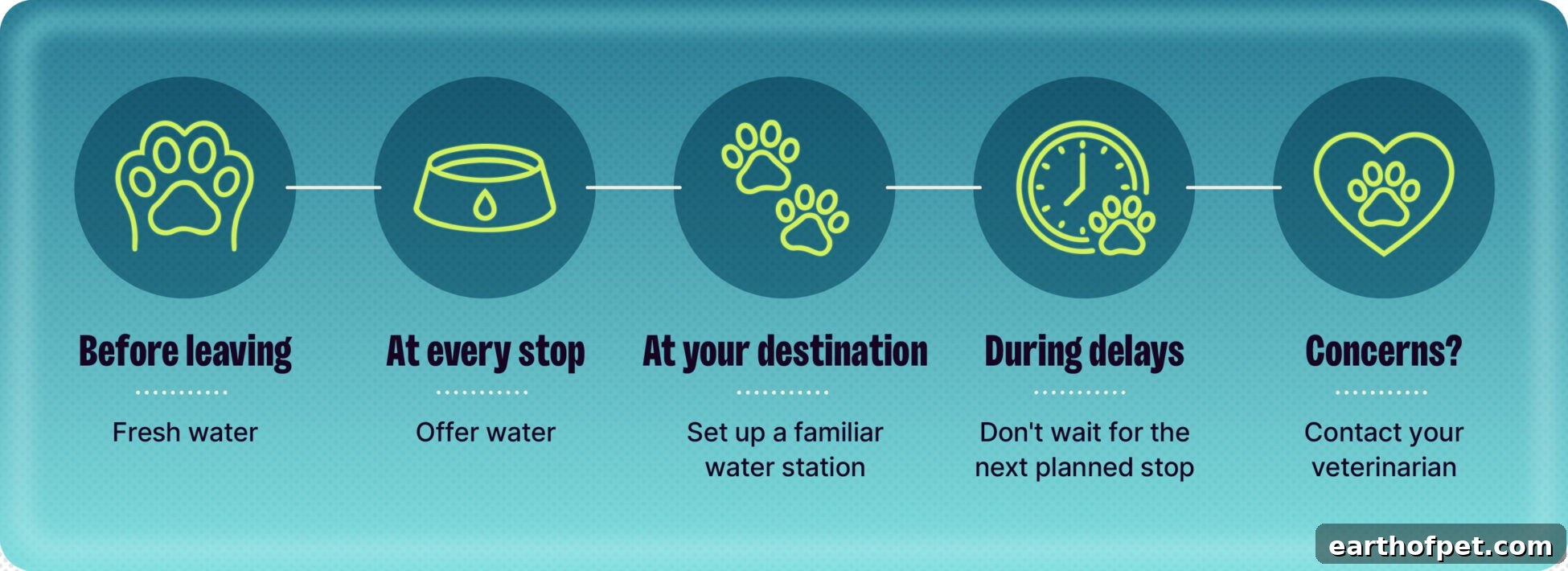
Offer water regularly rather than waiting until your pet looks thirsty. Bring bottled water if your pet has a sensitive stomach and use a collapsible bowl for convenience. For cats, watch for signs of dehydration such as lethargy or reduced appetite and offer fresh water whenever possible.
Arriving at the Hotel: Do a Pet’s-Eye Inspection
When you arrive, do a quick safety sweep before letting your pet explore. Look for medications, small objects, loose cords, toxic plants, or hiding spots. Set up a “home base” with their bed or blanket, food, and water so they have a familiar anchor.
Finding Pet-Friendly Accommodations
Confirm pet policies before booking: which animals are allowed, size or breed restrictions, fees, whether pets can be left alone, outdoor access, and nearby walking areas. Also identify the nearest veterinarian and emergency clinic so you’re prepared if you need professional care.
Managing Holidays with Extra People
Crowded, noisy homes can be stressful. Provide an escape route or quiet room with familiar bedding and water. Don’t force interactions—give your pet time and space to adjust away from the holiday activity.
The Holiday Delay Plan
Pack for both the trip you planned and the trip you didn’t. Include emergency items like extra food, water, bedding, medication, cleaning supplies, and current ID and microchip details so you can handle flight delays, overnight stays, or changes in plans.
| If Plans Go Sideways… | Have This Ready |
| Traffic or delays | Extra food and water |
| Flight delayed | Food, treats, and water |
| Overnight stay needed | Bedding, medication, and cleaning supplies |
| Luggage separated | Food and medication in carry-on |
| Pet gets lost | Current ID, microchip info, and a recent photo |
| Weather changes | Appropriate gear and backup supplies |
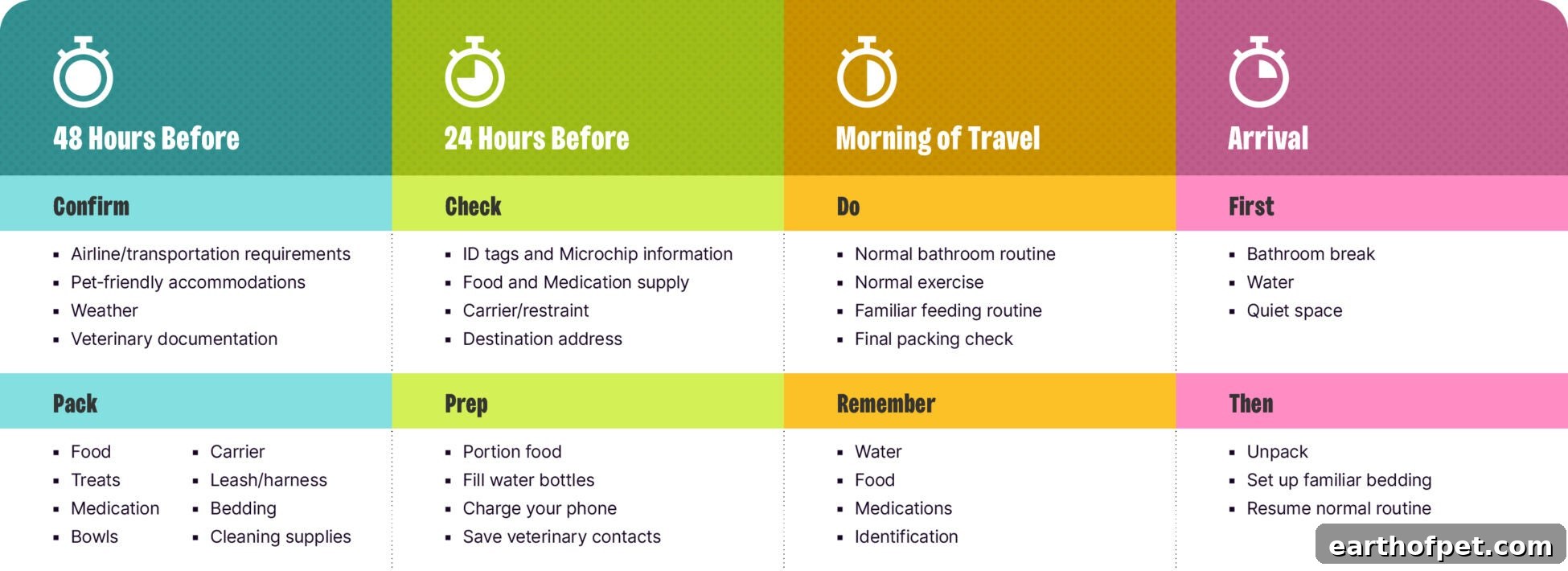
The 48-Hour Pet Travel Countdown
48 HOURS BEFORE
Confirm airline or transport rules, pet-friendly lodging, weather, and any required veterinary documents. Begin packing food, treats, medication, bowls, carrier, leash, bedding, and cleaning supplies.
24 HOURS BEFORE
Check ID tags, microchip information, food and medication supplies, and your carrier or restraint. Portion food, fill water containers, save veterinary contact information, and charge your phone.
MORNING OF TRAVEL
Follow the normal bathroom, exercise, and feeding routine and do a final packing check. Remember water, food, medications, and identification.
ARRIVAL
On arrival, offer a bathroom break and water, set up a quiet space, unpack familiar bedding, and resume the usual routine.
The Complete Holiday Pet Travel Game Plan
Use this as your final checklist. If you want to simplify everything, remember these five principles:
1. Familiar beats fancy
Bring the food, bedding, and routines your pet already knows.
2. Secure beats convenient
Choose a carrier or restraint that prioritizes safety over ease.
3. Routine beats improvisation
Keep feeding, bathroom, exercise, and sleep schedules consistent.
4. Extra beats exactly enough
Pack extra food, medication, and supplies in case plans change.
5. Calm beats rushed
Allow more time than you think you need so you and your pet can travel without stress.
A Final Word for the Holiday Road
Pets don’t make travel simpler, but they do slow you down in a good way. You stop for water, bathroom breaks, and to let your dog sniff that important patch of grass. That pause can make the holidays feel less hectic. Bring familiar food and comforts, give your pet time and a safe place to settle, and remember: they don’t care about the schedule—just that they arrive with you.
Holiday Pet Travel FAQ
How do I travel with a dog during the holidays?
Maintain your dog’s routine, bring familiar food, water, treats, and bedding, and secure them in a crate or restraint in the car. Plan regular bathroom and exercise breaks, and verify airline and destination rules well in advance for air travel.
What should I pack when traveling with my dog?
Pack regular food, treats, water and bowls, leash, carrier or restraint, waste bags, medication, veterinary records, identification, bedding, favorite toys, and first-aid supplies. Include extras for delays.
How do I travel with a cat for the holidays?
Use a secure carrier, bring familiar bedding or an item that smells like home, keep food and routines consistent, and never let a cat roam loose in a moving vehicle.
How do I keep pets hydrated while traveling?
Offer water regularly, bring bottled water if needed, and use a collapsible bowl for convenience. Don’t wait until your pet looks thirsty—make hydration part of the travel routine.
What is the best food to bring when traveling with a dog?
Bring the food your dog already eats and tolerates well. Avoid switching diets right before travel. Dry or shelf-stable options are easiest to transport and serve when refrigeration is limited.
How long can a dog go without eating?
That depends on age, size, health, and feeding habits. Rather than extending meal times, aim to keep your dog’s usual feeding schedule and consult your veterinarian for advice before long trips.
How do I maintain my dog’s routine while traveling?
Keep meals, bathroom breaks, exercise, and bedtime consistent. Bring familiar food, treats, and bedding so the basics stay predictable.
What are the best tips for a holiday road trip with a dog?
Prioritize safety and routine: secure your dog, plan regular stops, bring familiar food and water, pack extra supplies, never leave your dog alone in a parked vehicle, and practice short drives beforehand if needed.