It’s 11 p.m. and your dog is on the kitchen floor, legs paddling, jaw clenched, eyes unfocused. Maybe this is the first time you’ve seen it. Maybe it’s the fourth seizure this month. In that moment, the urge to pick them up or “do something” is overwhelming. The most important actions are simple and safe — and what you do after the seizure ends is often more important than frantic interventions while it’s happening.
This guide explains exactly what to do during an active seizure and what to track afterward so your veterinarian has the clear information they need. It also covers when a seizure is an emergency and how ongoing monitoring can help manage a dog with recurrent events.
If your dog is seizing right now: clear the area of furniture and stairs, start timing the event, and keep your hands away from the dog’s mouth. Most seizures stop within two minutes on their own. If a seizure lasts longer than five minutes, or a second seizure starts before your dog has fully recovered, treat it as an emergency and seek immediate veterinary care.
What a Seizure Actually Looks Like
Seizures typically fall into three phases: a pre-ictal (warning) phase, the seizure itself (ictal phase), and a post-ictal recovery period. Not every seizure is dramatic; some are subtle and easy to miss.
Before a seizure, a dog may seem off — pacing, hiding, or seeking you out with a distant expression. The seizure phase can involve loss of consciousness, stiffening, limb paddling or jerking, drooling, and sometimes loss of bladder or bowel control. Focal seizures affect only part of the body, such as one side of the face or a single leg, while the dog may remain partly aware and appear confused.
Recovery varies: some dogs stare blankly for several minutes after a focal event, while others pace and bump into furniture after a generalized seizure. Temporary disorientation, restlessness, or sensory changes are common in the post-ictal period and can last minutes to hours.
What to Do During the Seizure
Stay calm, time it, and remove hazards. Those three steps cover most of what you need to do.
- Note the exact start time the moment it begins. Use a timer or your phone rather than estimating.
- Move nearby hazards — coffee tables, sharp edges, stairs, or anything the dog could hit.
- Do not restrain the legs or try to stop the movements; that can cause injury.
- Keep your hands away from the mouth. Dogs cannot “swallow their tongue,” but involuntary jaw movements can cause painful bites.
- Reduce light and noise if you can reach switches without leaving the dog. Bright light and loud sounds may prolong disorientation.
- Do not splash water or shout to try to “snap them out” of it — those actions usually do not shorten the seizure and can worsen post-ictal confusion.
- If someone else is present, have them record a short video. Even 20 seconds of footage gives your veterinarian far more useful detail than a memory-based description.
When It Crosses Into a Real Emergency
Most seizures are terrifying to watch but not immediately life-threatening. Certain situations, however, require urgent veterinary care.
If a seizure lasts more than five minutes, or if your dog starts seizing again before fully waking up from the first episode, this is called status epilepticus and needs emergency treatment. Cluster seizures — two or more events within 24 hours with partial recovery between episodes — also warrant prompt veterinary evaluation. A first-ever seizure should always prompt a veterinary call or visit, even if your dog appears fine an hour later. The first seizure helps determine whether the cause is epilepsy or something else such as low blood sugar, toxin exposure, or an internal medical issue that needs diagnostic testing.
After the Seizure: The Recovery Window
The post-ictal phase deserves gentle care. Move your dog to a quiet, dim room and give them space to recover. Offer water only once they can drink without choking. Appetite after a seizure varies; some dogs are very hungry, others won’t eat for hours — both can be normal.
Temporary vision or hearing changes can last up to a couple of hours and usually resolve on their own. If the disorientation, inability to stand, or abnormal breathing continues well beyond the typical recovery period, contact your veterinarian.
Why Tracking Patterns Matters Almost As Much As the Seizure Itself
A single seizure gives a veterinarian limited information. A clear log of several events reveals whether treatment is effective, whether patterns are emerging, and potential triggers.
Record the date and precise start time, duration in seconds, seizure type (generalized or focal), circumstances in the hours before (missed medication, new food, stress, poor sleep), and how long recovery took. Built-in apps or dedicated seizure logs from veterinary teams can make this task easier and more accurate than reconstructing events from memory.
Where Continuous Monitoring Fits In
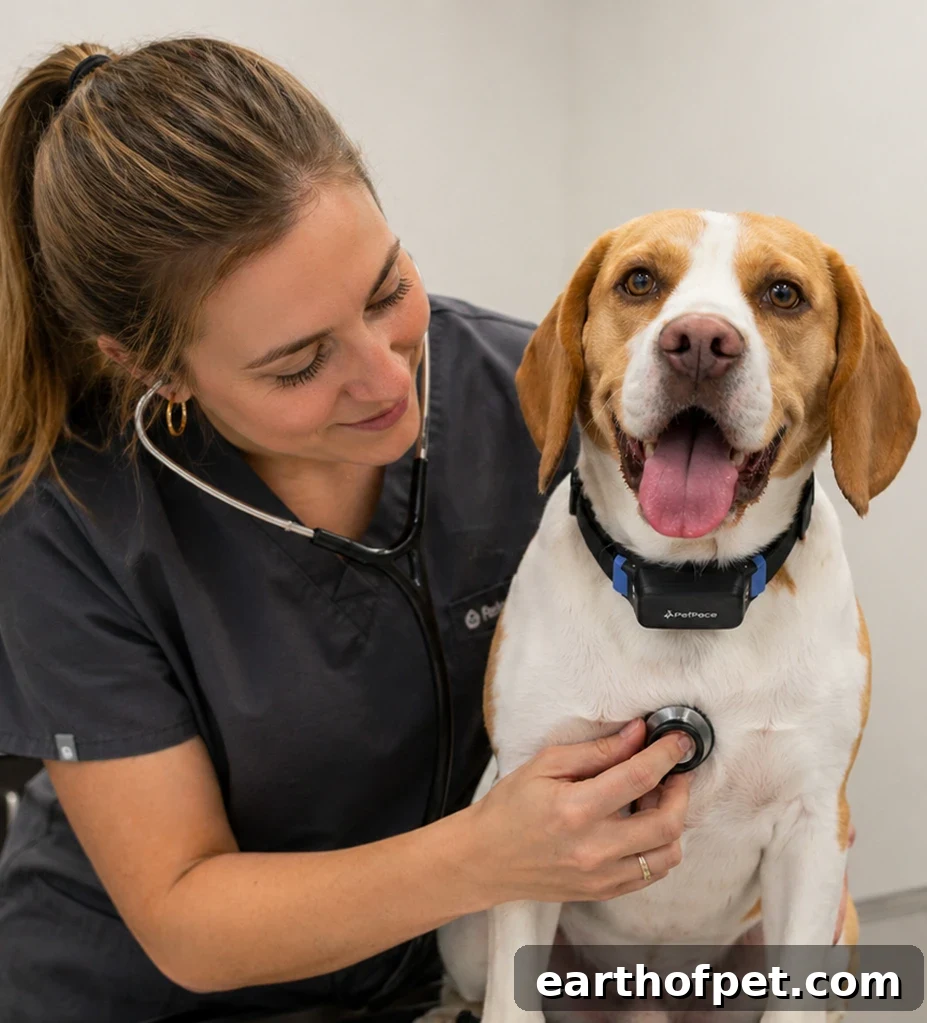
A written log only captures what you observe. Many seizures occur overnight or when no one is watching. Continuous monitoring devices that record activity, heart rate, temperature, and sleep can add objective, timestamped data that complements your notes. That paired information — your log plus continuous metrics — gives your veterinarian a fuller picture of what’s happening and when.
FAQ
How long do dog seizures usually last? Most generalized seizures run between 30 seconds and two minutes. Seizures longer than five minutes, or repeated seizures without recovery, are an emergency.
Should I put anything in my dog’s mouth during a seizure? No. Putting fingers or objects near the mouth risks a severe bite. Let the seizure run its course while protecting the dog from nearby hazards.
What’s the difference between cluster seizures and status epilepticus? Cluster seizures are multiple events over 24 hours with some recovery between them. Status epilepticus is a single seizure lasting more than five minutes or repeated seizures without recovery. Both require same-day veterinary attention.
Can stress or diet trigger seizures? In some dogs, stress, missed medications, disrupted sleep, dietary changes, or hormonal shifts can lower the seizure threshold. Triggers vary between individuals, so consistent logging helps identify personal patterns.
Will my dog remember having a seizure? No. During a generalized seizure a dog loses awareness. Post-ictal confusion is part of recovery, not a memory of the episode.
When should I go to the emergency vet? Seek immediate care if a seizure lasts over five minutes, a second seizure begins before full recovery, it’s your dog’s first-ever seizure, or breathing appears abnormal afterward. For all other cases, contact your regular veterinarian the same day to report what you observed.
Conclusion
Seizures are distressing to witness, but a calm, repeatable routine helps you respond safely: time the event, clear the area, keep your hands away from the mouth, and record what happened once your dog is stable. Over weeks and months, a consistent seizure log — ideally paired with objective monitoring data when possible — turns frightening nights into actionable information your veterinarian can use to diagnose causes and optimize treatment.